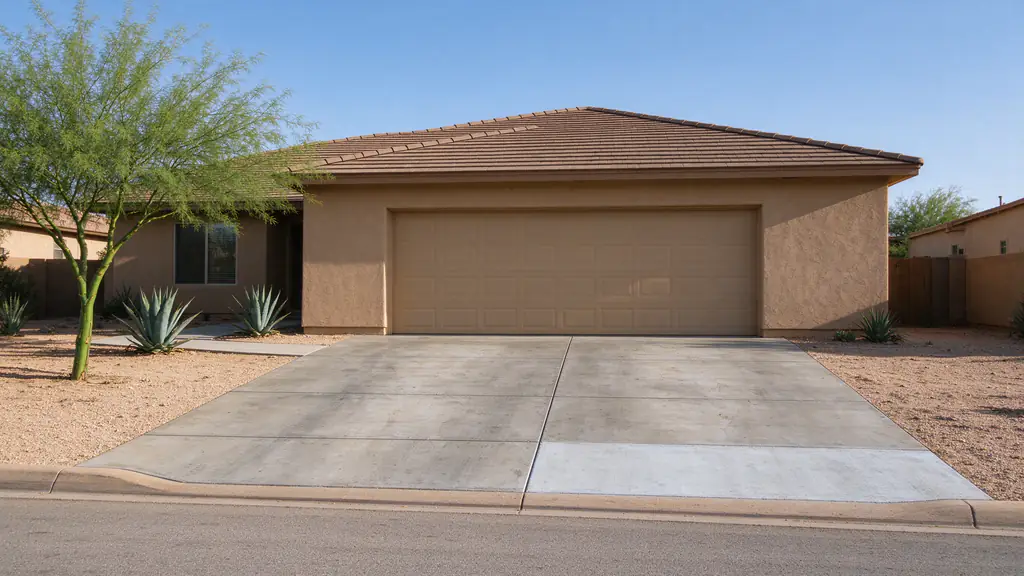
Can extreme heat crack a concrete driveway?
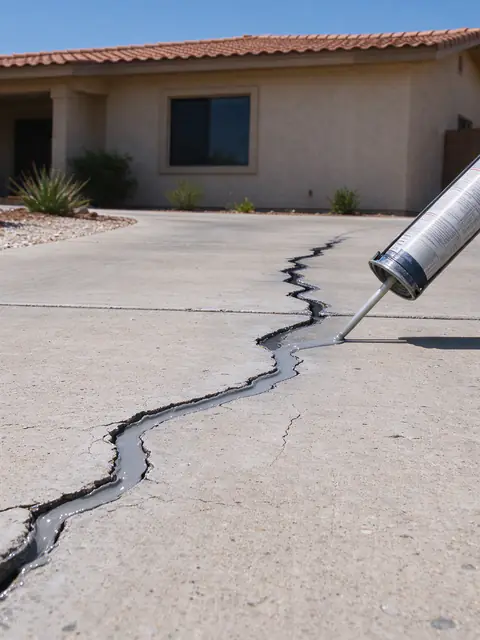
Heat does the most harm while concrete is new. Fresh concrete placed in hot, dry, windy weather loses water fast and can develop plastic shrinkage cracks and a weak surface, which is why hot-weather practice caps concrete at 95°F at discharge. On a cured slab, daily heating and cooling opens and closes the joints, which is the movement joints are cut to take.
Should I repair my driveway or replace it?
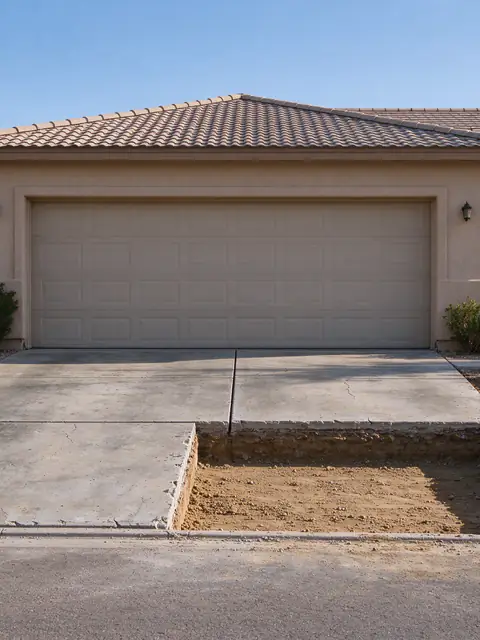
Repair when the base is sound and the damage is local: a few cracks, one settled panel, a worn surface. Replace when cracking runs across panels, the base has failed or washed out, or several sections are already broken. Resurfacing only suits a sound slab; it doesn't fix settlement or a failed base, and the cracks underneath come back through.
Do I need a permit to repair a driveway in Phoenix?
Work entirely on your lot often needs none, but the right-of-way is different. On streets with roll or ribbon curb, Phoenix treats up to 10.5 feet of concrete drive in the right-of-way as part of the on-site work, with no separate driveway permit; longer runs need one, and the concrete there is 6-inch Class A. Each suburb runs its own right-of-way permits.
Who is responsible for the sidewalk where it crosses my driveway?
In Phoenix, City Code makes the owner of a lot next to a sidewalk responsible for keeping it in repair. If a defect isn't fixed after the City gives notice, the City can do the work and add the cost to the property tax roll. Other Valley cities set their own rules, so the answer is confirmed per address with the city where the house sits.
What does driveway repair typically cost in the Phoenix area?
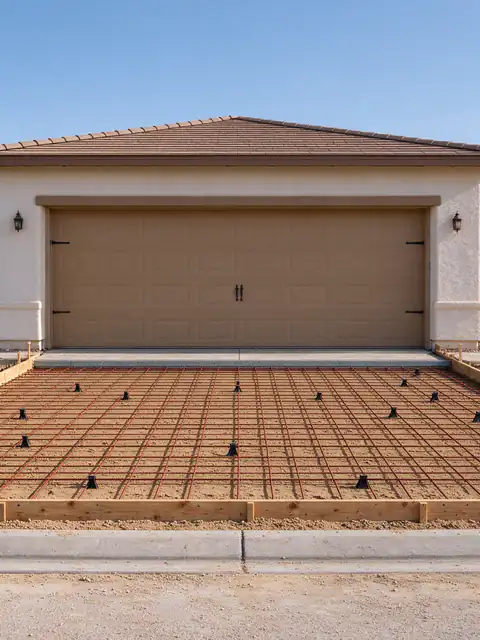
It depends on the repair. Typical Phoenix-area ranges run about $0.50 to $5 per linear foot to fill and seal concrete cracks, $100 to $415 to patch one asphalt pothole, and $6 to $11 per square foot for a new concrete driveway, plus $1.20 to $1.90 per square foot to remove the old one. Base damage, access and minimum charges move the number.
Does sealcoating fix a cracked asphalt driveway?
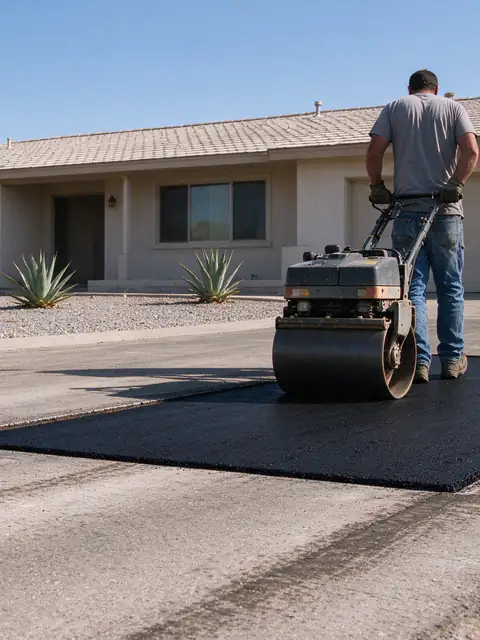
No. Sealcoat is a thin protective coat for a sound surface: it slows oxidation from the sun and keeps water out of fine cracks. It doesn't bridge open cracks, rebuild a soft base or fix alligator cracking from fatigue, and it isn't resurfacing. Those need crack filling, patches that remove the failed material, or an overlay on a sound base.
Why does my asphalt driveway get soft in summer?
Asphalt is held together by a binder that softens as it heats, and Phoenix pavement rarely cools off: normal summer highs at Sky Harbor run from about 100°F to 106.5°F, with lows near 80°F. Soft asphalt scuffs when wheels turn in place and ruts under parked weight, most of all on a fresh or thinly built drive.
Can I park on a dirt or gravel yard in Phoenix?
Phoenix requires parked vehicles to sit on a dust-free surface such as concrete or asphalt. On a single-family or duplex lot, a smooth layer of gravel at least 3 inches deep inside a permanent border also qualifies, and rear yards are exempt. That rule is why many dirt parking areas end up as bordered gravel, concrete or pavers.
Is caliche a problem for driveway work?
Caliche is a cemented layer of calcium carbonate in desert soil. It doesn't crack a driveway by itself, but it makes digging out a failed base or regrading for drainage slower, and it can slow water draining down through the soil. USDA soil surveys flag cemented layers mostly along foothill and desert edges, such as parts of Peoria and Paradise Valley.
Can a sunken driveway slab be lifted instead of replaced?
Often, if the panel is still in one piece. Mudjacking pumps cement slurry under the slab and foam lifting injects expanding polyurethane; both raise a sound panel and fill the void below it. Neither fixes a broken or crumbling panel, and if water keeps washing soil out from under the edge, the drainage has to be corrected or the slab drops again.
Who does the work when I hire Sundial Driveway Repair?
Sundial Driveway Repair is a service company that offers and manages the work; licensed and insured contractors carry it out. In Arizona, a contractor generally needs a Registrar of Contractors license when a job tops $1,000 in labor and materials or needs a permit, and you can look up any license and its classification on the Registrar's website.