111days a year reach 100°F or more at Sky HarborNOAA climate normals
0.6nights a year drop to freezing at Sky Harbor, so heat and water, not frost, drive most damageNOAA
June 15 to September 30 is monsoon seasonNational Weather Service
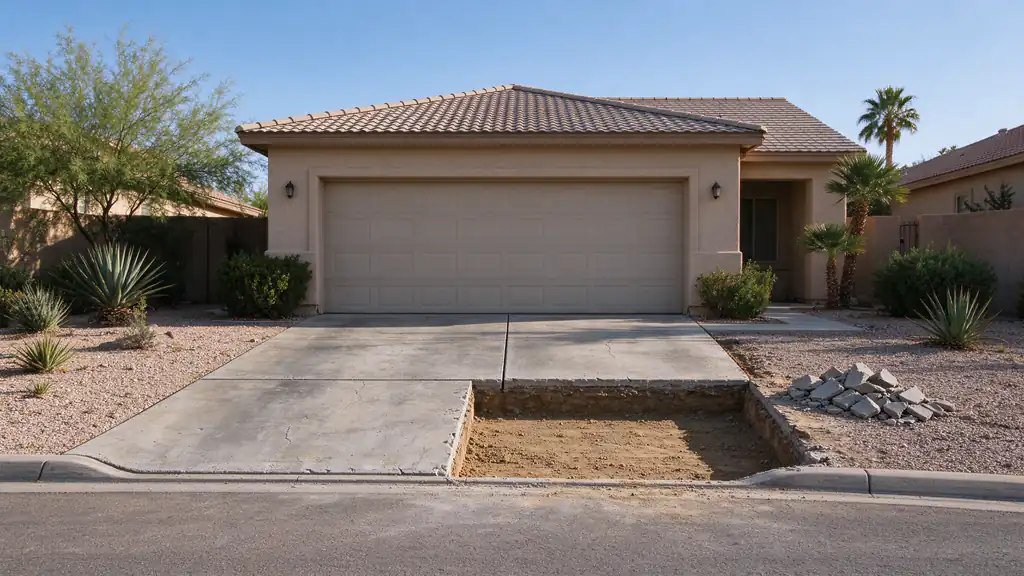
Phoenix treats up to 10.5 ft of concrete drive past a roll curb as on-site work, with no separate driveway permit
Concrete for a residential driveway in the Phoenix right-of-way is 6-inch Class A
Last Updated:
Concrete driveway repair fixes the part of a slab that has failed: a crack, a flaking surface, a broken edge or a panel that dropped. In Phoenix the right repair depends less on how the damage looks and more on what is happening underneath, because clay soils, monsoon runoff and summer heat cause most of it. Sundial Driveway Repair is a service company offering and managing concrete driveway repair across Phoenix and its suburbs, for homes and commercial properties, and the work is fulfilled by licensed and insured contractors.
A driveway is a system, not just a slab. Compacted subgrade carries an aggregate base, the base carries the concrete, and saw-cut control joints give the concrete a place to crack where it shrinks. When one layer fails, the damage usually shows up in another, which is why a crack can be a cosmetic shrinkage line or the first sign of a sunken driveway. Telling the two apart is most of the job.
What happens on the first visit
The first visit looks at the whole driveway before anyone talks about a method. It starts with the surface and finish, since a plain broom finish repairs differently from stamped concrete or exposed aggregate. Each crack is checked for width, for whether its two sides are level, and for whether it stays inside a joint or runs across a panel. Panels are checked for steps at the joints and gaps at the garage and sidewalk, and the surface is tapped to find hollow-sounding areas over voids.
Water gets the same attention: where downspouts discharge, where irrigation reaches the slab, and whether the drive sheds water toward the street or holds it at the garage. The visit also notes which part of the work sits in the street right-of-way (usually the apron, sidewalk crossing and curb), because that decides whether a city permit applies. The damaged area is measured, and the estimate names the repair method, the area it covers and what it won’t change, such as color match.
Portland cement concrete is cement paste binding sand and stone. It is strong when squeezed and weak when pulled, and it shrinks as it dries, so some cracking is built in. Control joints are cut to make those cracks happen in a straight line. A hairline crack with level edges that hasn’t changed in a year is usually shrinkage and needs sealing at most. A crack that widens, steps up on one side, or reopens after it was filled is a working crack: the slab is still moving, and filling it treats the symptom. Driveway crack repair covers how working and dormant cracks are sealed differently.
Movement in the Valley usually traces to the soil. In USDA soil survey samples, more than three of every four points in Gilbert and Chandler show moderate or higher shrink-swell, the clay that swells when it gets wet and shrinks as it dries. A slab on that soil rises and settles with the seasons and with irrigation, and it cracks where the support changes. The guide to why driveways crack and sink in Phoenix traces these causes in detail.
Spalling, scaling and pitting
In colder states, freeze-thaw cycles and de-icing salt cause most surface loss. Phoenix Sky Harbor averages 0.6 freezing nights a year (NOAA climate normals), so that is rarely the cause here. Flaking on a Valley driveway more often starts with a weak top layer from finishing or curing: water worked into the surface, finishing while bleed water was still on the slab, or concrete that dried too fast in the heat. Rust stains in a crack point to corroding reinforcement, which can pop the concrete above it. The guide to what causes driveway spalling goes further into each one.
Crumbling edges and broken corners
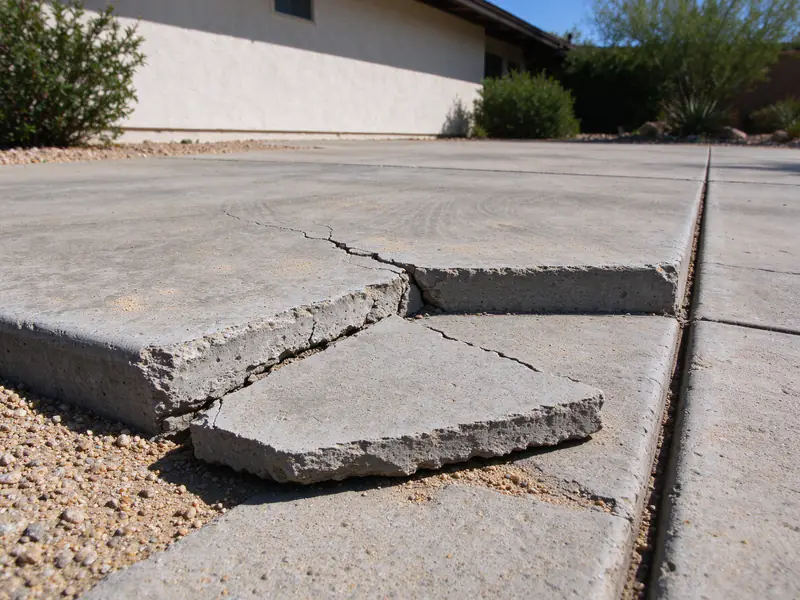
Edges and corners have support on fewer sides, so they break first when the base under them softens or washes out. A monsoon storm that runs water along the edge of a drive, or a sprinkler line that keeps the soil wet, removes fines from the base until the edge rides on air. Heavy loads such as a delivery truck finish the job. Patching the edge without dealing with that water source puts the new concrete on the same soft ground.
Settled panels and failed joints
A panel that dropped has lost support beneath it: base that was never compacted well, soil washed out by water, or clay that shrank. If it is still in one piece, driveway leveling can raise it. Failed joints, where the filler has rotted or pulled out, let water and grit into the joint, which can break the panel edges as they expand in the heat. Expansion joint repair replaces that filler with a flexible sealant.
How the repair is matched to the damage
Each method answers a specific failure, and the base decides which one is worth doing:
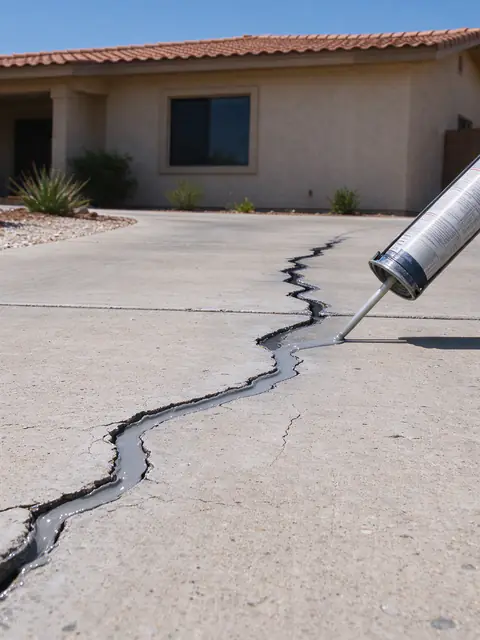
Clean, fill and seal. A dormant crack is cleaned out and filled with a flexible sealant that keeps water out of the base. This is maintenance, and it is the cheapest repair that works.
Partial-depth patch. For spalls, popouts and broken joint edges, the unsound concrete is saw-cut and chipped back to sound material, then filled with a concrete patching compound chosen for the depth: thin bonded mortars for shallow areas, and a coarser repair concrete for deeper ones.
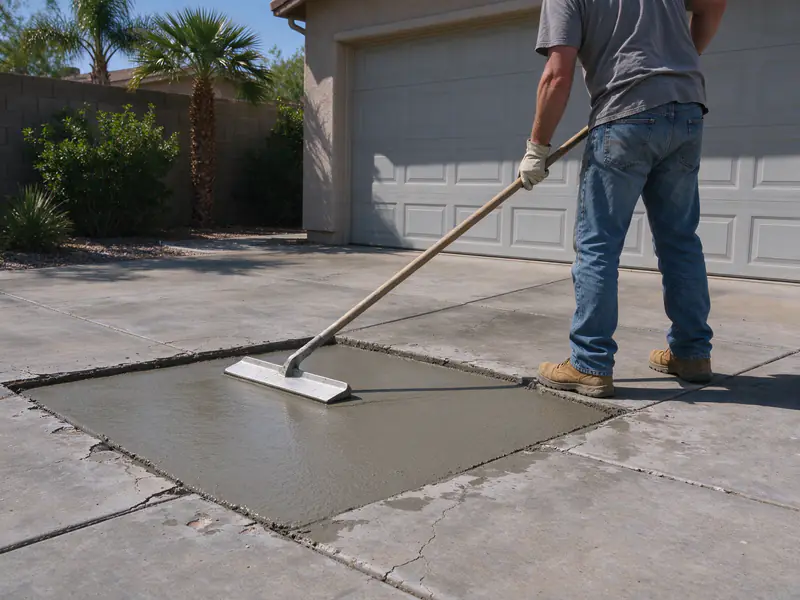
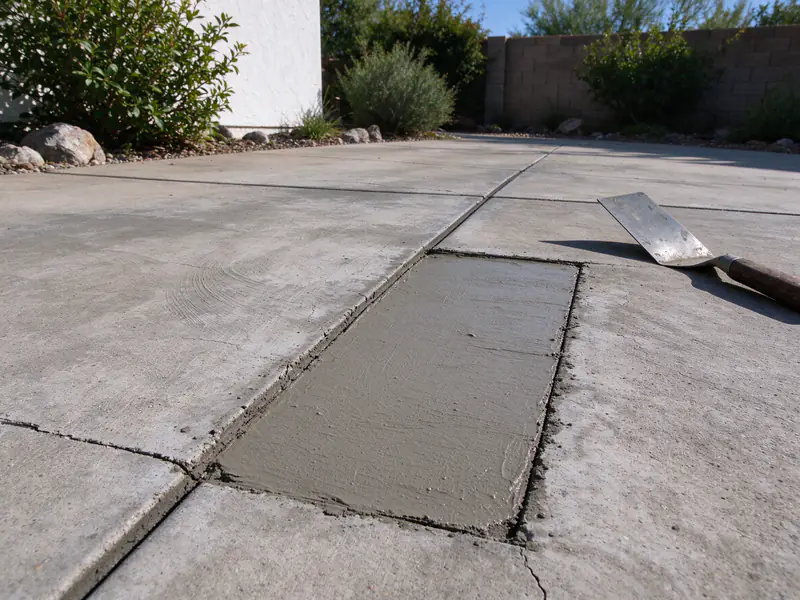
Section replacement. A broken or sunken panel is saw-cut at its joints, broken out and hauled away. The base is repaired and compacted, and new concrete is placed and finished to match the slope of the panels around it.
Lifting. A sound panel that settled is raised with cement slurry or polyurethane foam pumped through small drilled holes. Lifting restores height; it doesn’t mend a broken panel.
Resurfacing. A thin bonded overlay renews a worn surface on a slab that is level and solid. Driveway resurfacing explains its limits: cracks and settlement underneath come back through.
When cracking runs across most panels or the base has failed throughout, piecemeal repair stops being good value and driveway replacement is the honest answer. The repair vs replacement guide sets out where that line usually falls, and the driveway repair cost guide breaks down what each option costs in the Phoenix area.
Phoenix standards where the driveway meets the street
The part of the driveway between the sidewalk and the street belongs to the public right-of-way, and repairs there follow City rules rather than personal preference. Under the City of Phoenix Driveway Policy for Single Family Development, residential driveway concrete in the right-of-way is 6 inches thick, Class A. On streets with roll or ribbon curb, up to 10.5 feet of concrete drive in the right-of-way counts as part of the on-site work and needs no separate driveway permit; a longer run does. Beyond that 10.5 feet, materials other than concrete or finishes other than broom need a maintenance agreement with Street Transportation, which matters if you want a stamped or colored apron. Where a sidewalk crosses the drive, Phoenix requires an accessible walkway with a cross slope no steeper than 50:1. The Phoenix driveway permit guide and the driveway apron repair page cover that edge in more detail.
Each suburb sets its own rules for that strip. Mesa, for instance, issues right-of-way permits only to contractors licensed by the Arizona Registrar of Contractors and uses its own driveway details, as the Mesa service-area page explains.
Heat also shapes the schedule. Hot-weather practice from the American Concrete Institute (ACI 305.1) caps concrete at 95°F at discharge for general work, and normal July highs at Sky Harbor reach 106.5°F, so summer pours are planned for the cooler part of the day and kept damp while they cure. The guide to how heat affects driveways in Phoenix explains why.
Color, texture and what a repair can’t promise
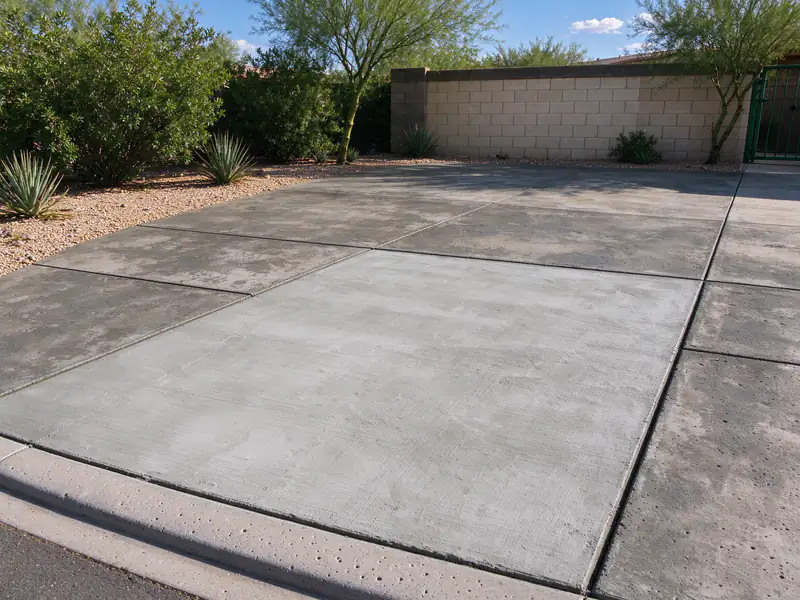
New concrete is lighter than old concrete, and no mix or sealer makes a fresh patch disappear into a weathered slab. The difference narrows over time. Replacing whole panels from joint to joint, rather than patching a ragged hole, makes the repair look deliberate. Stamped and exposed-aggregate finishes can be matched in pattern and texture more closely than in color. If an even look matters more than cost, replacing a larger area, or the full drive, is the more reliable way to get it.
Insurance, tax and payment notes
Whether homeowners insurance pays for driveway damage depends on the policy and on what caused the damage, and that decision belongs to the insurer. Nothing in an estimate means a claim will be accepted. The driveway insurance guide explains the questions to ask. On tax, the Arizona Department of Revenue treats repair and replacement work as maintenance, repair, replacement or alteration contracting: the contractor usually pays tax on materials when buying them, so it is built into the price rather than added as a line on your invoice. That is general information, not tax advice. To budget before a visit, the cost estimator works from the same published ranges shown here, and you can ask for an estimate when you are ready.
VIIVIVIVIIIIII
02
What's included
A look at the whole slab, its joints, edges and drainage before a method is chosen
A measured repair area and a named repair method in the estimate
Saw-cutting at joints so a replaced section has clean, square edges
Breakout and haul-off of the concrete that is removed
Base repair and compaction under any section that is replaced
Sealing open joints next to the repair where they need it
The city right-of-way permit when the work reaches the apron, sidewalk or curb
VIIVIVIVIIIIII
03
Concrete driveway repairs compared
Concrete driveway repairs compared: what each fixes, what it leaves, and a budgeting range
Repair
Best for
Won't fix
Budgeting range
Clean, fill and seal a crack
Narrow cracks with level edges on a sound base
A slab that is still moving or has dropped
$0.50 to $5 per linear ft (typical Phoenix area), plus a minimum charge on small jobs
Partial-depth patch
Spalls, popouts and broken joint edges in the top inch or two
Cracks through the full slab or a failed base
Priced per job after measuring
Lift the panel
A sound panel that settled in one piece
Broken panels, or soil that keeps washing out
Mudjacking $4 to $10 per sq ft (typical Phoenix area); foam $8 to $25 per sq ft (national)
Replace a section
Broken or sunken panels, rebuilt on new base
Color match with the older panels next to it
$10 to $15 per sq ft (typical Phoenix area)
Resurface
A worn, scaled or stained surface on a level, solid slab
Settlement, active cracks or a failed base
$5 to $10 per sq ft (typical Phoenix area)
Replace the driveway
Cracking across most panels or a base that failed throughout
Nothing structural; it is the full rebuild
$6 to $11 per sq ft new pour, plus $1.20 to $1.90 per sq ft removal (typical Phoenix area)
04
Related resources
Guides that go deeper on concrete repair decisions in the Valley.
Why the freeze-thaw explanation found in typical driveway advice rarely fits the Valley, the finishing, curing, steel and joint problems that do, and how the depth of the damage sets the repair.
The physics of a slab that grows and shrinks every day, why heat does its worst damage to concrete in the first hours, how asphalt binder softens and ages under Valley sun, and what owners can do through a long summer.
Typical Phoenix-area and national budgeting ranges for each kind of driveway repair, what is inside the price, the City permit fees, and worked example budgets.
The signs that point to a repair, the ones that point to a new driveway, the middle option of replacing sections, and the Phoenix soil, water and right-of-way rules that tip the choice.
Coverage turns on the cause of the damage and the wording of your policy. Here is how to read the two together, and what a repair estimate can and can't do for a claim.
05
How the work runs
First call or estimate request
Describe the surface, what changed and roughly where the property is. Photos of the damage and the street edge help. The published ranges give you a budget to think about before any visit.
A look at the whole driveway
The visit looks at more than the damaged spot: the slab or asphalt, the joints and edges, where water runs, and the transitions at the garage, sidewalk and street. The damaged area is measured, and anything found that changes the scope, such as soft base or caliche, is explained in the estimate.
Work timed for the heat
Hot-weather practice from the American Concrete Institute caps concrete at 95°F at discharge for general work, so summer pours are planned for the cooler part of the day. Where the job crosses into the street right-of-way, the city's permit is part of the scope.
Cure and handover
How long the car stays off depends on the material and the temperature. That wait is set out before the work starts, so you can plan around it.
VIIVIVIVIIIIII
06
What this work looks like
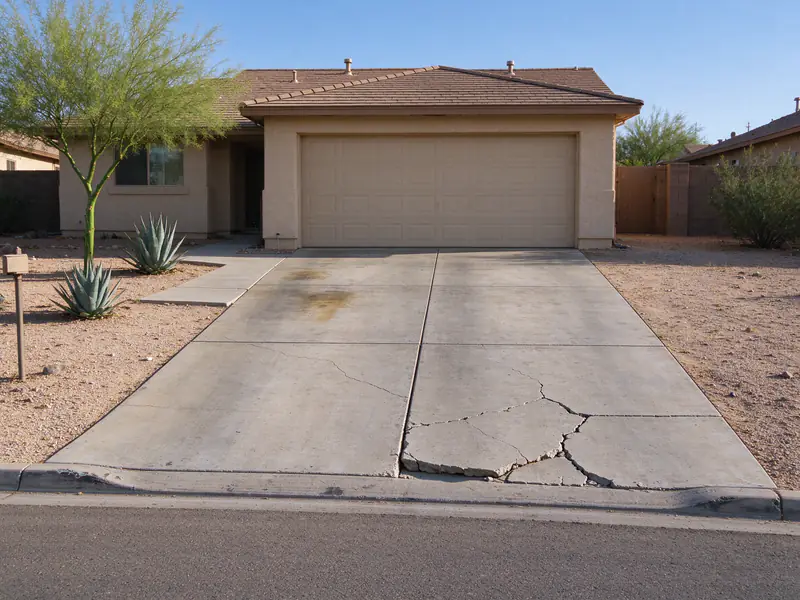
Cracked corner of a concrete driveway panel in Phoenix that has settled below the rest of the slab
Fresh concrete being bull floated in a replacement driveway panel in Phoenix
New broom-finished concrete panel set between older driveway panels in Phoenix, lighter in color than the old concrete
Saw-cut partial-depth patch filled with gray repair mortar along a concrete driveway joint in Phoenix
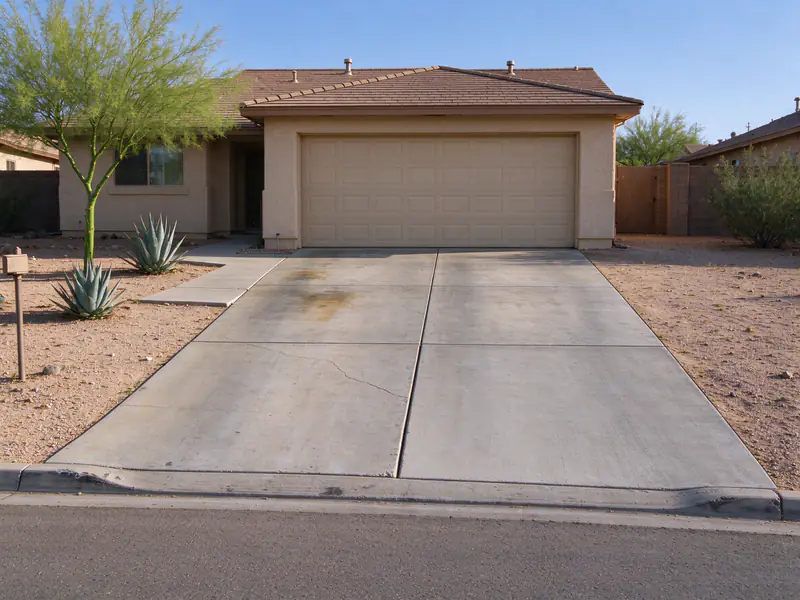
BeforeAfter
Cracked, flaking or sunken concrete? Get an Estimate.
Send a few photos and the rough size of the damaged area. The estimate names the repair, the area it covers and what it won't change.
You can, but only as a stopgap. Asphalt and concrete don't bond to each other, move differently in heat, and the joint between them opens and lets water reach the base. The patch also stays a different color and texture. Inside the Phoenix right-of-way, materials and finishes are set by City policy, so check before patching an apron with anything but concrete.
Will a repaired concrete section match the color of the old driveway?
Not exactly, and no honest estimate promises it. New concrete is lighter than a slab that has spent years in the sun, and the difference narrows slowly as it weathers. Replacing whole panels from joint to joint makes the new section look deliberate rather than patched, and a sealer can even out the sheen, though not the color underneath.
Why is my concrete driveway flaking or pitting?
In Phoenix it is rarely frost. Flaking usually starts with a weak top layer from finishing or curing: water worked into the surface, finishing while bleed water was still present, or a slab that dried too fast in the heat. Pitting can also be popouts from soft aggregate. If the slab under the surface is sound, resurfacing or a partial-depth patch can deal with it.
What does rust bleeding from a driveway crack mean?
It usually means water is reaching the steel reinforcement through the crack and the steel is corroding. Rust takes up more room than the steel it replaces, so it can push off the concrete above it. The repair removes the unsound concrete, deals with the exposed steel and patches or replaces the section, and the crack itself is sealed so water stops getting in.
What should I have ready before asking for a concrete repair estimate?
A wide photo of the whole driveway and close photos of the damage, rough dimensions if you have them, when you first noticed it and whether it has changed, where roof and irrigation water goes, and any HOA rules for driveway finishes. Note whether the damage reaches the apron, sidewalk or curb, since that decides whether a city permit is involved.