111days a year reach 100°F or more at Sky HarborNOAA climate normals
0.6nights a year drop to freezing at Sky Harbor, so heat and water, not frost, drive most damageNOAA
June 15 to September 30 is monsoon seasonNational Weather Service
Phoenix treats up to 10.5 ft of concrete drive past a roll curb as on-site work, with no separate driveway permit
Concrete for a residential driveway in the Phoenix right-of-way is 6-inch Class A
Last Updated:
Stamped concrete repair starts with one question: is the damage in the sealer on top, or in the concrete itself? A stamped driveway that looks ruined can have a sealer problem that cleaning and resealing fixes, while a cracked or sunken panel needs concrete work and an honest talk about matching. Sundial Driveway Repair is a service company offering and managing stamped concrete repair across Phoenix and its suburbs, including exposed-aggregate driveways, for homes and commercial properties, with the work fulfilled by licensed and insured contractors.
Stamped concrete is ordinary concrete with a decorative top. Color goes in as integral color mixed through the batch or as a color hardener broadcast onto the fresh surface. A release agent, often a contrasting powder, keeps the texture mats from sticking and leaves the antiqued look in the low spots. The mats press a pattern such as ashlar slate, cobblestone or wood plank into the surface, and a sealer, usually acrylic, protects the color and gives it depth. Each of those layers can fail on its own, and each one fails differently.
What happens on the first visit
The first visit looks at the whole drive: surface, joints, edges, where water runs, and the garage, sidewalk and street transitions. On a decorative drive it also records the pattern, the color system and the sealer, because a repair has to follow all three. Cracks are checked for width, offset and whether they cross panels, and hollow spots are found by tapping. Water dropped on worn areas shows whether the sealer still sheds it, and a whitened or peeling patch is checked to see whether the problem sits in the sealer film or the concrete below.
The estimate names the method, the area, any right-of-way portion and what it excludes. On stamped work the exclusions matter more than usual: color match, texture match and pattern match are each stated separately.
Sealer failure or slab failure
When the sealer is the problem
Whitening, cloudiness, blotchy haze and peeling sheets are sealer failures. Acrylic sealer that went on too thick, over a damp slab, or in direct heat can trap moisture under the film, which shows as white blush. Sun breaks the film down over time, leaving the color looking dry and chalky. At Phoenix Sky Harbor, 111 days a year reach 100°F or more (NOAA climate normals), so drives in full sun wear their sealer faster than shaded ones, and the guide to how heat affects driveways explains the heat side. These are surface problems. Stripping the failed film, or reactivating it with a solvent where the sealer allows, and resealing in cooler hours usually restores the look without touching the concrete.
When the concrete is the problem
Cracks, flaking and settled panels are concrete failures, and a fresh coat of sealer won’t fix them. Stamped concrete cracks for the same reasons as any slab: shrinkage, soil movement and lost support. Its control joints are often hidden along grout lines in the pattern, and a crack that wanders away from them is visible. Flaking on stamped surfaces often traces to finishing: color hardener worked in while bleed water was on the surface, or release agent and texture worked too hard, leaving a weak top layer that later sheds. Phoenix sees 0.6 freezing nights a year at Sky Harbor (NOAA), so frost is rarely the cause here. The guide to what causes driveway spalling covers surface loss in more detail. A panel that has dropped is a support problem, and concrete driveway repair covers lifting and replacement.
How each repair works
Cleaning and resealing. The drive is washed, oil and tire marks are treated, and a new sealer coat goes on thin and even. A tinted sealer can even out color that has faded unevenly, as long as the concrete is sound. An anti-slip additive in the final coat helps on sloped drives.
Color restoration. Where color has faded from the concrete itself, a penetrating stain or a tinted sealer can bring it back toward the original. The result depends on the old color system, and it is judged on a small area before the whole drive is treated.
Crack repair. A dormant crack is cleaned and sealed with a flexible sealant in a gray or tinted shade. Where the crack runs near a grout line, it can be worked into the line so it reads as part of the pattern. A crack that keeps moving gets the same treatment as on plain concrete; driveway crack repair explains why the cause comes first.
Section replacement. A failed panel is saw-cut out along joints or grout lines, the base is repaired, and new concrete is placed, colored and stamped with the closest available mat. The release color and sealer are then blended into the old surface.
What a repair can and can’t match
Pattern is the easiest to follow, when the same or a close texture mat is still available. Texture comes close, though hand-tooled edges along the old concrete always show some difference. Color is the hardest. New concrete starts lighter and weathers at its own pace, a different batch of color hardener varies, and the old drive has years of sun on it. A tinted sealer over both old and new narrows the gap but does not remove it. Replacing whole panels from joint to joint, rather than patching inside a panel, makes the difference look planned. If an even look matters more than cost, driveway resurfacing with a decorative overlay or a larger replacement are the options to weigh.
Where a stamped drive reaches the street, the City of Phoenix Driveway Policy sets the rules for the right-of-way. Beyond the first 10.5 feet of concrete drive past a roll or ribbon curb, finishes other than broom need a maintenance agreement with Street Transportation, which matters if you want to rebuild a stamped apron as it was. The driveway apron repair page covers that edge, and HOA rules may also set colors and finishes for the drive.
Cost and payment notes
No single per-foot price fits decorative repair, so it is priced after measuring. Resealing is priced by area and moves with cleaning, stripping and the number of coats. Crack sealing is priced by length. Section replacement costs more than a plain broom-finish section because of the color, release agent, stamping and blending work on top of the breakout, base repair and new concrete. A sealer refresh is also something buyers notice, and the guide to repairing a driveway before selling weighs that choice. Sealing an ordinary concrete or paver drive is covered on the driveway sealing page. Whether insurance pays depends on the policy and the cause. When you’re ready, ask for an estimate.
VIIVIVIVIIIIII
02
What's included
A look at the whole drive and a test of whether the problem is in the sealer or the concrete
Identifying the pattern, texture and color system so a repair can follow it
Cleaning, and stripping failed sealer where it has whitened or peeled
Resealing, with a tinted sealer where color has faded unevenly
Crack sealing in a gray or tinted sealant, worked into the grout lines where possible
Section replacement re-stamped with the closest available pattern mat, when a panel has failed
A written note of what the repair won't match: color, texture or pattern
VIIVIVIVIIIIII
03
Stamped concrete repairs compared
Stamped concrete repairs compared: what each fixes, what it leaves, and how it is priced
Repair
Best for
Won't fix
How it's priced
Clean and reseal
Dull, faded or worn sealer on a sound slab
Cracks, flaking concrete or settlement
By the square foot after measuring
Strip and reseal
Sealer that has turned white, cloudy or is peeling
Color lost from the concrete itself
By the square foot; stripping adds to the price
Tinted sealer or stain
Uneven or sun-faded color on a sound surface
A different pattern, or texture damage
By the square foot
Seal cracks along the pattern
Dormant cracks, ideally in or near the grout lines
A slab that is still moving
By the linear foot, with a minimum charge
Replace and re-stamp a section
A broken, sunken or badly flaking panel
An exact color or pattern match with the old concrete
Per job; costs more than a plain broom-finish section
04
Related resources
Guides that go deeper on stamped concrete repair decisions in the Valley.
Why the freeze-thaw explanation found in typical driveway advice rarely fits the Valley, the finishing, curing, steel and joint problems that do, and how the depth of the damage sets the repair.
The physics of a slab that grows and shrinks every day, why heat does its worst damage to concrete in the first hours, how asphalt binder softens and ages under Valley sun, and what owners can do through a long summer.
A way to sort driveway problems into the ones worth fixing before a sale, the ones to document, and the ones to leave, without guessing at what a buyer will pay.
05
How the work runs
First call or estimate request
Describe the surface, what changed and roughly where the property is. Photos of the damage and the street edge help. The published ranges give you a budget to think about before any visit.
A look at the whole driveway
The visit looks at more than the damaged spot: the slab or asphalt, the joints and edges, where water runs, and the transitions at the garage, sidewalk and street. The damaged area is measured, and anything found that changes the scope, such as soft base or caliche, is explained in the estimate.
Work timed for the heat
Hot-weather practice from the American Concrete Institute caps concrete at 95°F at discharge for general work, so summer pours are planned for the cooler part of the day. Where the job crosses into the street right-of-way, the city's permit is part of the scope.
Cure and handover
How long the car stays off depends on the material and the temperature. That wait is set out before the work starts, so you can plan around it.
VIIVIVIVIIIIII
06
What this work looks like
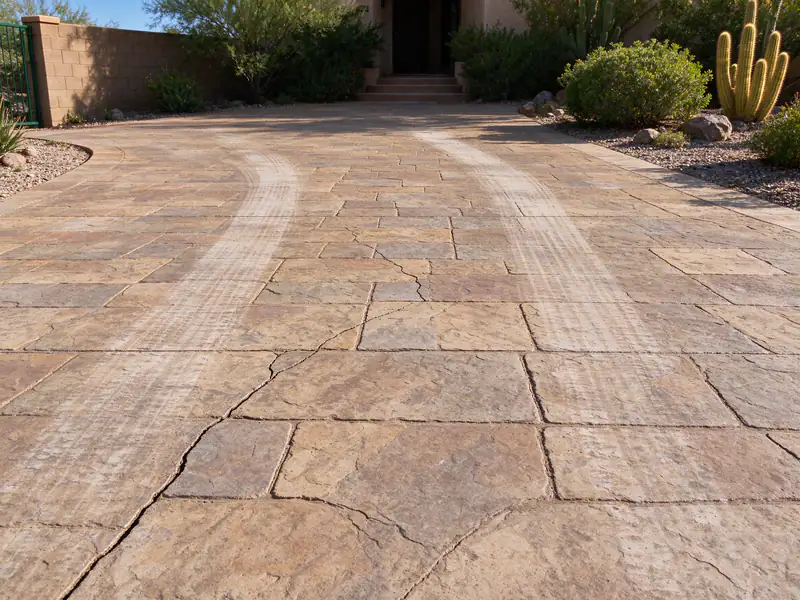
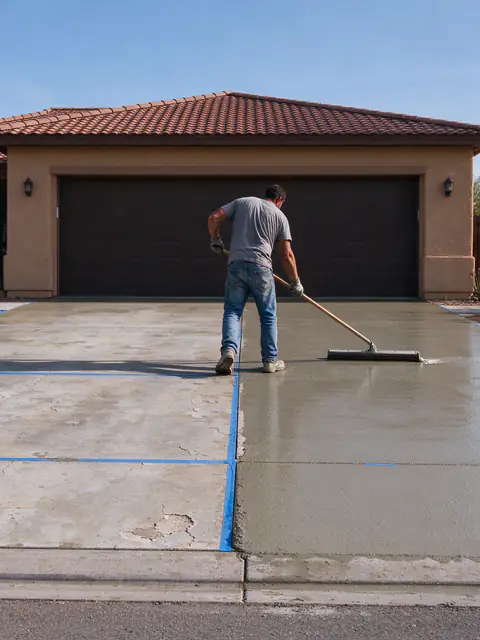
Cracked, faded ashlar-pattern stamped concrete driveway in Scottsdale
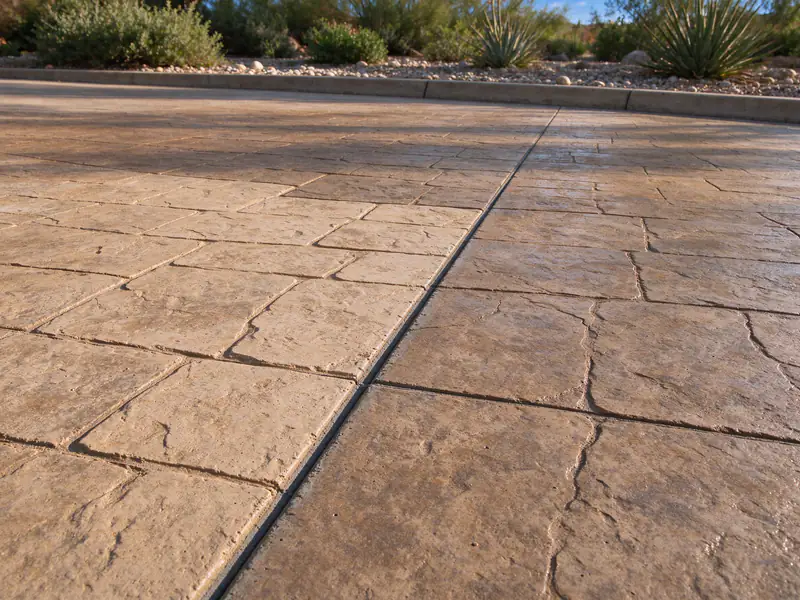
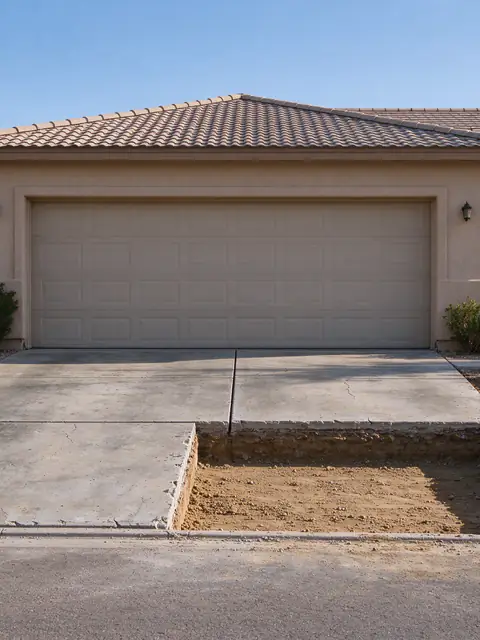
New stamped concrete section next to the original in Scottsdale, slightly different in shade
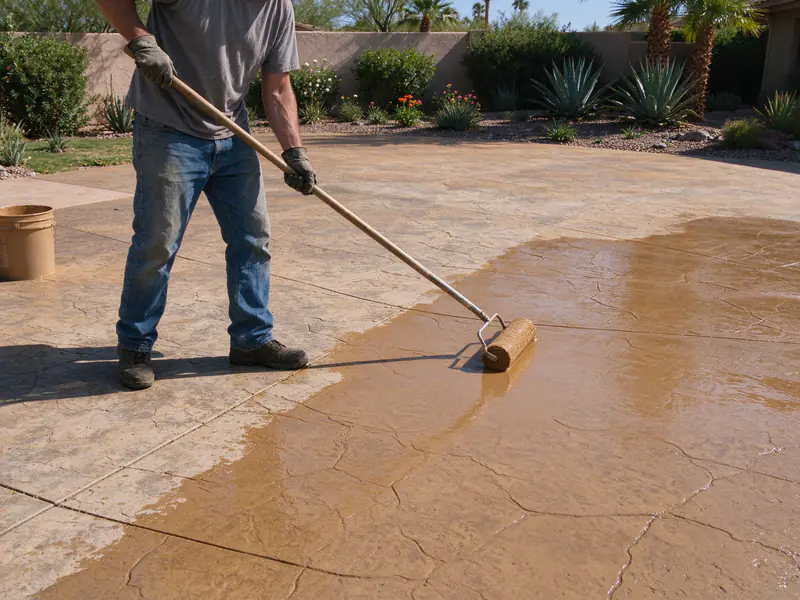
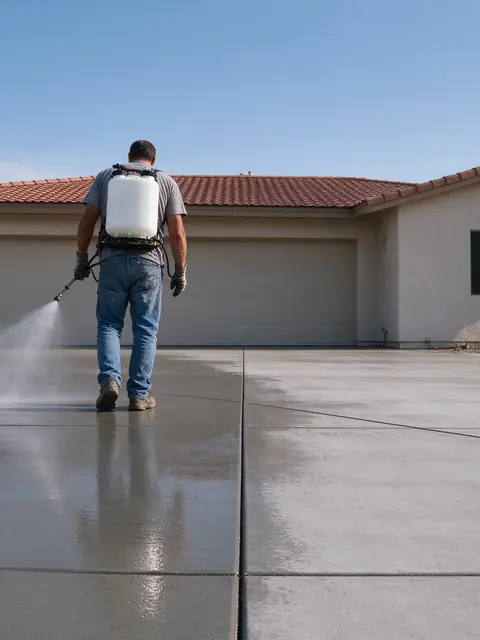
Tinted sealer being rolled onto a faded stamped driveway in Scottsdale
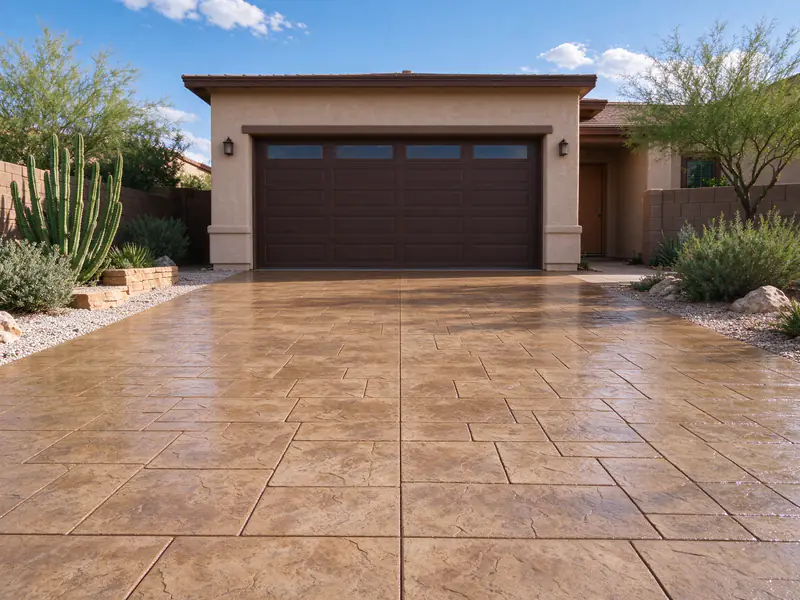
Resealed stamped concrete driveway in Scottsdale with even color
Faded, cracked or flaking stamped concrete? Get an Estimate.
Send a wide photo, close photos of the damage and a note of the pattern. The estimate says whether the problem is the sealer or the slab and what a repair can match.
Why has my stamped concrete driveway turned white or cloudy?
White haze on stamped concrete points to the sealer first. Acrylic sealers can trap moisture when they are applied too thick, over a damp slab or in high heat, and the trapped moisture shows as white haze or blotches. Sealer also breaks down in strong sun. Stripping or reactivating the sealer and resealing in the right conditions often clears it, White powder that brushes off can instead be efflorescence, salts carried up by moisture, which is cleaned rather than stripped. Either way the sealer is tested before anyone talks about replacing concrete.
Can a cracked section of stamped concrete be matched?
Closely, but not exactly. A new section can follow the same pattern if a matching texture mat is available, and the color can be brought near with color hardener, stain and a tinted sealer. New concrete still weathers differently from old, and patterns are sometimes discontinued. Replacing the whole panel between joints or grout lines makes the difference look planned rather than patched.
How often does a stamped concrete driveway need resealing?
It depends on the sealer, the sun, and the traffic, so the surface is the guide rather than the calendar. When water stops beading, the color looks dry and chalky, or tire marks wear through in the wheel paths, the sealer has worn thin. Resealing before it wears away completely is easier than stripping and restoring faded color later.
Is a sealed stamped driveway slippery?
A glossy film-forming sealer on smooth stamped texture can be slick when wet, especially on a sloped drive. An anti-slip additive mixed into the final coat adds grit to the surface, and a lower-gloss sealer helps too. If an existing drive is slippery, that can be addressed when it is next resealed.
Can loose stones in an exposed aggregate driveway be repaired?
Where only a few stones have popped out, the sockets can be cleaned and filled with a matching stone set in an epoxy or repair mortar, and a sealer helps bind the surface. Where the cement paste around the stones has eroded across a large area, the surface is losing its grip on the aggregate, and resurfacing or replacing that section is the more lasting choice.