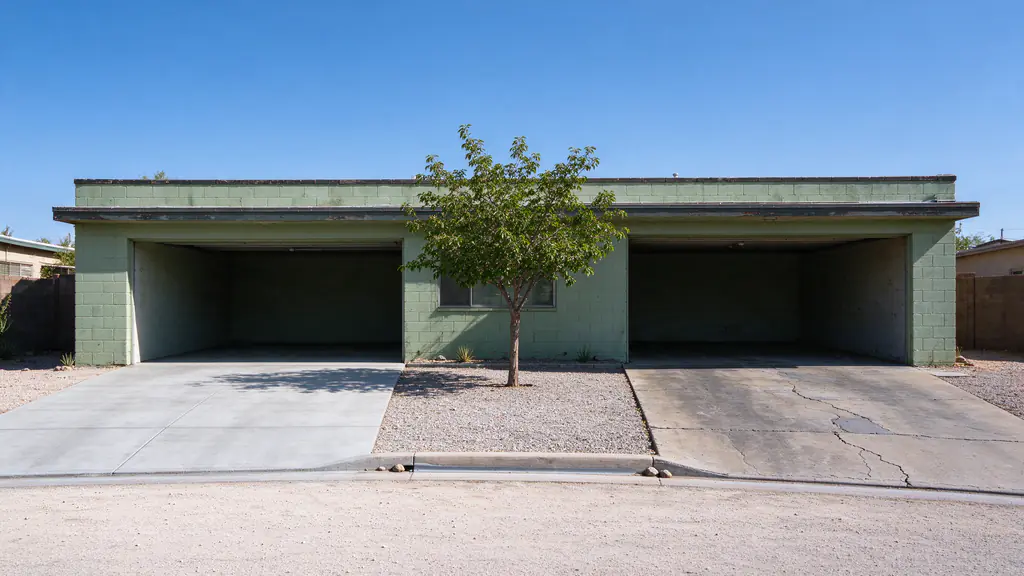
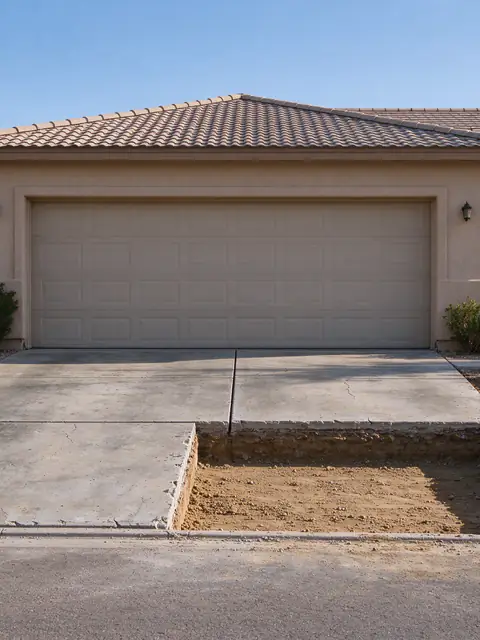
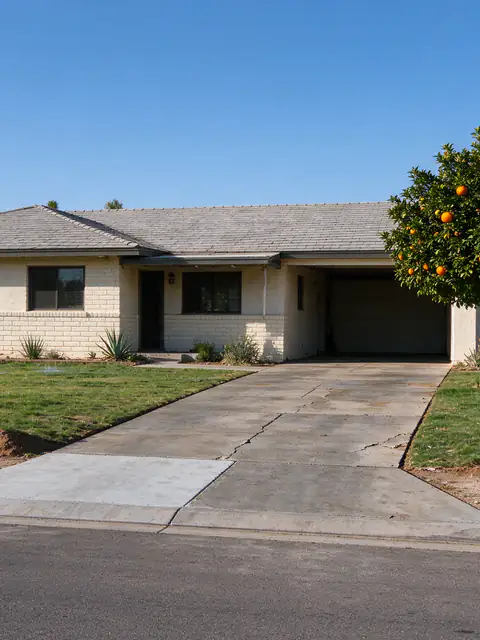
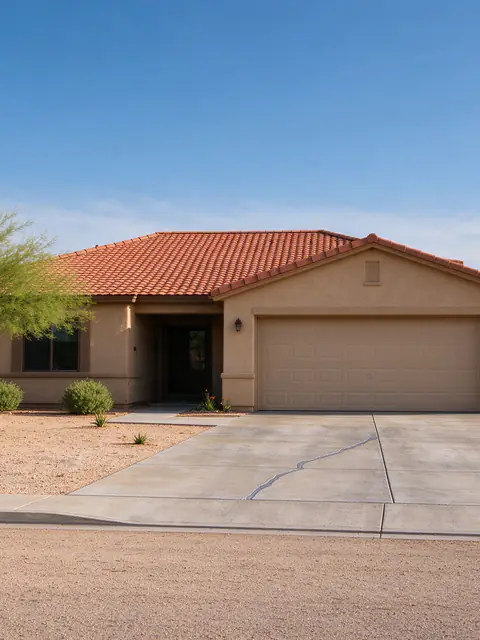
Where a duplex or a pair of attached units has two driveways, one can fail while the other holds up. Replacing the failed side at the joint is a normal repair, but the shared edge has to come back at the same height, and new concrete won't match the color of the old slab beside it.
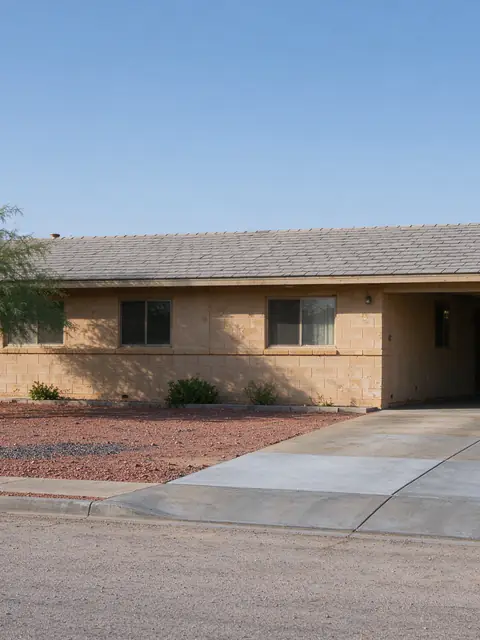
An old slab with spread joints and worn surface
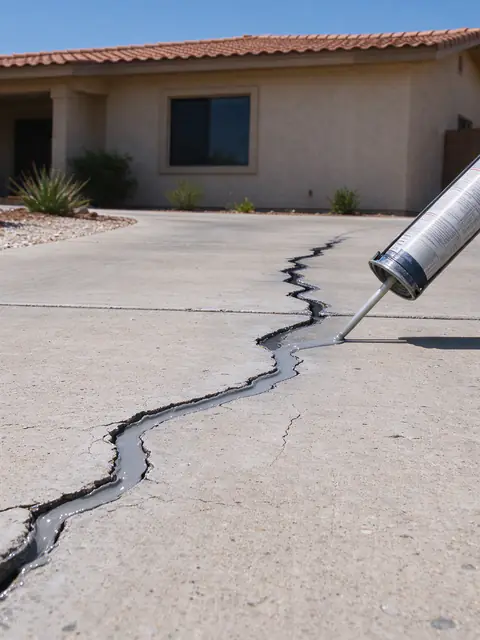
Where a Tempe house predates 1980, as 41.2% of the city's housing does, and keeps its first driveway, that slab has carried cars for decades. Where joints have opened, edges have crumbled and the surface has worn, the choice is between targeted repair, resurfacing a slab that is still level and sound, and replacing sections whose base has given way.
Driveway work that reaches the street
Tempe's permit records include Engineering paving permits described as a paving permit for a driveway at residential addresses. Which driveway jobs need one, and what the City requires at the curb, is confirmed with City of Tempe Engineering for the address, and the permit becomes part of the scope when it applies.
A storefront or small lot entrance
Commercial frontages and small parking lots carry more weight and turning traffic than a house drive, and accessible parking spaces and aisles follow the federal ADA Standards. A broken entrance apron or a failing strip of asphalt on a commercial lot is scoped differently from a residential drive, with traffic and access planned around the business.
When one half of a duplex driveway has sunk and cracked while the other half still sits level, the repair has to stop at the shared joint and meet the sound side at exactly the same height. That kind of job fits a city where only 38.1% of housing units are single-family detached, in Census Bureau figures, and driveway repair in Tempe, AZ, can mean shared lots, small rentals and storefront entrances as much as single-house drives. Sundial Driveway Repair is a service company offering and managing driveway repair in Tempe and across the Phoenix area, for homes and commercial properties, and licensed and insured contractors fulfill the work.
Working through a Tempe driveway, start to finish
Photos and a short description come first, with a note on whether the property is a house, a multi-unit lot or a business. At the visit, the whole drive is looked at, along with any drive it shares a joint with: surface, joints, edges, where water from roofs and sprinklers runs, and how the concrete meets the garage or carport, the sidewalk and the street. Each crack is checked for width and offset and for whether it carries across panels. Tapping finds hollow spots, and a section is sometimes cut out to see the base. Anything that changes the scope, such as soft base under a panel, is explained.
The estimate names the method, the area, any right-of-way portion and what it excludes, such as a color match with the older slab next door. Cracks in sound concrete go to driveway crack repair. A worn surface on a level slab may suit driveway resurfacing, and broken or sunken panels go to concrete driveway repair. Where the work reaches the street, Tempe’s Engineering paving permit becomes part of the scope once the City confirms it applies to the job. Any contractor working under a permit must hold an Arizona Registrar of Contractors license, and the license lookup guide shows how to check one.
Summer pours are planned for the cooler hours and kept damp while curing, and the cure wait is set out before work starts, which matters on a shared lot where everyone who parks there needs to know when they can use it again.
Dense blocks, Laveen clay loams and Tempe’s paving permits
Tempe is old and compact by Valley standards. Census figures count 86,182 housing units with a median year built of 1984; 41.2% were built before 1980 and 25.1% in 2000 or later. Where a property still has its original concrete, it has had decades of heat, irrigation and parked weight, and the decision can be between fixing what failed and replacing what is worn out across the board. Age sets context only; whether a given slab is near the end of its life is what the visit checks, and the repair vs replacement guide lays out the signs.
The ground is clay loam on flat land. USDA soil survey samples across the city are dominated by Laveen loam, Laveen clay loam and Avondale clay loam on 0 to 1 percent slopes, with moderate shrink-swell at 61.4% of points and high at 3.5%. NRCS rates most of those points only somewhat limited for local roads, and no cemented layers turned up in the samples. In practice that points away from caliche and toward support: clay that swells when wet and shrinks as it dries works joints open and lets panels settle where water collects. Cold is a small factor. NOAA’s Tempe ASU station averages 9.7 nights a year at or below freezing, brief overnight lows that thaw by midday.
Tempe’s open permit data show the City handles driveway work at the street through Engineering paving permits, described in the records as a paving permit for a driveway. Over a two-year window, 18 permits carried driveway in the description, 7 of them on residentially zoned parcels, out of 116 paving permits in all. Those counts describe the City’s paperwork, not how many driveways need repair, and the City’s right-of-way rule pages weren’t available to check, so curb and apron requirements are confirmed with City of Tempe Engineering per address. Who maintains the sidewalk at a Tempe drive is also confirmed per address.
Choosing between a new section and a new drive
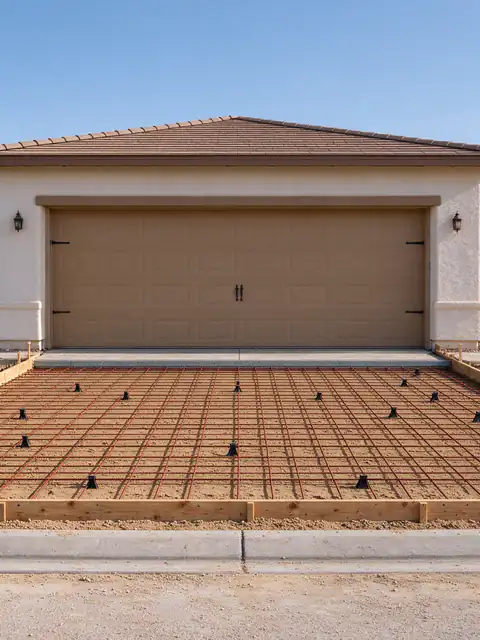
On older Tempe concrete, the useful question is how much of the slab still has a sound base. Where one or two panels have failed, replacing just those sections keeps cost down, as long as the new concrete meets the old at the same height. Where cracking runs across most panels, driveway replacement on a corrected base is the repair that lasts, and the resurfacing vs replacement guide explains why an overlay can’t stand in for it. Asphalt drives and lots follow their own methods through asphalt driveway repair, and the asphalt vs concrete guide compares the two. For business owners and landlords, commercial driveway repair and parking lot repair cover entrances, traffic and accessible spaces, and the driveway repair cost guide gives the budget ranges. Neighboring pages for Mesa, Arcadia and Camelback East and Chandler cover how those areas handle the same work.
Older drive or duplex driveway in Tempe? Get an Estimate.
Send photos of each driveway, the joints between them and the street edge. Say whether the property is a house, a duplex or a commercial lot; that sets the scope and whether a Tempe paving permit is involved.
The shaded disc marks the general service area around the area’s center, not an office or job site. Open Tempe, AZ in Google Maps
VIIVIVIVIIIIII
05
Tempe driveway questions
Does Tempe require a permit for driveway work at the street?
It can. Tempe's open permit data include Engineering paving permits described as a paving permit for a driveway, and 18 permits with driveway in the description were issued over a two-year window, 7 of them on residentially zoned parcels. The City's right-of-way rule pages weren't available to check, so the requirement for a given job is confirmed with City of Tempe Engineering.
What does it cost to replace one section of a Tempe driveway?
The typical Phoenix-area range is about $10 to $15 per square foot to break out, haul off and repour a damaged concrete section, and very small sections often price as a minimum job. If the slab is sound and only cracked, sealing runs about $0.50 to $5 per linear foot, and resurfacing a level, solid slab about $5 to $10 per square foot. No Tempe-specific range is published.
Can one side of a duplex driveway be replaced without the other?
Yes, as long as the two drives are separated by a joint and the base under the sound side is in good shape. The failed side is cut at the joint, the base is corrected and new concrete is placed to meet the neighbor at the same height. Expect a visible color difference; partial repairs are never promised to match older concrete.
What kind of soil sits under Tempe driveways?
Mostly clay loams. USDA soil samples across Tempe are dominated by Laveen loam, Laveen clay loam and Avondale clay loam, with moderate shrink-swell at 61.4% of points and high at 3.5%. No cemented layers such as caliche turned up in the samples. That points to base support and joint movement as the things to check, rather than hard digging, though a soil map can't describe one lot.
Should an older Tempe rental driveway be resurfaced or replaced?
Resurface only if the slab is level and solid and the damage is limited to the surface, such as scaling or worn texture. A bonded overlay doesn't fix settled panels, a failed base or active cracks, which come back through it. If panels have dropped or cracking runs across several of them, replacing those sections costs more up front but solves the problem the overlay would hide.
The signs that point to a repair, the ones that point to a new driveway, the middle option of replacing sections, and the Phoenix soil, water and right-of-way rules that tip the choice.
What resurfacing actually is on concrete and on asphalt, the condition it needs underneath, how it compares on price with a rebuild, and the height and drainage questions an overlay raises.
How a rigid slab and a flexible pavement each respond to Valley heat, storms and soils, what each needs to stay sound, how they are repaired, and the City rules that apply at the street.
Typical Phoenix-area and national budgeting ranges for each kind of driveway repair, what is inside the price, the City permit fees, and worked example budgets.
Which license classes fit each kind of driveway work, when the small-job exemption applies and when it doesn't, and what to check besides the license itself.