Driveway situations that come up in Central Phoenix
A sidewalk notice at a rental
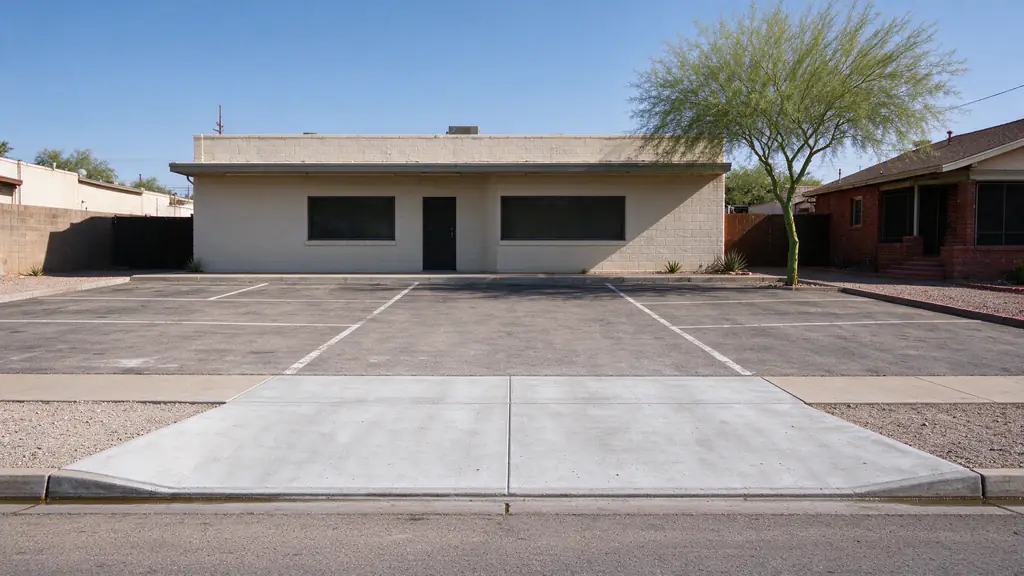
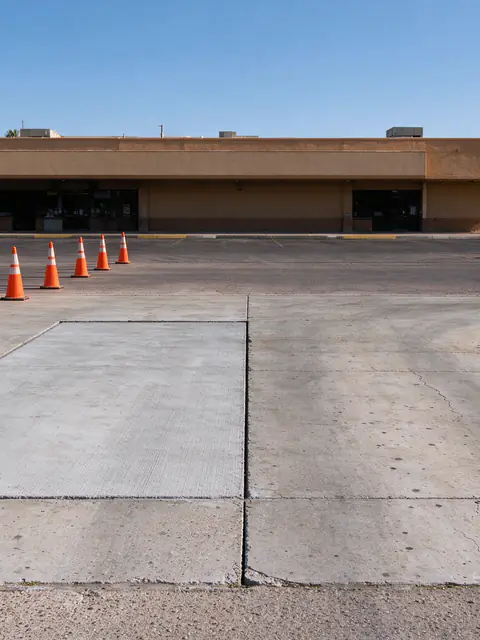
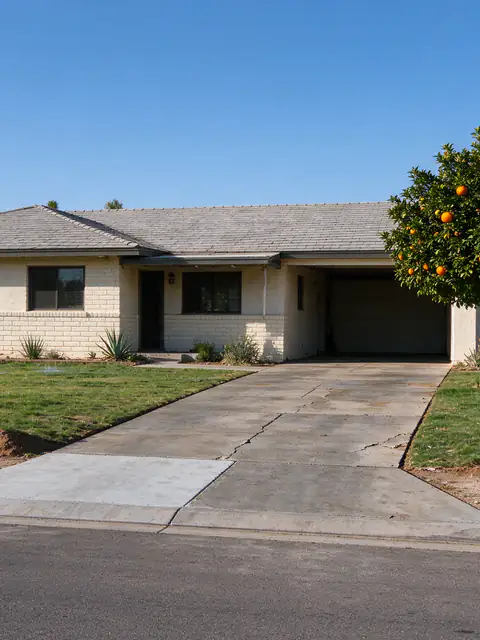
Phoenix City Code puts sidewalk repair on the owner of the abutting lot. If Street Transportation sends a notice and the owner doesn't act, the City can do the work and charge it as a lien. A raised panel at the driveway crossing can sometimes be ground level; a broken or sunken one is replaced under a City permit.
A curb cut nobody uses anymore
When a lot changes use and an old driveway goes dead, Phoenix's parking guideline says the unused driveway is replaced with curb, gutter and sidewalk to City standards. Closing a curb cut is its own scope, separate from repaving the lot behind it.
A small lot that needs patching and new lines
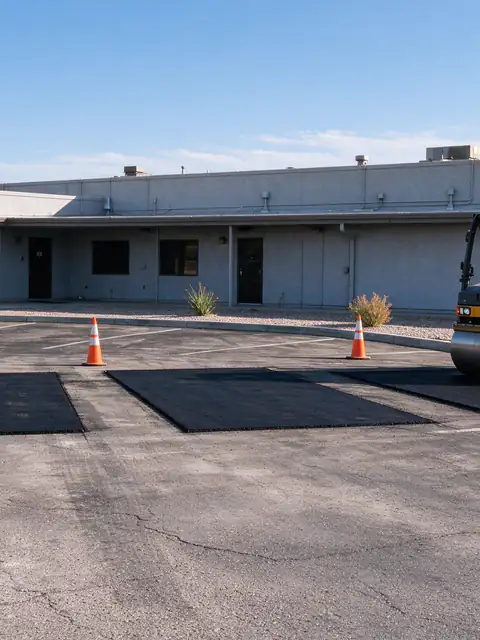
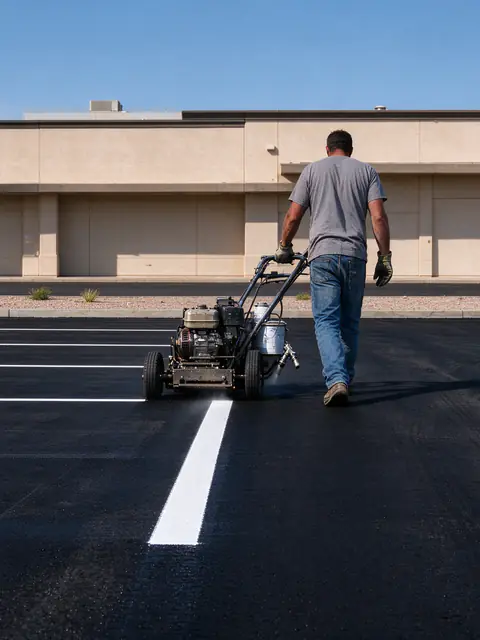
Phoenix wants parking areas on a dust-free surface, striped, with 6-inch safety curbing around parking and maneuvering areas and accessible spaces marked to the zoning ordinance. Patching and restriping have to put those back where they were, so the layout is part of the scope from the start.
An original apron on a pre-1960 house
Where a central Phoenix house dates from before 1960 and keeps its first apron, that apron may not meet today's accessibility rule: a walkway across every driveway with a cross slope no steeper than 50:1. A rebuilt apron is poured to current City standards, so the new crossing is set to that slope.
Fewer than one in four homes in Phoenix’s Central City village is owner-occupied, 23.5% by tract-level Census estimates, and just 32.2% are single-family detached. So the person weighing driveway repair in Central Phoenix is, for many homes, a landlord who doesn’t live behind the driveway, and businesses add lots of their own. Sundial Driveway Repair is a service company that offers and manages driveway, apron and lot repair across central Phoenix and the wider metro, and licensed and insured contractors fulfill each job.
Who is deciding, and what they need to know
An owner-occupant wants the drive fixed. A landlord or business owner also wants to know what the City can require and when. Phoenix City Code Section 31-54 makes the owner of a lot abutting a sidewalk responsible for its repair, and a Street Transportation notice can set the timing. A raised edge at the crossing may only need trip hazard grinding; a broken panel needs replacing under a City permit as part of apron repair. The apron responsibility guide explains where your part ends.
Commercial lots and the Phoenix parking guideline
City permit data show why this village gets its own page. The City’s current-permits map lists 54 driveway permits in Central City, the most of Phoenix’s 15 villages, along with 146 concrete-in-right-of-way permits. Those counts include development work, so they show how much happens at the curb here, not how much needs repair. For a business, the rules that shape a repair are in the parking guideline: a dust-free surface, striping, 6-inch safety curbing and accessible spaces. Plans show where stormwater goes, with catch basins and retention per the City’s storm water manual, and sites over half an acre may need a grading and drainage plan. Commercial driveway repair and parking lot repair cover the paving, and parking lot striping puts the layout back.
Old aprons, infill and clay loam
The housing is old as well as rented. About 48.3% of the village’s 28,853 units were built before 1980 and 28.9% before 1960, while 38.1% date from 2000 or later. Where an original apron survives, it may not meet Phoenix’s rule that every driveway carry an accessible walkway with a cross slope no steeper than 50:1, and a rebuilt one is poured to that standard. Where a lot changes use and a driveway goes dead, the City wants it closed with curb, gutter and sidewalk, which is curb cut work in reverse. The Phoenix driveway permit guide covers when each permit applies.
Underneath, USDA soil samples put half of Central City’s points in moderate or higher shrink-swell soils, mostly Avondale and Glenbar clay loams. The survey’s road ratings flag low strength at 30.0% of points and both shrink-swell and flooding at 21.7%, with no cemented layers. Clay with low strength and poor drainage gives a slab little support, so base condition gets a close look before a section of concrete driveway is replaced. When a property is going on the market, the repair before selling guide helps decide how much to do.
From photos to a scoped estimate
Photos and a short description come first. The visit then checks the whole drive or lot, including the joints, the edges, where water runs and the transitions to the garage, sidewalk and street. The estimate names the method, the area, the right-of-way portion and what it excludes, such as color match. The Arcadia and Camelback East and South Phoenix pages cover neighboring villages under the same City rules.
A driveway, apron or lot in Central Phoenix? Get an Estimate.
Send photos of the damage, the curb and any City notice, and say whether the property is a home, a rental or a business. That sets the scope and the permits.
What does Phoenix require when a Central City parking lot is repaved?
The City's parking guideline calls for a dust-free surface, which usually means asphalt or concrete, striped spaces, 6-inch safety curbing around parking and maneuvering areas, and accessible spaces 11 feet wide by 18 feet deep with a 5-foot access aisle, signed with the international symbol. Plans show the stormwater path, and a grading and drainage plan may be required for sites over half an acre.
What happens to an old curb cut a Central Phoenix lot no longer uses?
Under the City of Phoenix parking guideline, an existing driveway that is no longer used is replaced with curb, gutter and sidewalk built to City standards. That work is in the right-of-way, so it goes through a Planning and Development permit. It is scoped and priced separately from any repaving on the lot itself.
Can the City bill me for the sidewalk at my Central Phoenix rental?
Yes. Phoenix City Code Section 31-54 makes the owner or lessee of a lot abutting a sidewalk responsible for its repair. If the Street Transportation Director sends a notice and the owner doesn't act, the City can make the repair and charge it as a lien, and unpaid costs after 45 days go to the Maricopa County Assessor and onto the property tax roll.
What does it cost to fix a driveway or small lot in Central Phoenix?
For a house or duplex, the typical Phoenix-area ranges apply: about $10 to $15 per square foot to replace a damaged concrete section and $0.50 to $5 per linear foot to fill and seal cracks. Phoenix's fee schedule sets a $195 minimum for a residential single-lot right-of-way permit. Commercial lot repairs, sealcoating and striping are priced after measuring, by area, base condition and layout.
Is my Central Phoenix driveway in a flood zone?
That depends on the address, and FEMA's flood map is the place to check it. In a point sample of FEMA's flood hazard layer, 11.1% of Central City village points fell in a special flood hazard area, so some lots are and many aren't. The USDA soil survey's flooding rating is a different measure and doesn't decide insurance or permits.
How the City's Driveway Policy for Single Family Development and its right-of-way fee schedule decide whether your driveway job needs a permit, and what it costs when it does.
The apron usually sits on public land, yet the repair often falls to the homeowner. Here is how ownership, upkeep and permits split between you, the city and anyone who dug it up.
How a rigid slab and a flexible pavement each respond to Valley heat, storms and soils, what each needs to stay sound, how they are repaired, and the City rules that apply at the street.
A way to sort driveway problems into the ones worth fixing before a sale, the ones to document, and the ones to leave, without guessing at what a buyer will pay.
What sealcoating a residential asphalt driveway costs as a national budgeting example, what crack filling and patching add, what drives commercial lot pricing, and what sealcoat can and can't do for the money.