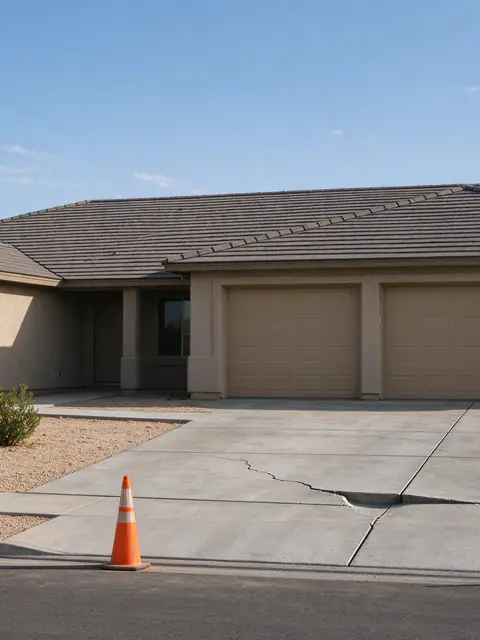
Joints that have opened or lost their sealant
Joints are where a slab is meant to move. An open joint lets water and grit into the base, so cleaning and resealing it, or replacing failed filler, keeps that water out before the edges start to break.
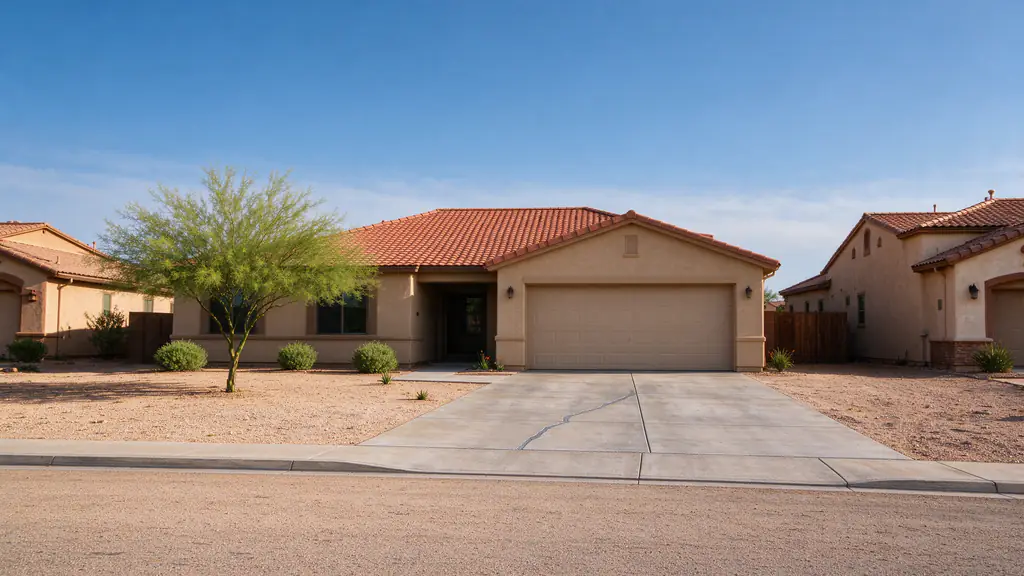
Service area · City of Chandler
Joints are where a slab is meant to move. An open joint lets water and grit into the base, so cleaning and resealing it, or replacing failed filler, keeps that water out before the edges start to break.
A crack that reopens after sealing is still moving. That points to support under the slab, not to a bad sealant, and the visit checks whether the panel has settled, whether one side has lifted and where water reaches the ground beside it.
Chandler permits construction in its right-of-way through an encroachment permit. Its certificate of quantities lists a concrete driveway or alley entrance as an inspection-fee item counted per entrance, with curb and gutter by the linear foot and sidewalk by the square foot.
New concrete won't match an older stamped or colored surface exactly, so a visible repair is planned with that in mind, and an association's approval comes first if the change shows from the street.
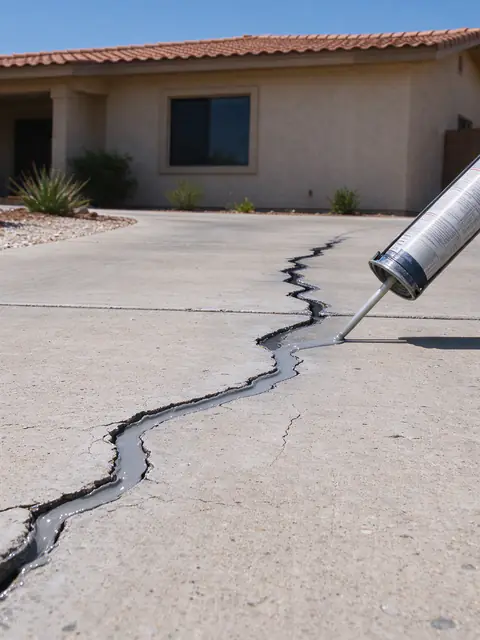
Driveway crack repair in Phoenix for concrete and asphalt: dormant vs working cracks, filling vs sealing, and when a crack points to the base.
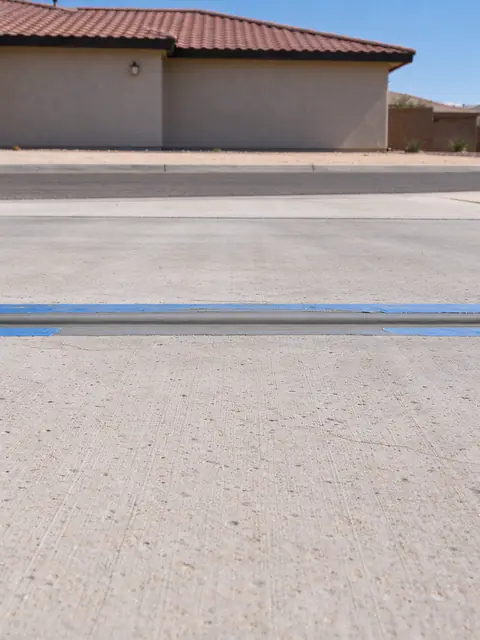
Driveway expansion joint repair in Phoenix: rotted wood and fiberboard fillers replaced with backer rod and flexible sealant.
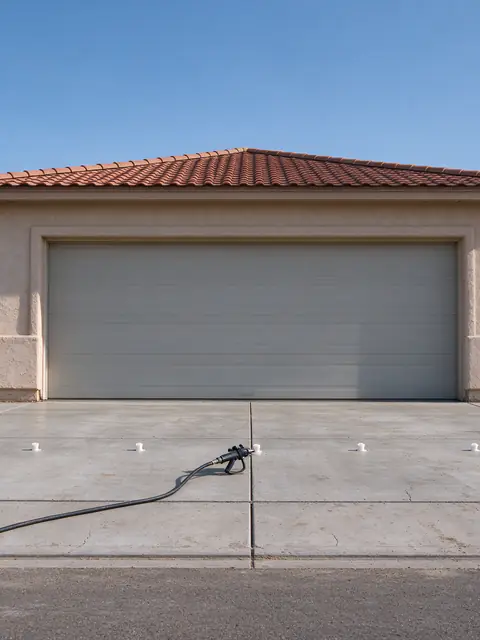
Concrete driveway leveling in Phoenix: when a settled panel can be lifted, mudjacking vs foam, what lifting can't fix, and local price ranges.
Last Updated:
Chandler counts driveway entrances one at a time: on the City’s certificate of quantities for an encroachment permit, each concrete driveway or alley entrance is its own inspection-fee item, beside curb and gutter by the foot and sidewalk by the square foot. Behind the entrance, driveway repair in Chandler, AZ, turns on joints and cracks, over soil that shows moderate shrink-swell across most of the city. Sundial Driveway Repair is a service company offering and managing driveway repair in Chandler and across the Phoenix area, for homes and commercial properties, with the work fulfilled by licensed and insured contractors.
On a Chandler drive the first job is telling joints from cracks, so the visit covers the full slab and its edges, then follows the water from the downspouts and sprinklers to the street, and checks the garage, sidewalk and curb transitions. A crack gets measured for how wide it is, whether one side sits higher and whether it runs from panel to panel. Tapping finds hollow spots; where the base is in question, a small section may be cut out to look. If that turns up soft base, the change in scope is explained before anything is agreed, and the estimate spells out the method, the area, any entrance or right-of-way portion, and what it leaves out, such as a color match on stamped or colored concrete. Joint work goes to expansion joint repair, moving cracks to driveway crack repair once the cause is known, and a settled sound panel to driveway leveling. When the entrance is involved, the City’s encroachment permit is part of the scope, and driveway apron repair covers that work.
Chandler’s housing is mostly post-1990. Census Bureau figures give a median year built of 1997 across 112,800 housing units, with 43.1% built in 2000 or later, only 9.8% before 1980, and 67.5% single-family detached. Where a house still has the driveway it was built with, that slab has been through two or three decades of summers, long enough that joint sealant and filler are worth checking even on a sound slab.
USDA soil survey samples across the city show moderate or higher shrink-swell at 76.9% of points, in Mohall loam, Mohall sandy loam and Gilman loam, but the high class at only 7.7%, and no cemented layers. That is a wide spread of moderate movement rather than severe heave: panels shift a little with each wet and dry cycle, joints work open, and where sprinklers or downspouts keep one edge wet, the movement concentrates there. The guide to why driveways crack and sink explains the mechanism.
At the street, the encroachment permit treats the entrance, the curb and gutter and the sidewalk as separate measured items, so an estimate that touches the right-of-way lists each one. Who is responsible for a damaged curb or sidewalk panel at a Chandler drive is confirmed per address with the City.
Keeping joints sealed is cheap next to replacing broken edges, and lifting a whole panel through slurry or foam is an option the mudjacking vs polyjacking guide compares. Stamped surfaces have their own repair limits, covered under stamped concrete repair, and flaking surfaces are explained in the spalling guide. If your home is in an HOA, the HOA driveway rules guide explains the approvals, and the driveway repair cost guide sets out budgets. Nearby, the Gilbert, Tempe and Mesa pages cover those cities.
Cracks, joints or an entrance in Chandler? Get an Estimate.
Send photos of the cracks and joints, the entrance at the street, and any earlier repairs. Mention if the surface is stamped or colored, or if an HOA reviews changes.
Through an encroachment permit for construction in the City's right-of-way, issued by Chandler Development Services. The City's certificate of quantities for that permit counts a concrete driveway or alley entrance as one inspection-fee item each, and lists curb and gutter by the linear foot and sidewalk by the square foot. The fee for a given entrance is confirmed with the City.
Use the shared Phoenix-area ranges: about $0.50 to $5 per linear foot to fill and seal concrete cracks, about $4 to $10 per square foot to mudjack a settled slab, and about $10 to $15 per square foot to break out and repour a damaged section. Small jobs often carry a minimum charge, and entrance work adds Chandler's encroachment permit.
Partly because of the soil. USDA samples across Chandler show moderate or higher shrink-swell at 76.9% of points, mostly in Mohall loams and Gilman loam, so a slab moves slightly as the ground gets wet and dries out. Joints absorb that movement, and over time their sealant wears and the gap widens. A soil map describes the city, not your lot.
That is confirmed per address with the City of Chandler. Phoenix's City Code puts sidewalk repair on the abutting owner, but that rule doesn't carry over to Chandler. Any curb, gutter or sidewalk work in the right-of-way falls under Chandler's encroachment permit.
Possibly, but it needs approval before any concrete is cut. A new entrance at the street is right-of-way work under Chandler's encroachment permit, and width and placement limits for your lot are confirmed with the City per address. If your home is in an HOA, the association's design review may apply as well.
How a driveway is built, what the Valley's heat, soils and storms do to each layer, how to read the cracks you can see, and when a repair can wait.
How each lifting method works, where they really differ, how Phoenix clay and storm water affect the choice, and the cases where lifting isn't the answer at all.
Why the freeze-thaw explanation found in typical driveway advice rarely fits the Valley, the finishing, curing, steel and joint problems that do, and how the depth of the damage sets the repair.
How association rules sit on top of city codes for driveway repairs, widening, pads and materials, and how to put together a request the board can approve.
Typical Phoenix-area and national budgeting ranges for each kind of driveway repair, what is inside the price, the City permit fees, and worked example budgets.
Tell us the surface, what changed and the nearest cross streets. Photos of the damage and the street edge make the estimate more useful.