111days a year reach 100°F or more at Sky HarborNOAA climate normals
0.6nights a year drop to freezing at Sky Harbor, so heat and water, not frost, drive most damageNOAA
June 15 to September 30 is monsoon seasonNational Weather Service
Phoenix treats up to 10.5 ft of concrete drive past a roll curb as on-site work, with no separate driveway permit
Concrete for a residential driveway in the Phoenix right-of-way is 6-inch Class A
Last Updated:
Driveway sealcoating puts a thin protective coat over sound asphalt to slow the damage that sun and heat do to it. It is maintenance for pavement that is still structurally healthy, and it works best on a drive that has been cleaned, crack-filled and patched first. Sundial Driveway Repair is a service company offering and managing driveway sealcoating for asphalt drives across Phoenix and its suburbs, for homes and commercial properties, and the work is fulfilled by licensed and insured contractors.
Sealcoat is for asphalt only. A concrete driveway or pavers need a different product with a different job, covered on the concrete and paver sealing page. And sealcoat is not resurfacing: it adds no thickness and no strength, which is the difference between this page and driveway resurfacing.
What happens on the first visit
The first visit looks at the whole drive and decides whether it is a candidate for sealing at all. The surface, the edges, where water runs and how the asphalt meets the garage, sidewalk and street all get a look. Cracks are sorted by type: separate cracks that can be filled before sealing, and alligator cracking in the wheel paths that signals a failing base and needs patching first. Soft spots, dips that hold water and broken edges are noted, because sealcoat laid over any of them only hides them for a short time.
The estimate names the prep, the crack filling, the area to be coated and what sealcoat won’t fix. If the drive needs repair first, that is said plainly, with the asphalt driveway repair work listed separately so you can see what each part costs.
What the Phoenix sun does to asphalt
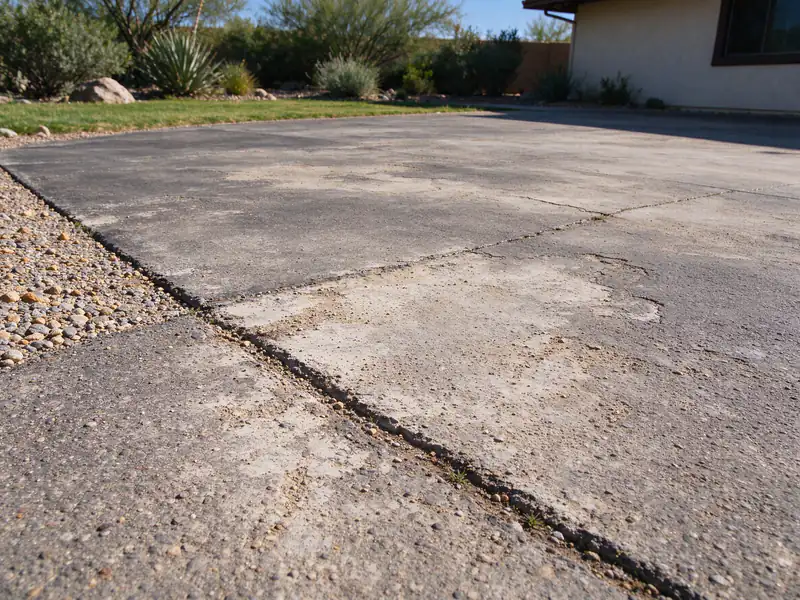
Asphalt is stone held together by a petroleum binder. Sunlight and heat oxidize that binder over time, the same way they bleach and stiffen a garden hose left outside. Oxidized binder is harder and more brittle, so the surface stops flexing and starts to crack, and the fine stone at the top comes loose (raveling). The color shift from black to pale gray is that process in plain sight.
Phoenix gives the binder a hard time. Sky Harbor averages 173.4 days a year at 90°F or above and 111.3 days at 100°F or above in NOAA’s climate normals, and normal summer nights stay near or above 80°F, so the pavement spends long stretches hot. Sealcoat puts a sacrificial layer between that exposure and the binder underneath. When the coat wears through, the binder starts aging again, which is why sealing is a repeated maintenance step rather than a one-time fix. The guide to how heat affects driveways in Phoenix explains the wider effects of heat on both asphalt and concrete.
What sealcoat can’t do
A sealcoat is a few coats of liquid, often an asphalt emulsion with fine sand mixed in for grip. It fills the surface pores and hairline cracks, but it can’t bridge an open crack, lift a dip or stiffen a soft base. Laid over alligator cracking, it makes the drive look uniform for a season while the base keeps failing underneath, and the cracks print right back through. The alligator cracking guide covers why that pattern needs the failed area cut out.
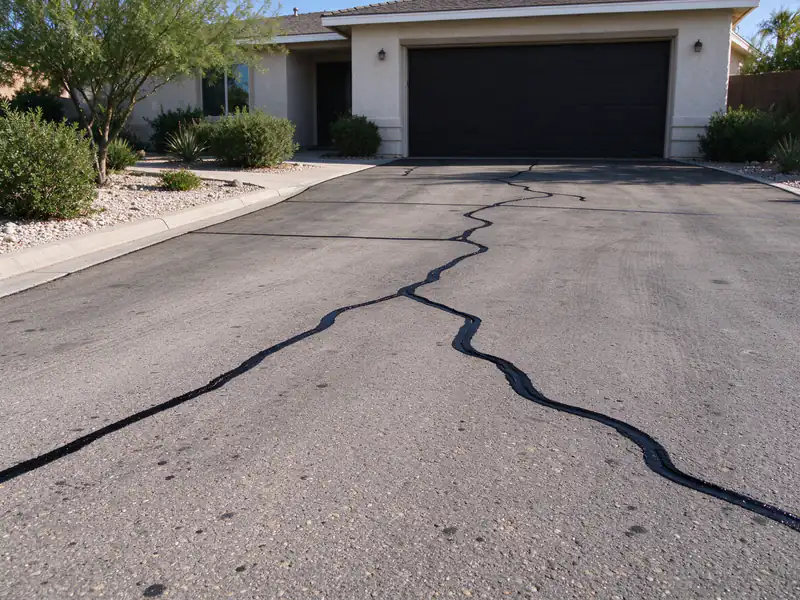
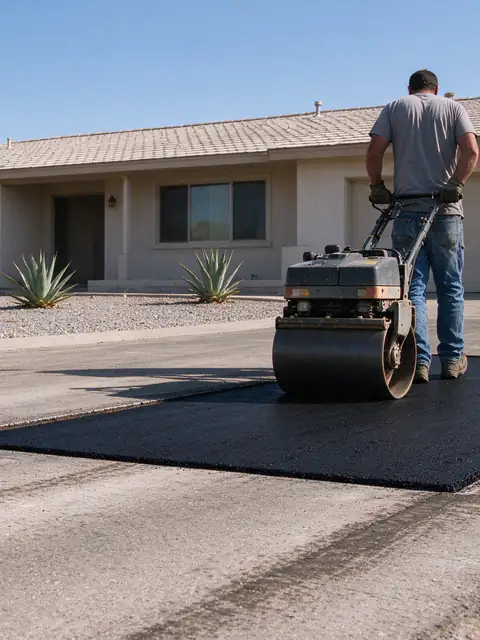
So the order matters. Open cracks are filled first, as described on the driveway crack repair page. Failed areas are patched with compacted hot-mix. Only then does sealcoat make sense. If the whole surface is badly raveled or the drive has failed in many places, a new layer of asphalt or a rebuild does more than any coat could. Whether sealing pays off on a given drive is weighed in the guide is sealcoating worth it.
How a sealcoating job runs
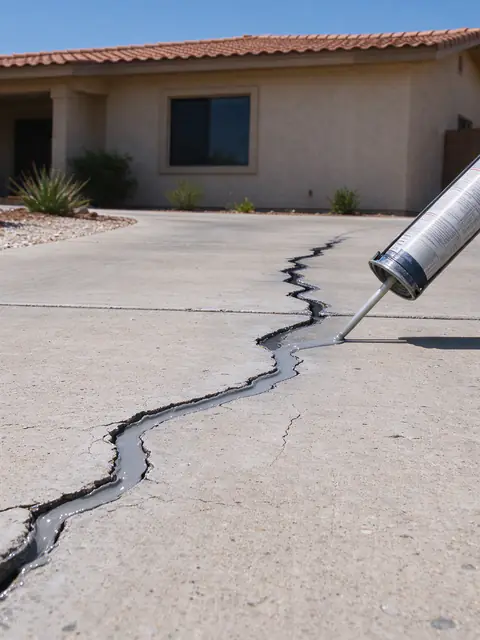
Prep takes longer than the coating. The drive is swept and blown clean, with dirt and weeds cleared from the edges and from any joint with the garage slab. Oil, transmission fluid and other stains are cleaned and primed, because sealer won’t bond to them and will lift there first. Open cracks are cleaned and filled.
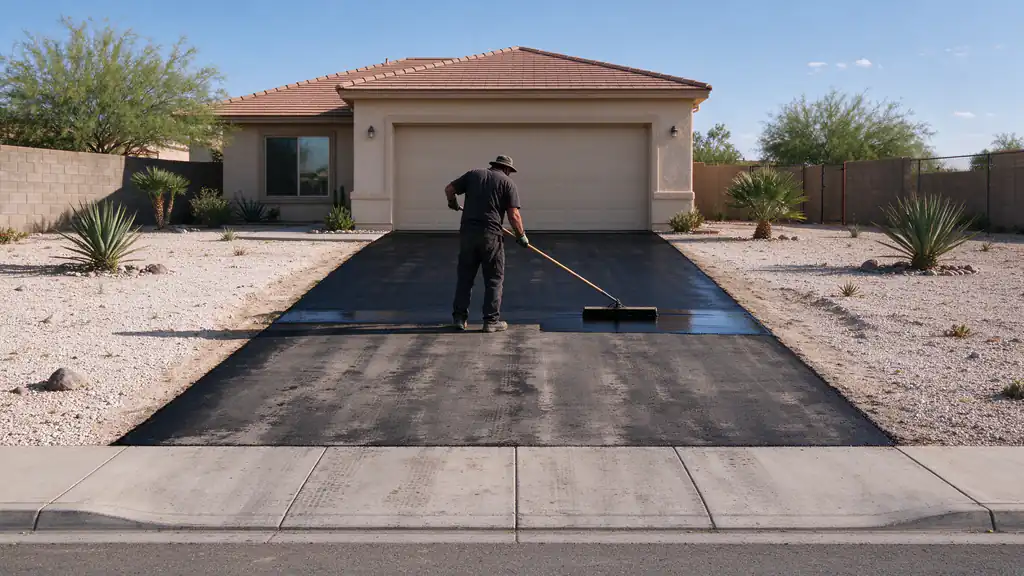
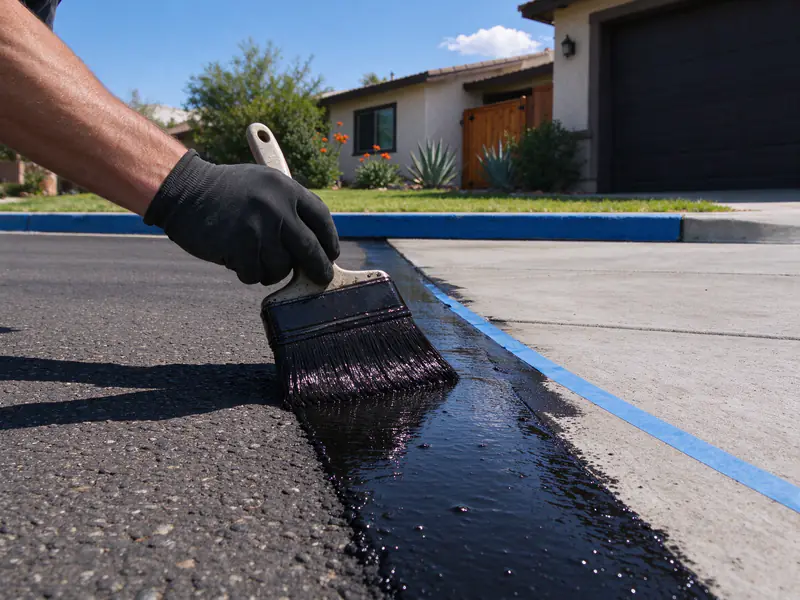
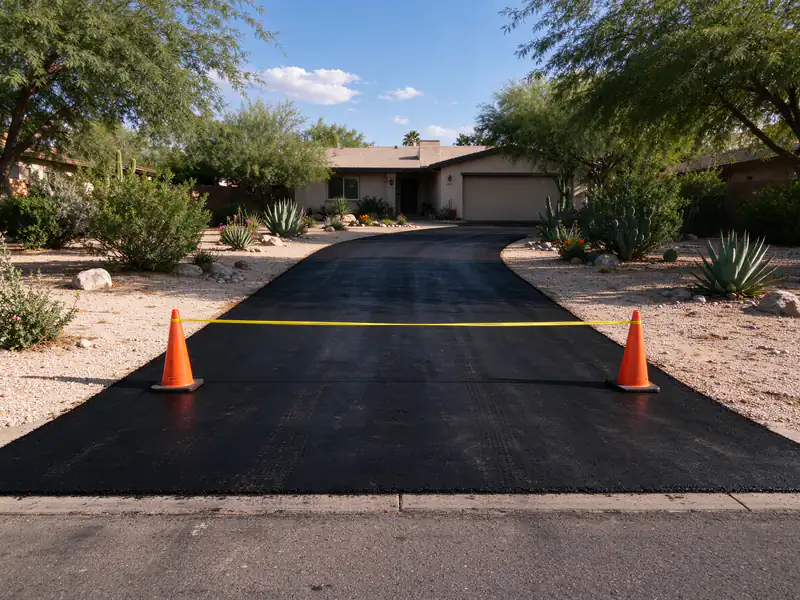
The edges against the garage, sidewalk and landscaping are cut in by brush, and the field is coated by squeegee or spray in thin, even coats. Two thin coats bond and wear better than one heavy one; homeowners report thick single coats cracking and flaking early. The drive is then taped or barricaded while it dries, and the wait before walking and driving on it is stated before work starts.
Where the drive reaches the street, part of it sits in the public right-of-way. The City of Phoenix’s paving right-of-way permit category includes seal coat, so work on the apron can fall under it; the Phoenix driveway permit guide and the driveway apron repair page explain where that line sits.
When to sealcoat in the Valley
Sealer needs a dry surface and dry hours afterward to cure. Two Phoenix patterns shape the timing. The first is heat: on a summer afternoon a dark driveway gets hot enough that sealer can skin over before it levels and bonds, so summer work is planned for cooler parts of the day. The second is the monsoon. The NWS defines the season as June 15 to September 30, and July and August each average about 0.9 inches of rain at Sky Harbor, often in short, heavy storms; a downpour on fresh sealer can wash it toward the street. June averages just 0.02 inches, which makes early summer mornings, along with the milder weeks of spring and fall, the easier windows.
Who does the work, and how to compare offers
Arizona’s Registrar of Contractors licenses seal coating: residential work falls under the R-13 asphalt paving class, commercial work under A-15, and CR-66 is the dual class. A contractor generally needs a license when a job tops $1,000 in labor and materials or needs a permit. The license lookup guide shows how to check one.
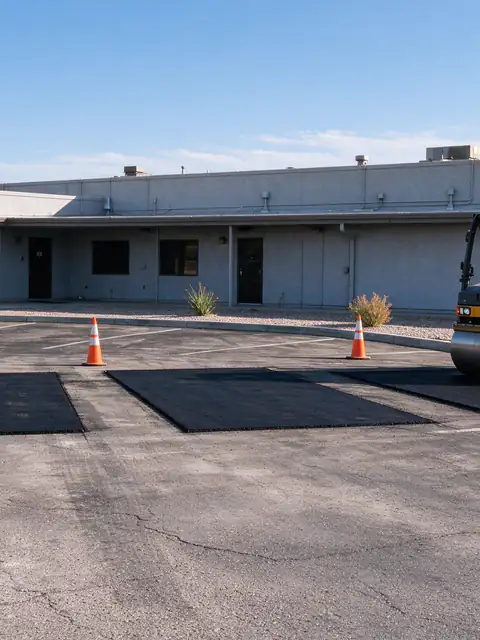
Compare offers on scope, not just price: how the surface is cleaned, how stains are treated, which cracks are filled and with what, how many coats, and how long the drive stays closed. An offer that leaves those out is hard to hold anyone to. For shared lots and business entrances, sealcoating and parking lot striping are covered with parking lot repair.
Payment and insurance notes
Sealcoating is routine maintenance. Whether a policy covers any driveway damage depends on the policy and the cause, and that decision belongs to the insurer, not the estimate. On tax, the Arizona Department of Revenue treats this kind of work as maintenance, repair, replacement or alteration contracting, so tax on materials is usually built into the price rather than added as a line. The sealcoating cost guide breaks down what moves the price, the cost estimator gives a budget from the published ranges, and you can ask for an estimate with a few photos of the drive.
VIIVIVIVIIIIII
02
What's included
A look at the whole drive to confirm the asphalt is sound enough to seal
Sweeping and blowing the surface clean, with edges and joints cleared of dirt and weeds
Priming or treating oil and fluid stains so the sealer can bond
Filling open cracks before the sealer goes on
Hand-brushing along the garage slab, sidewalk and other edges
Thin coats of sealer spread evenly across the drive
Taping or barricading the drive while it dries, with the wait stated
VIIVIVIVIIIIII
03
Sealcoat compared with the other asphalt treatments
Sealcoat compared with the other asphalt treatments: what each does and a budgeting range
Treatment
What it does
What it doesn't do
Budgeting range
Sealcoat
Slows oxidation and raveling, sheds water from fine surface cracks, evens out the color
Bridge open cracks, fix a soft base or alligator cracking, add strength
$280 to $870 per driveway (national budgeting example)
Crack filling
Keeps water out of the base through separate open cracks
Help with widespread fatigue cracking
$0.50 to $3 per linear ft (national), usually with a minimum service charge
Patching
Replaces failed asphalt and base in a defined area
Renew the surface of the rest of the drive
$100 to $415 per pothole (typical Phoenix area); larger saw-cut repairs priced by area
Overlay
Puts a new layer of asphalt over a sound base
Stop failed base from reflecting through
$1 to $4 per sq ft (national budgeting example); base repairs extra
04
Related resources
Guides that go deeper on sealcoating decisions in the Valley.
What a sealcoat does to asphalt under Valley sun, the driveways it helps and the ones it can't, how to time it around heat and monsoon storms, and what to check before paying for it.
What sealcoating a residential asphalt driveway costs as a national budgeting example, what crack filling and patching add, what drives commercial lot pricing, and what sealcoat can and can't do for the money.
How to recognize fatigue cracking, the base and water problems behind it, how it differs from other asphalt cracks, and why the repair has to go below the surface.
05
How the work runs
First call or estimate request
Describe the surface, what changed and roughly where the property is. Photos of the damage and the street edge help. The published ranges give you a budget to think about before any visit.
A look at the whole driveway
The visit looks at more than the damaged spot: the slab or asphalt, the joints and edges, where water runs, and the transitions at the garage, sidewalk and street. The damaged area is measured, and anything found that changes the scope, such as soft base or caliche, is explained in the estimate.
Work timed for the heat
Hot-weather practice from the American Concrete Institute caps concrete at 95°F at discharge for general work, so summer pours are planned for the cooler part of the day. Where the job crosses into the street right-of-way, the city's permit is part of the scope.
Cure and handover
How long the car stays off depends on the material and the temperature. That wait is set out before the work starts, so you can plan around it.
VIIVIVIVIIIIII
06
What this work looks like
Pale, raveling oxidized asphalt surface on a Peoria driveway before sealcoating
Swept asphalt driveway in Peoria with cracks filled before sealcoating
Brush cutting in sealcoat along a concrete edge on a Peoria asphalt driveway
Freshly sealcoated black asphalt driveway in Peoria taped off while it dries
Gray, sun-baked asphalt? Get an Estimate.
Send a few photos of the drive. The estimate says whether the asphalt is ready to seal, what prep and crack filling it needs, and what sealcoat won't change.
Can sealcoat go over oil stains on an asphalt driveway?
Not directly. Oil and transmission fluid dissolve asphalt binder, and sealer won't bond to an oily surface, so it peels there first. Stains are cleaned and treated with an oil-spot primer before sealing. Where fluid has soaked in long enough to leave the asphalt soft and crumbly, that spot is cut out and patched, because no coating firms it back up.
Why is my driveway sealer peeling?
Usually because it didn't bond. Sealer put down over dust, dirt or oil, applied in one heavy coat instead of thin ones, laid on a surface so hot it skinned over before it could level, or rained on before it dried can all peel. Sealer meant for asphalt also doesn't belong on concrete. Peeling coats are scraped or cleaned back before resealing.
Can a brand-new asphalt driveway be sealcoated right away?
No. Fresh asphalt needs time for the binder to cure and harden before a coat goes on, and sealing it too soon can trap that process and leave a soft surface. The right wait depends on the mix and the weather, so take it from whoever placed the asphalt. Until then, the new surface doesn't need protecting.
Can sealcoat be applied over alligator cracking?
It can be applied, but it won't help for long. Alligator cracking means the pavement is failing under load, often over weak or wet base, and a thin coat can't bridge the cracks or restore support. The pattern prints back through within a season or two. The cracked area is cut out and patched with compacted hot-mix first, and then the drive can be sealed.
What should I sort out before a sealcoating appointment?
Plan to keep cars off the drive until the stated dry time passes, and park on the street before work starts. Turn off sprinklers that reach the driveway for the drying window, move bins and planters off it, and point out oil stains and cracks you know about. If you live in an HOA, check whether it sets rules on driveway finishes.