Is sealcoating worth it for a Phoenix asphalt driveway?
What a sealcoat does to asphalt under Valley sun, the driveways it helps and the ones it can't, how to time it around heat and monsoon storms, and what to check before paying for it.
Last Updated:
Short answerSealcoating is worth it on sound asphalt that is starting to gray and open fine cracks: it slows the sun's oxidation of the binder and keeps water out of the surface. It isn't worth it on a driveway with alligator cracking, ruts, potholes or soft base, because it is a surface coat and adds no structural strength.
Is sealcoating worth it? On a sound asphalt driveway that is beginning to gray, usually yes, because it slows the aging that Phoenix sun inflicts on asphalt. On a driveway whose base has failed, no, because sealcoat sits on the surface and can’t change what is happening underneath. Sundial Driveway Repair is a service company offering and managing driveway sealcoating and asphalt driveway repair across Phoenix and its suburbs, fulfilled by licensed and insured contractors, and this guide explains where sealcoat pays off and where the money belongs elsewhere.
What does sealcoat actually do?
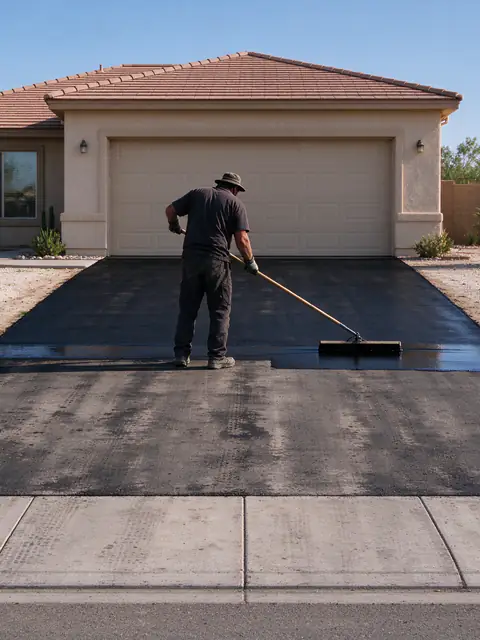
Sealcoat is a thin liquid coating, usually an asphalt emulsion or a refined coal-tar product mixed with fine sand and additives, spread or sprayed over asphalt and left to dry. It does three things. It shields the binder, the asphalt cement that holds the stone together, from ultraviolet light and oxygen. It seals the surface against water and fuel drips. And it restores the dark, even color of newer pavement.
It doesn’t add strength. The coat is thin, it doesn’t bridge open cracks, and it doesn’t rebuild base. It also isn’t resurfacing: resurfacing is a new layer of asphalt with real thickness, and the resurfacing vs replacement guide covers when that fits.
Why does Phoenix sun make sealcoating matter?
The binder in asphalt ages when it is exposed to heat and sunlight. It oxidizes, stiffens and loses its flexibility, the surface turns from black to gray, fine cracks open, and stone at the surface starts to loosen, which is called raveling. Phoenix Sky Harbor averages about 111 days a year at 100°F or more and 173 days at 90°F or more (NOAA climate normals), so a driveway here spends a long season in exactly the conditions that drive that aging.
Sealcoat takes the exposure in place of the binder. That slows the graying and the fine cracking, and it keeps water out of the surface during monsoon storms, when water that gets into cracks can reach and soften the base. The guide to how heat affects driveways in Phoenix explains the binder in more depth.
There is one trade-off. A fresh black coat absorbs more sun than gray pavement. The City of Phoenix found its lighter cool-pavement coating ran about 10.5°F to 12°F cooler at the surface than traditional asphalt around midday on public streets, which shows how much surface color affects heat. That study covered public streets, not driveways, but expect a freshly coated drive to run hot underfoot on summer afternoons.
Which driveways benefit from sealcoating?
Sealcoating pays off on asphalt that is still structurally sound. Good candidates are:
A drive one to a few years old, once it has cured, to protect it early.
An older drive that is graying and has fine surface cracks but no soft spots, ruts or patterns of interlocking cracks.
A drive with a few isolated cracks that are filled first.
A parking lot or commercial drive with sound pavement, where sealcoat and striping can be done in one visit.
The prep matters as much as the coat. The surface is cleaned of dirt, oil and vegetation, oil spots are treated so the coat will stick, cracks are cleaned and filled with a flexible crack filler, and failed patches are cut out and repaired before coating.
When is sealcoating a waste of money?
Sealcoat can’t help a driveway that has already failed structurally. Don’t pay for it, or for anyone who suggests it as a fix, in these cases:
Alligator cracking over large areas. Interlocking cracks mean the pavement is fatiguing over a weak or wet base. Sealcoat over them looks good for a season, then the cracks show through again. The alligator cracking guide explains the right repair.
Potholes and soft spots. They need cutting out and rebuilding, not coating.
Ruts and dips. These are deformation in the pavement or base, and sealcoat follows them.
Wide, open cracks. They need filling first; sealcoat alone doesn’t bridge them.
Concrete. Asphalt sealcoat is made for asphalt. Concrete and pavers use their own sealers, covered on the concrete sealing page.
On a drive like that, the money is better spent on patching, an overlay on a sound base, or a rebuild. The repair vs replacement guide covers how to tell which.
When is the best time to sealcoat in Phoenix?
Timing is about heat and rain. Sealcoat needs warm, dry weather to dry and cure, so the Valley has a long working season, but extreme afternoon heat can dry the coat too fast at the surface, and a monsoon storm on a fresh coat can wash it off or leave it streaked. The National Weather Service defines monsoon season as June 15 to September 30. Spring and fall avoid both problems; in summer, applying early in the day helps. Either way, the drive stays free of traffic until the coat has cured. The blog on the best time of year for driveway work covers scheduling more broadly.
New asphalt needs to cure before its first coat, because the binder has to give off some of its lighter oils first. A sealcoat put on fresh asphalt too soon can trap them and soften the surface.
What does sealcoating cost, and is the math worth it?
As a national budgeting example, sealcoating a typical residential asphalt driveway runs roughly $280 to $870, depending on size, prep and crack repair. Crack filling is usually done at the same visit; a national budgeting range for asphalt crack filling is about $0.50 to $3 per linear foot, usually with a minimum service charge. The sealcoating cost guide covers what changes the price.
The math works when the coat delays repairs that cost more: slowing the cracking and raveling that let water into the base, which leads to patches and eventually to replacement. It doesn’t work when the driveway is past saving, or when it is coated far more often than it wears.
How do you choose who does it?
Ask for a written scope that says how the surface will be cleaned, how cracks will be filled, what product will be used and how many coats, and how long to stay off the drive. Be wary of a crew at the door offering to coat the drive today from material left over from another job. In Arizona, a contractor generally needs a Registrar of Contractors license when a job tops $1,000 in labor and materials or needs a permit, and residential seal coating falls under the R-13 asphalt paving class. The license lookup guide shows how to check.
If you aren’t sure whether your driveway is a sealcoat candidate or past it, the condition assessment sorts the signs, or call the number at the top of this page.
VIIVIVIVIIIIII
02
More questions on this
Does sealcoating make an asphalt driveway hotter in summer?
A fresh black coat absorbs more sun than gray, aged asphalt, so it runs warmer for a while. No official measure exists for Phoenix driveways, but the City of Phoenix found its lighter cool-pavement coating ran about 10.5°F to 12°F cooler than traditional asphalt on public streets at midday, which shows how much surface color matters. The coat lightens slightly as it weathers.
Can sealcoat go on over oil stains?
Not straight over them. Oil softens asphalt and keeps sealcoat from bonding, so a coat over a fresh stain can stay tacky, discolor or peel. The spot is cleaned, and where oil has soaked in, treated with an oil-spot primer before coating. If oil has softened the asphalt itself, that area may need a patch first. Fixing the leak keeps the new coat from failing again.
Does sealcoating help an asphalt driveway get through monsoon season?
It helps the surface. A sound coat keeps water out of fine cracks and slows the loss of fine material from the surface during heavy rain. It doesn't fill open cracks, which need crack filler first, and it does nothing about water running under the edges or pooling in low spots. Those need drainage fixes, because water in the base is what turns cracks into potholes.
VIIVIVIVIIIIII
03
Get an Estimate for sealcoating
Tell us the surface, what changed and the nearest cross streets. Photos of the damage and the street edge make the estimate more useful.
What sealcoating a residential asphalt driveway costs as a national budgeting example, what crack filling and patching add, what drives commercial lot pricing, and what sealcoat can and can't do for the money.
How to recognize fatigue cracking, the base and water problems behind it, how it differs from other asphalt cracks, and why the repair has to go below the surface.
How a rigid slab and a flexible pavement each respond to Valley heat, storms and soils, what each needs to stay sound, how they are repaired, and the City rules that apply at the street.
The physics of a slab that grows and shrinks every day, why heat does its worst damage to concrete in the first hours, how asphalt binder softens and ages under Valley sun, and what owners can do through a long summer.
Which license classes fit each kind of driveway work, when the small-job exemption applies and when it doesn't, and what to check besides the license itself.