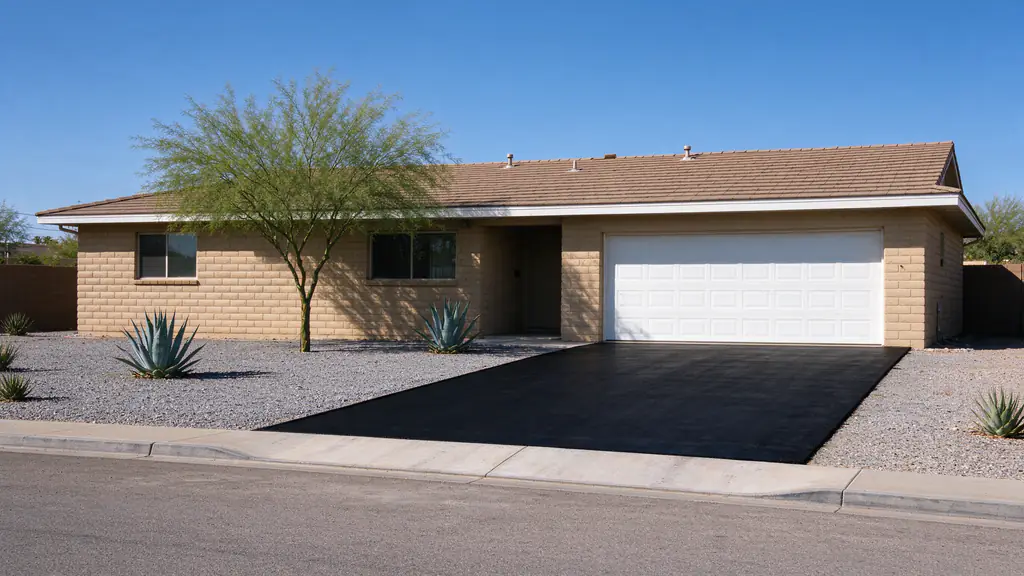
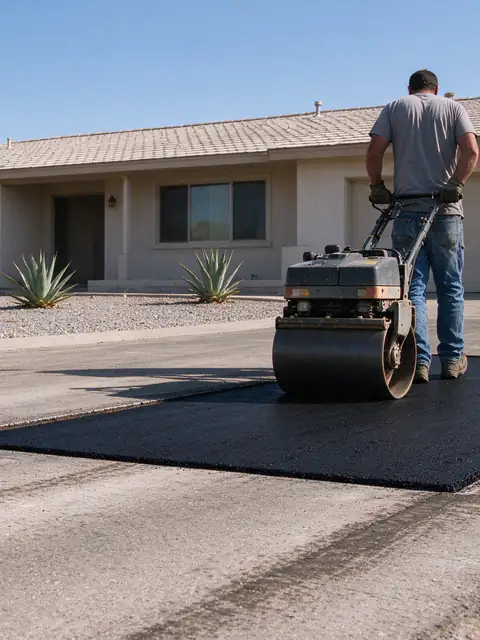
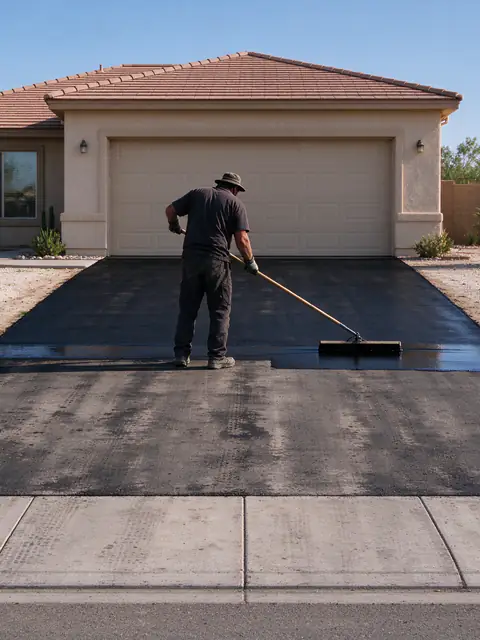
Sun and heat oxidize the binder in asphalt until the surface turns gray and fine cracks open. If the base below is still firm, filling the cracks and sealcoating protects what is there. If the cracks have joined into small blocks, the base has given way under that area, and a sealcoat won't hold it together; that section needs a patch that rebuilds the base.
One low corner that holds water
Glendale's sampled soils carry few road limitations, so a single settled corner points first to water: a downspout emptying onto the edge, a sprinkler line or a low spot that ponds after a storm. The repair lifts or replaces the panel and moves the water away from it.
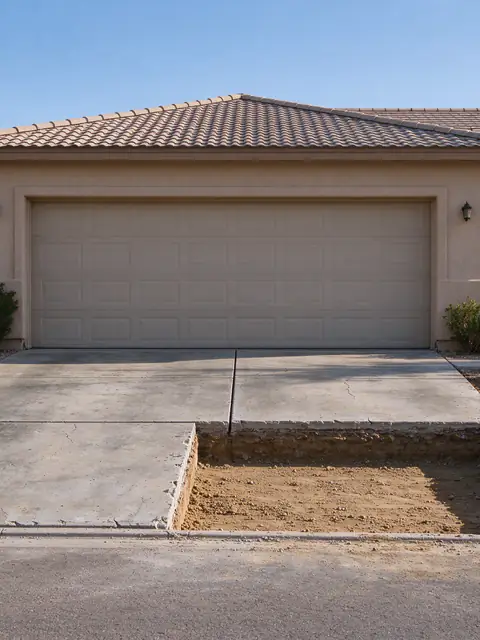
A cracked apron at the curb
The apron and curb sit in the City of Glendale's right-of-way, not on your lot. Whether a given job needs a Glendale right-of-way construction permit, whether a bond applies and which apron detail it is built to are confirmed per address with City of Glendale Engineering before the estimate is final.
An original slab on an older house
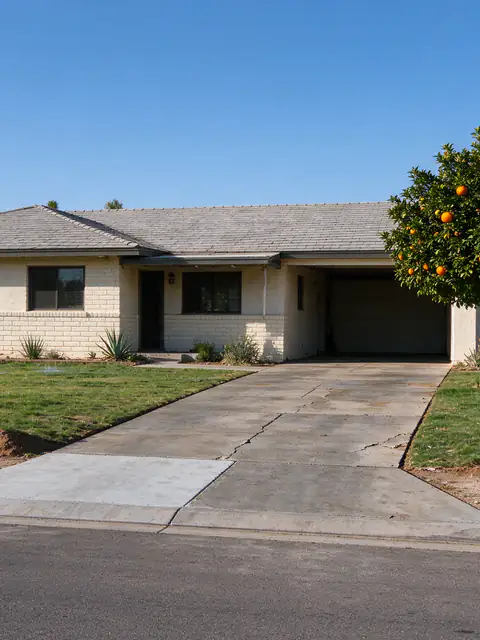
Where a Glendale house dates from before 1980 and keeps its first driveway, the question is repair or replace. Scattered cracks on a sound base can be sealed or a few panels replaced. Cracking across many panels, heaving or a base that has failed under much of the drive points toward a rebuild.
Glendale sits on gentler ground than the East Valley: in USDA soil samples, under a third of its points show moderate or higher shrink-swell clay, against nearly four in five in Gilbert. So when a drive here cracks, settles or breaks up, age, heat and water deserve the first look, and driveway repair in Glendale, AZ, starts at the surface and the drainage. Sundial Driveway Repair offers and manages driveway repair in Glendale and the rest of the Phoenix area, for homes and commercial properties; it is a service company, and licensed and insured contractors fulfill the work. The other early question is where the damage sits, because Glendale runs its own engineering office and Phoenix’s rules stop at the city line.
What the soil does and doesn’t explain here
Less than it does elsewhere in the Valley. USDA NRCS soil survey samples put 29.2% of Glendale points in moderate or higher shrink-swell soils, against 46.2% in Mesa and 78.4% in Gilbert. Gilman loam, Laveen loam and Mohall clay loam are the main map units, and no sampled point had a cemented caliche layer. The road-rating limits that do show up are flooding and low strength, each at 8.3% of points, which makes low spots that hold water worth more attention than the clay. The sample is small, 24 points, and a soil map is never a site test. It says what to check, not what lies under one driveway. The guide to why driveways crack and sink covers those mechanisms in more depth.
Older surfaces and what wears out first
The Census Bureau’s American Community Survey gives Glendale a median build year of 1986, with 35.4% of its 93,736 housing units built before 1980 and 59.2% single-family detached. Where a house keeps its original drive, that surface has been through decades of summers that average 111.3 days a year at or above 100°F at Sky Harbor, by NOAA’s normals. Age is context, not proof of a defect, but it frames the choice.
Where the drive is asphalt, heat oxidizes the binder and the surface goes gray, brittle and cracked. Asphalt driveway repair fills the cracks and patches failed areas, and sealcoating protects a surface that is still sound. It doesn’t fix a failed base, and the alligator cracking guide explains how to tell the difference. Where the drive is concrete, crack repair suits narrow cracks with level edges, and resurfacing suits a worn top on a solid slab. When most of the drive has failed, the repair or replace guide helps weigh driveway replacement.
The curb line belongs to Glendale
Work at the street edge goes through City of Glendale Engineering, not Phoenix. Glendale’s design standards have called for a right-of-way construction permit, a possible performance bond, and aprons built to City details G-456 or G-458 or to MAG Standard Detail 250. Those references come from an older edition, so the permit, any bond and the detail that applies are confirmed per address before the estimate is final. The apron responsibility guide covers who owns that strip, and apron repair is the work itself. Any contractor on a permitted job should hold an Arizona ROC license, which you can check with the license lookup guide.
How a Glendale estimate comes together
A Glendale visit covers the full drive rather than the one bad spot: the surface, every joint and edge, where water runs off, and the joins with the garage, sidewalk and street. Each crack is judged by its width, any offset and whether it runs across panels, and tapping picks out hollow areas. The written estimate gives the method, the area, any part that falls in the right-of-way and the exclusions, such as color match. Nearby, the Central Phoenix and South Phoenix pages cover how the City of Phoenix handles the same questions.
Driveway trouble in Glendale? Get an Estimate.
Send a wide photo of the drive, close photos of the damage, and say whether it is asphalt or concrete and whether it reaches the curb.
The shaded disc marks the general service area around the area’s center, not an office or job site. Open Glendale, AZ in Google Maps
VIIVIVIVIIIIII
05
Glendale driveway questions
Does Glendale follow Phoenix's driveway permit rules?
No. Glendale is its own city with its own engineering department, so the City of Phoenix's driveway policy, including the rule that lets a short concrete drive behind a roll curb skip a driveway permit, doesn't apply there. Glendale's design standards describe a right-of-way construction permit for street-side work. The current requirement, any bond and the apron detail are confirmed per address with City of Glendale Engineering.
What does it cost to fix an asphalt driveway in Glendale?
Glendale prices follow the same typical Phoenix-area figures as the rest of the Valley. Patching a single pothole runs about $100 to $400, and larger saw-cut repairs that rebuild the base are priced by the square foot. For crack filling, a national budgeting range is about $0.50 to $3 per linear foot, and sealcoating a residential drive is a national budgeting example of roughly $280 to $870 per job, depending on size, prep and crack repair.
Is caliche a problem under Glendale driveways?
Not in the soil survey sample. None of the 24 USDA points sampled inside Glendale flagged a cemented layer, while Peoria's sample flagged 20.5%. That doesn't rule out a hard layer on one lot. If digging for a base repair hits caliche, it changes the excavation and the price, and the estimate explains the change before the work goes on.
Should I sealcoat or replace my Glendale asphalt driveway?
It depends on the base. A sealcoat protects asphalt that is oxidized but still firm and mostly in one piece; it does not repair a structural failure. Alligator cracking, ruts and potholes mean the base below has failed in those areas, which calls for saw-cut patches or, where the failure is widespread, a new driveway.
Can someone without an ROC license fix my Glendale apron?
Usually not. Arizona's handyman exemption covers only casual, minor jobs under $1,000 in total that need no local permit, and it ends when a permit is required. Apron work in the City's right-of-way goes through City of Glendale Engineering, so the contractor should hold the right Registrar of Contractors license, such as R-9 for residential concrete. You can look it up on the ROC website.
How to recognize fatigue cracking, the base and water problems behind it, how it differs from other asphalt cracks, and why the repair has to go below the surface.
What a sealcoat does to asphalt under Valley sun, the driveways it helps and the ones it can't, how to time it around heat and monsoon storms, and what to check before paying for it.
The signs that point to a repair, the ones that point to a new driveway, the middle option of replacing sections, and the Phoenix soil, water and right-of-way rules that tip the choice.
The apron usually sits on public land, yet the repair often falls to the homeowner. Here is how ownership, upkeep and permits split between you, the city and anyone who dug it up.
Which license classes fit each kind of driveway work, when the small-job exemption applies and when it doesn't, and what to check besides the license itself.