111days a year reach 100°F or more at Sky HarborNOAA climate normals
0.6nights a year drop to freezing at Sky Harbor, so heat and water, not frost, drive most damageNOAA
June 15 to September 30 is monsoon seasonNational Weather Service
Phoenix treats up to 10.5 ft of concrete drive past a roll curb as on-site work, with no separate driveway permit
Concrete for a residential driveway in the Phoenix right-of-way is 6-inch Class A
Last Updated:
Sunken driveway repair starts with why the slab dropped, because the cause decides whether a panel can be lifted, needs new base under it, or has to be replaced. A sunken panel has lost support: the ground under it compressed, washed out or shrank. Sundial Driveway Repair is a service company offering and managing sunken driveway repair across Phoenix and its suburbs, for homes and commercial properties, fulfilled by licensed and insured contractors. The repair is chosen after the visit has found the cause, not before.
Settlement tends to show up in a few places: the first panel out from the garage, an edge beside a planter or downspout, a strip over an old utility trench, or the apron near the street. Each one points to a different cause, and fixing the height without fixing the cause puts the new panel back on the same failing ground.
What happens on the first visit
The first visit looks at the whole drive: surface, joints, edges, where water runs, and the garage, sidewalk and street transitions. The drop at each joint is measured, and the slope at the garage door is checked to see whether water now runs toward the house. Panels are tapped to find hollow areas over voids, and where the cause isn’t clear, a section is sometimes cut out to see the base. Cracks are checked for width, offset and whether they cross panels, since a sunken panel that has cracked through is a different job from one that dropped in one piece.
The estimate names the method, the area, any part in the street right-of-way and what it excludes, such as color match. Findings that change the scope, such as soft base, caliche or a void that runs under more than one panel, are explained in plain terms before the work is priced.
Why driveway slabs sink
Poor compaction under the slab
Soil and aggregate base have to be compacted in thin layers to carry a slab. Fill that was placed loose, such as backfill against a new house’s foundation or the soil returned to a utility trench, keeps consolidating for years under the weight of concrete and cars. That is one reason the panel nearest the garage drops: it sits on the ground that was dug out and pushed back during construction. Poor compaction settlement usually slows once the fill has consolidated, which makes those panels good candidates for lifting.
Water washing out the base
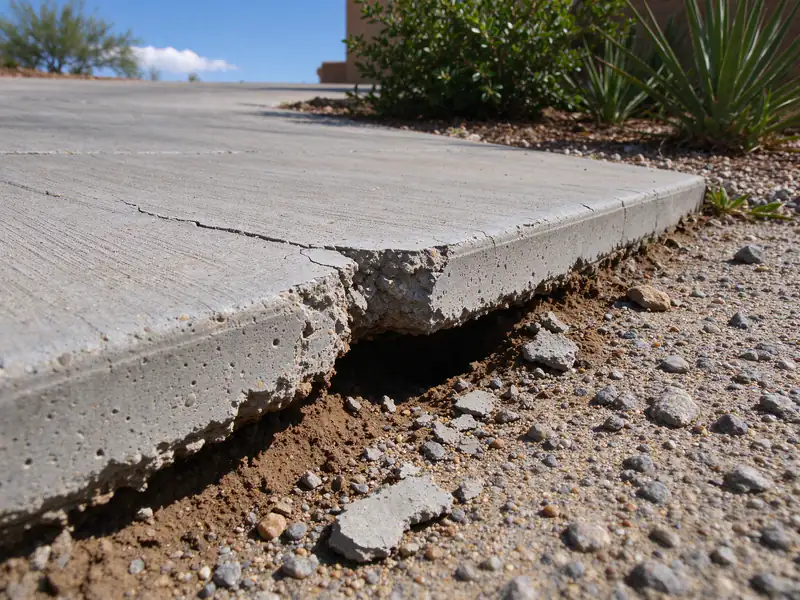
Water moving along or under a slab carries fine soil with it and leaves a void, an empty pocket the concrete bridges until it cracks or sags. Downspouts that empty onto the drive, sprinklers that wet the edge every day and sheet flow during storms all do it. The National Weather Service defines the Southwest monsoon as June 15 to September 30, and Sky Harbor averages 4.1 days a year with half an inch of rain or more (NOAA), so a few hard storms do much of a year’s damage. Settlement from washout keeps going until the water path changes, and the guide to driveway sinking after heavy rain covers that pattern.
Clay that shrinks as it dries
Shrink-swell clay loses volume as it dries and gains it when wet. In USDA soil survey samples, more than three of every four points in Gilbert and Chandler show moderate or higher shrink-swell. A panel on that soil drops where the ground dries out and can rise where it stays wet, so a sunken edge next to a dry strip and a heaved joint beside a watered planter can both be the same soil. The guide to why driveways crack and sink explains the soil mechanisms.
Standing water at the garage
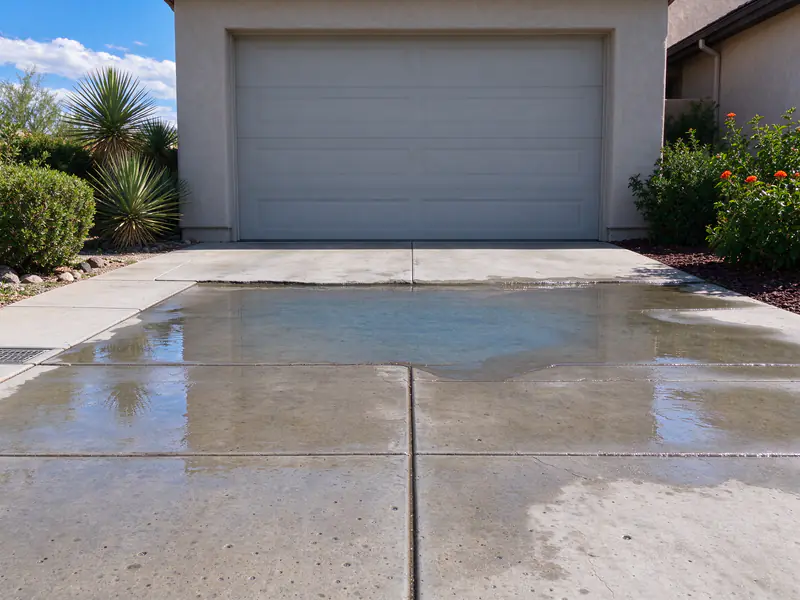
A driveway is poured to shed water away from the house. When the first panel drops or tilts back, water collects against the garage door, and that standing water does damage of its own. It seeps through the joint between the drive and the garage slab, softens the fill that caused the drop, and keeps the area wet long after a storm. On concrete it can stain and scale the surface; on asphalt it softens the binder and the base below. Pooling at the garage is often the first sign of settlement, and the repair has to restore the fall away from the door, not only close the step.
Lift it, rebuild it or replace it
The choice between driveway leveling and replacing a panel comes down to the slab and the ground. Lifting fits a panel that is whole, dropped in one piece, and sits on ground that has stopped moving or will once the water is fixed. It raises the panel and fills the void in one step, costs less than new concrete, and leaves small patched holes. A typical Phoenix-area range for mudjacking is about $4 to $10 per square foot, and a national budgeting range for polyurethane foam lifting is about $8 to $25 per square foot, both with minimum charges.
Replacement fits a panel that has cracked through, broken at a corner, sunk more than once, or sits over base that has to come out. The panel is saw-cut at its joints, broken out and hauled away, the soft base is dug out and replaced with compacted aggregate, and new concrete is placed to the slope of the panels around it. A typical Phoenix-area range for replacing a damaged section is about $10 to $15 per square foot. New concrete won’t match the older panels in color at first. When settlement runs across most of the drive, driveway replacement is the better value.
Asphalt can’t be lifted, so a sunken asphalt area is cut out, the base rebuilt and compacted, and new asphalt placed in lifts; asphalt driveway repair covers that work. Whatever the surface, the water that caused the drop gets dealt with: a downspout extended past the drive, a sprinkler head moved, or a channel or regrade where runoff crosses the slab. The driveway drainage page covers those fixes.
The street end and the right-of-way
A sunken apron at the street sits in the public right-of-way. In Phoenix, residential driveway concrete there is 6-inch Class A under the City’s driveway policy, and where a sidewalk crosses the drive the City requires an accessible walkway with a cross slope no steeper than 50:1. When a repair reaches the apron, sidewalk or curb, the city permit is part of the scope. The driveway apron repair page covers that edge.
Insurance and payment notes
Whether homeowners insurance covers a sinking driveway depends on the policy and on what caused the settlement, and that decision belongs to the insurer. The driveway insurance guide explains what to ask. To budget before a visit, the cost estimator uses the same ranges, and you can ask for an estimate when you are ready.
VIIVIVIVIIIIII
02
What's included
A look at the whole drive and where water runs, not only the low spot
Measuring the drop at each joint and the slope at the garage
Tapping for hollow areas, and cutting out a section to see the base where the cause isn't clear
A repair matched to the panel: lifting, base repair under a new section, or replacement
Breakout, haul-off and base compaction under any section that is replaced
Joint sealing around the repaired area so water stays out of the base
The city right-of-way permit when the repair reaches the apron, sidewalk or curb
VIIVIVIVIIIIII
03
Sunken driveway fixes compared
Sunken driveway fixes compared: what each fixes, what it leaves, and a budgeting range
Fix
Best for
Won't fix
Budgeting range
Lift with cement slurry
A sound concrete panel that dropped in one piece
Broken panels, or soil that keeps washing out
$4 to $10 per sq ft (typical Phoenix area), with a minimum charge
Lift with polyurethane foam
A sound panel where a light fill and a short wait matter
Broken panels or an active washout
$8 to $25 per sq ft (national budgeting range), with a minimum charge
Replace the section on rebuilt base
Broken, cracked-through or repeatedly sinking panels
Color match with the older panels next to it
$10 to $15 per sq ft (typical Phoenix area)
Cut out and rebuild an asphalt depression
A sunken area in asphalt where the base has failed
Widespread failure across the whole drive
Priced by area after measuring
Fix the water first
Any sinking caused by a downspout, sprinkler or runoff path
The drop that has already happened
Priced per job after the water path is traced
04
Related resources
Guides that go deeper on sunken driveway repair decisions in the Valley.
What a monsoon storm does to the layers under a driveway, how to tell a washed-out base from a slab that is only cracked, and which repairs hold once the water is dealt with.
How each lifting method works, where they really differ, how Phoenix clay and storm water affect the choice, and the cases where lifting isn't the answer at all.
Coverage turns on the cause of the damage and the wording of your policy. Here is how to read the two together, and what a repair estimate can and can't do for a claim.
05
How the work runs
First call or estimate request
Describe the surface, what changed and roughly where the property is. Photos of the damage and the street edge help. The published ranges give you a budget to think about before any visit.
A look at the whole driveway
The visit looks at more than the damaged spot: the slab or asphalt, the joints and edges, where water runs, and the transitions at the garage, sidewalk and street. The damaged area is measured, and anything found that changes the scope, such as soft base or caliche, is explained in the estimate.
Work timed for the heat
Hot-weather practice from the American Concrete Institute caps concrete at 95°F at discharge for general work, so summer pours are planned for the cooler part of the day. Where the job crosses into the street right-of-way, the city's permit is part of the scope.
Cure and handover
How long the car stays off depends on the material and the temperature. That wait is set out before the work starts, so you can plan around it.
VIIVIVIVIIIIII
06
What this work looks like
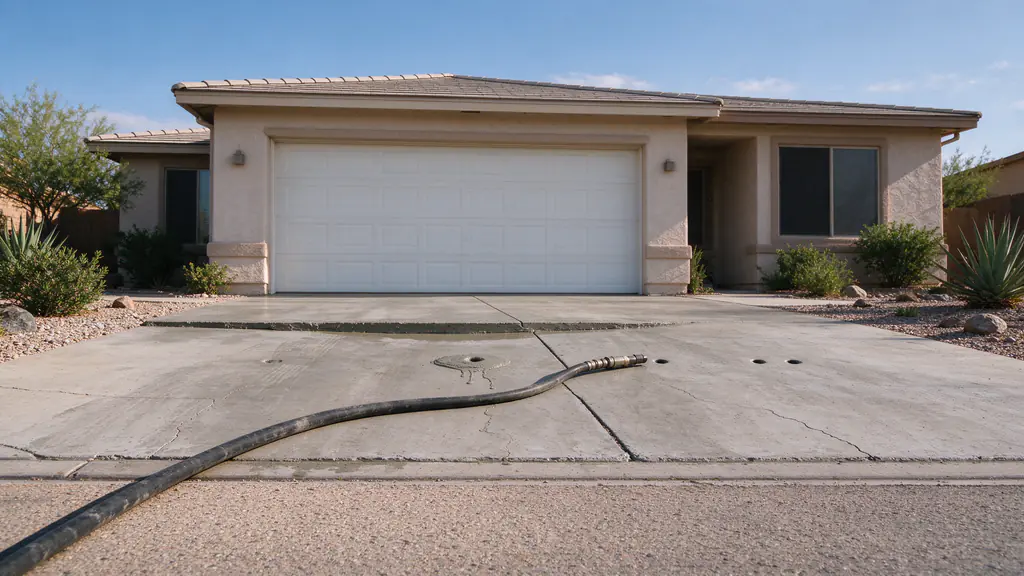
Water pooled on a sunken concrete driveway panel at a garage door in Phoenix after a storm
Washed-out void under the edge of a concrete driveway slab in Phoenix
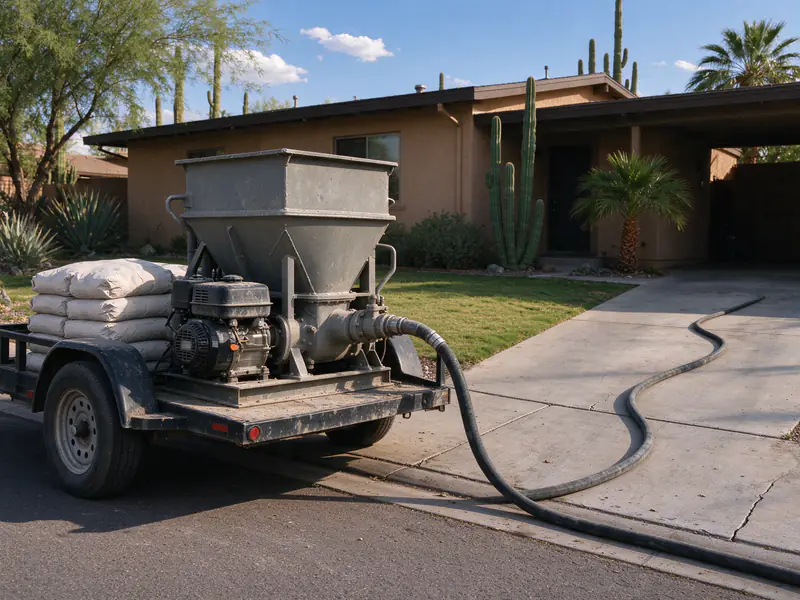
Trailer-mounted mudjacking pump with a hose running up a driveway in Phoenix
Diagram of mudjacking: holes about 1 1/2 inches across drilled through a settled driveway panel, with a pump hose pushing cement slurry into the void below to raise the panel
Driveway sinking? Get an Estimate.
Send a wide photo, a close photo of each step with a tape measure, and where your downspouts drain. The estimate explains why it sank and which fix fits.
Why does a driveway sink right in front of the garage?
The soil there is often backfill. When a house is built, the ground dug out for the footings is pushed back against the foundation, and if it wasn't compacted in layers it keeps settling under the weight of the slab and cars. Roof water from downspouts at the garage corners adds to it by softening or washing out that fill. That puts the first panel out from the garage door on the weakest ground.
Is water pooling at the garage door a sign the driveway has sunk?
Often, yes. A driveway is poured to fall away from the garage, so water that collects at the door usually means the first panel has dropped or tilted back toward the house. It can also mean the drive was poured too flat. Measuring the slope at the garage and the step at the first joint tells the two apart.
Can a sunken asphalt driveway be raised?
Not the way concrete is. Asphalt is flexible, so it can't be lifted as a slab. A sunken area in asphalt is saw-cut out, the soft or washed-out base below is removed and rebuilt with compacted aggregate, and new asphalt is placed and compacted in lifts so it sits level with the surrounding drive.
How soon does a sinking driveway need attention?
It depends on what the drop is doing. A small, stable step is a trip and drainage nuisance. A drop that is growing, a panel that rocks, a void you can see under an edge, or water now draining toward the house are reasons to act before the next monsoon, because each storm can wash out more of the base.
What photos help with a sunken driveway estimate?
A wide photo of the whole drive, a close photo of each step with a tape measure standing on the low side, and any gap you can see under a slab edge. Note where the downspouts discharge and where sprinklers hit, whether water pools after rain, and when you first noticed the drop.