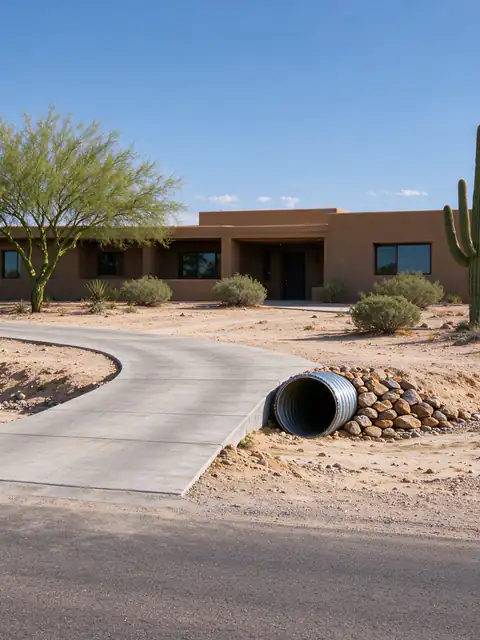
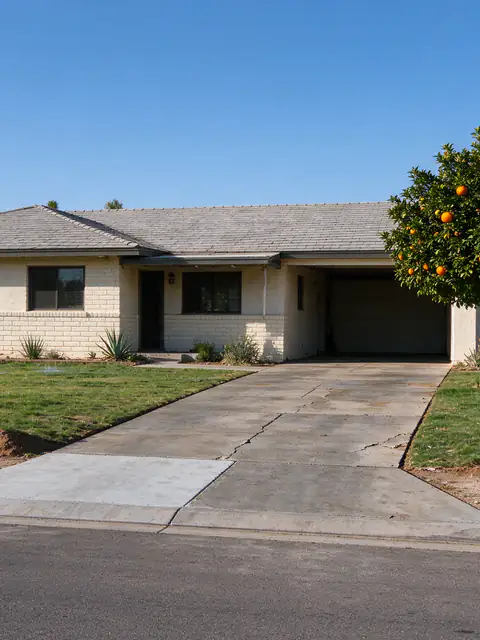
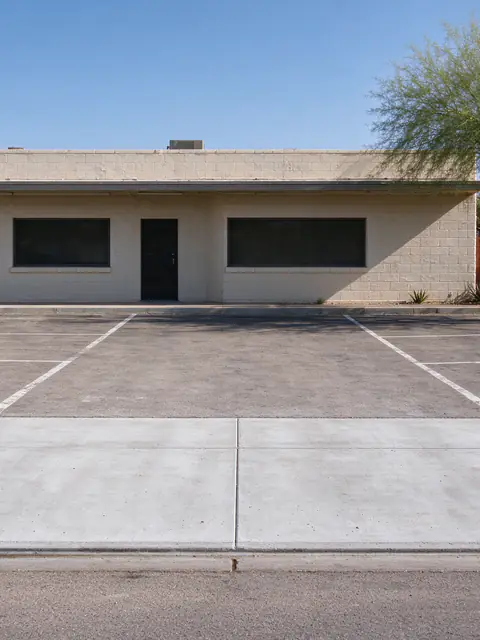
Driveway situations that come up in Paradise Valley
Any work at the street edge in the Town
The Town of Paradise Valley requires a Right-of-Way/Engineering Permit whenever work happens in Town right-of-way, driveway and sidewalk work included. There is no short-apron exemption like Phoenix's. The contractor's insurance certificate, for $2 million in liability naming the Town as additional insured, has to be delivered before the permit is released.
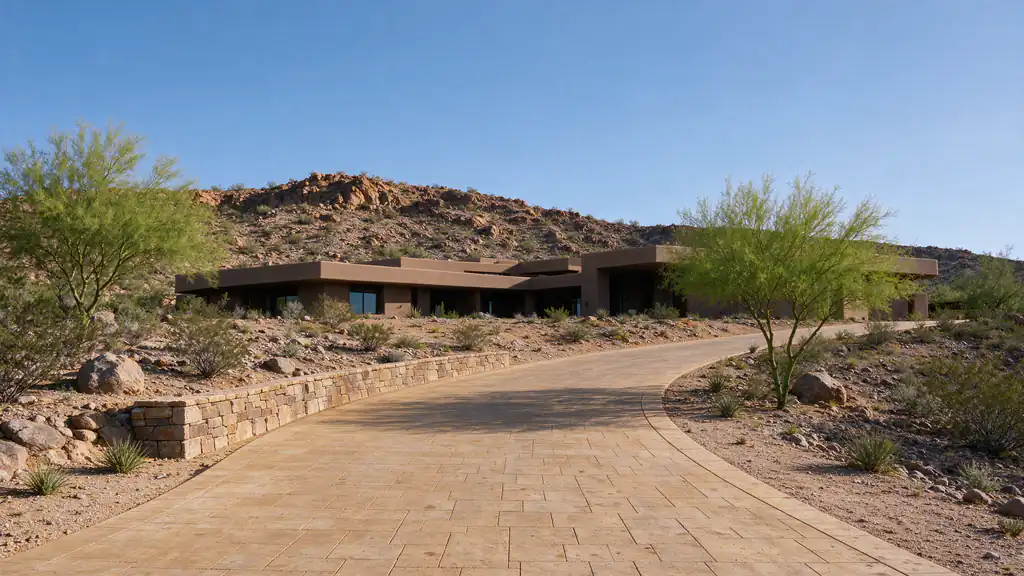
A long drive up a hillside lot
On a hillside-designated lot, the Town usually also asks for a staging and traffic plan, financial assurance or a performance bond, staked limits of disturbance with photos, and the Hillside Building Committee's conditions. A rebuild that changes grade or drainage needs a grading permit with engineer-signed plans before work starts.
A utility cut through a driveway panel
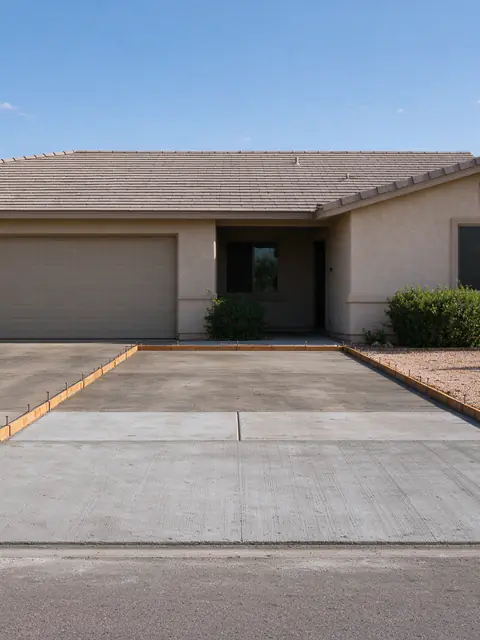
Under the Town's conditions for right-of-way permits, a utility pothole inside a sidewalk or driveway in the right-of-way means the whole panel, or the whole driveway, is removed and replaced. A patch in the middle of a panel isn't accepted there.
Pavers or stamped concrete that have shifted
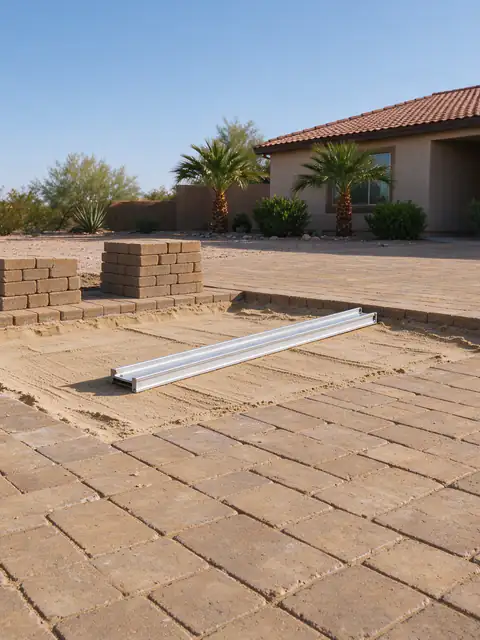
Where the drive is pavers, a sunken area is lifted, the base below rebuilt and the same pavers relaid. Stamped or colored concrete can be repaired in sections, but a new section won't match old color exactly. In either case the street end follows the Town's right-of-way concrete conditions.
Which Paradise Valley your address sits in decides who issues the permit for your driveway. The Town of Paradise Valley is its own municipality with its own permits, while Phoenix’s Paradise Valley village, to the north, follows City of Phoenix rules, so driveway repair in Paradise Valley, AZ, starts by settling which one you are in. Sundial Driveway Repair is a service company offering and managing driveway repair and replacement in both, and across the Phoenix area, for homes and commercial properties, with the work fulfilled by licensed and insured contractors. This page covers the Town first, then the village.
What the Town asks for at the street
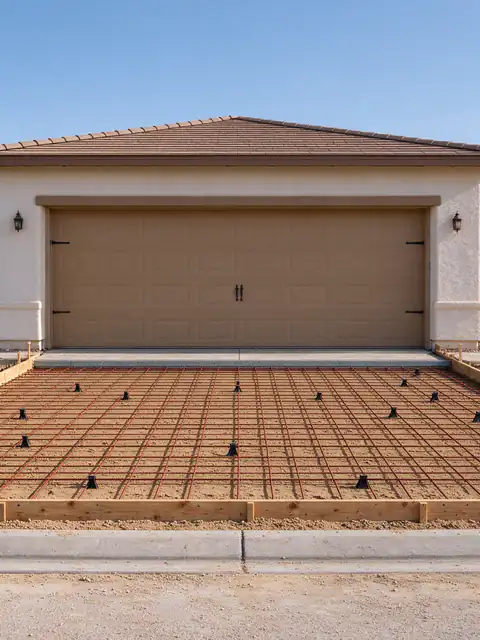
More than its neighbors do. Any driveway or sidewalk work in Town right-of-way needs a Right-of-Way/Engineering Permit, applied for electronically, and the contractor’s $2 million liability certificate naming the Town has to arrive before the permit is released. Phoenix, by contrast, treats up to 10.5 feet of concrete drive behind a roll curb as part of the on-site job. The Town’s conditions also set the materials: MAG Section 340 construction, Class A concrete at 3,000 psi, San Diego Buff sidewalks and ramps, and full-panel replacement wherever a utility pothole lands in a driveway or sidewalk. That makes apron repair here a permitted job from the start. Check any contractor’s ROC license with the license lookup guide.
Hillside lots, grading and caliche
The Town is almost entirely houses on their own lots: 96.0% of its 5,985 housing units are single-family detached in the Census Bureau’s survey, and 41.8% were built before 1980. Where a long drive climbs a hillside lot, the Town’s hillside rules add staging plans, financial assurance and staked disturbance limits, and a rebuild that changes grade or drainage needs a grading permit with an engineer-signed plan. That paperwork takes time and money before any concrete arrives, so driveway replacement on a hillside is planned around it. The replacement cost guide breaks down what it adds.
The ground itself is less of a mover than in the clay suburbs. USDA soil samples put just 11.4% of Town points in moderate or higher shrink-swell soils, but 18.2% show a cemented layer, a caliche layer within about five feet of the surface. Caliche slows excavation and raises the price, and it can hold water above it, which matters where driveway drainage is part of the fix. It isn’t a crack cause in itself, and the caliche guide explains why. FEMA maps put 4.8% of sampled Town points in a special flood hazard area. Where the drive is pavers, paver driveway repair resets them on a rebuilt base, and the paver repair cost guide has the budgeting examples.
Paradise Valley village, City of Phoenix
North of the Town, Paradise Valley village is the largest of Phoenix’s 15 urban villages, with about 80,991 housing units by tract-level Census estimates, roughly a third of them built before 1980. Here the City of Phoenix’s driveway policy applies: no separate driveway permit for up to 10.5 feet of concrete behind a roll or ribbon curb, a permit beyond that, and owner responsibility for the abutting sidewalk under City Code Section 31-54. The City’s current-permits map lists 30 driveway permits in the village, fourth among the 15. Soil samples flag cemented layers at 17.6% of points, the second-highest share of any village, so caliche is a cost driver on both sides of the line. The Phoenix driveway permit guide covers the village’s rules.
Planning a job on either side
Each job begins with the full driveway, from the garage to the street, with attention to joints, edges and runoff paths. The estimate states the method, the area, the right-of-way share, which permit office applies and what is excluded. Nearby, the Scottsdale and Arcadia pages cover the same questions under their own rules.
04
Paradise Valley village, City of Phoenix
Paradise Valley village is an urban village of the City of Phoenix, so work in the street right-of-way is permitted by the City of Phoenix.
33.1% of homes were built before 1980, with a median build year around 1986 (Census ACS, village estimate).
33.3% of sampled soil points show moderate or higher shrink-swell; 17.6% show cemented layers such as caliche (USDA NRCS).
Soil and housing figures describe the village as a whole, not a specific lot.
Driveway work in Paradise Valley? Get an Estimate.
Send photos of the drive and the street edge, and say whether the lot is hillside-designated. That decides which Town permits and plans the estimate includes.
Is my house in the Town of Paradise Valley or Phoenix's Paradise Valley village?
They are different places with different permit offices. The Town of Paradise Valley is its own municipality of about 6,000 homes. Paradise Valley village is one of the City of Phoenix's 15 urban villages, with about 81,000 homes, and follows Phoenix rules. The jurisdiction listed on your parcel's Maricopa County Assessor record settles it, and the estimate is written for that office.
What insurance must a contractor carry to work in Paradise Valley's right-of-way?
For a Town of Paradise Valley Right-of-Way/Engineering Permit, the contractor uploads a certificate of insurance for $2,000,000 in liability that names the Town as additional insured, and the Town won't release the permit until it has it. The application also needs a Town dust control plan for small disturbances, or a Maricopa County dust permit above a tenth of an acre.
Do I need a grading permit to rebuild a driveway in Paradise Valley?
If the work changes the existing grade and drainage of the land, yes. The Town's grading permit calls for a legal survey, a grading and drainage plan signed by an Arizona registered civil engineer, an engineer-signed SWPPP and a dust plan or permit. The building permit section also mentions an engineer-sealed plan where 999 square feet or more of impervious area is added; whether that applies to a driveway alone is confirmed per address.
What does driveway replacement cost in Paradise Valley?
The shared Phoenix-area ranges are the starting point: about $6 to $11 per square foot for a standard broom-finish concrete pour, plus roughly $1.20 to $1.90 per square foot to remove the old slab. A national budgeting range for a concrete apron is about $8 to $18 per square foot. Caliche, hillside access, engineered grading plans and decorative finishes push higher, and the Town's permit fee is confirmed per address.
What concrete does the Town of Paradise Valley require in its right-of-way?
The Town's conditions for right-of-way permits call for curb, gutter, driveway, sidewalk and ramps built to MAG Section 340, with concrete per MAG Section 725, Class A at 3,000 psi. Sidewalks and ramps are San Diego Buff colored concrete or an approved equal. The permit and stamped plans have to be on site while the work is done.
How caliche forms, where soil surveys flag it around Phoenix, why a compacted subgrade matters more than the caliche itself, and how a cemented layer changes drainage, excavation and the price of a repair.
The two numbers behind a concrete driveway replacement, tear-out and new pour, plus what base repair, grade correction, the apron and permits add, with illustrative budgets.
What swapping damaged pavers, resetting a sunken section and cleaning and sealing a paver driveway cost, why the base under the pavers sets the price, and what to look for on a quote.
Which license classes fit each kind of driveway work, when the small-job exemption applies and when it doesn't, and what to check besides the license itself.
How the City's Driveway Policy for Single Family Development and its right-of-way fee schedule decide whether your driveway job needs a permit, and what it costs when it does.