111days a year reach 100°F or more at Sky HarborNOAA climate normals
0.6nights a year drop to freezing at Sky Harbor, so heat and water, not frost, drive most damageNOAA
June 15 to September 30 is monsoon seasonNational Weather Service
Phoenix treats up to 10.5 ft of concrete drive past a roll curb as on-site work, with no separate driveway permit
Concrete for a residential driveway in the Phoenix right-of-way is 6-inch Class A
Last Updated:
Driveway resurfacing puts a new wearing surface over a driveway whose structure is still sound: a thin bonded overlay on concrete, or a new layer of hot-mix on asphalt. It renews what you see and drive on. It does not rebuild what is underneath, so the slab or pavement has to be level, solid and done moving before an overlay is worth paying for. Sundial Driveway Repair is a service company offering and managing driveway resurfacing across Phoenix and its suburbs, for homes and commercial properties, and the work is fulfilled by licensed and insured contractors.
Resurfacing is a different job from sealing. Sealcoat on asphalt and sealer on concrete are coatings that protect a surface; resurfacing adds a new layer of material. The driveway sealcoating page covers the coating side.
What happens on the first visit
The first visit decides whether the driveway is a resurfacing candidate at all. It looks at the whole drive: the surface and finish, the joints, the edges, where water runs, and the garage, sidewalk and street transitions. Cracks are checked for width, for whether their two sides are level, and for whether they cross panels. The slab is tapped to find hollow areas over voids, since an overlay on a hollow spot breaks when the slab under it does.
Anything on the surface is noted too: old sealer, paint, oil and earlier patches all affect bonding. The estimate names the method, the area, the prep and the repairs that come first, and what resurfacing won’t fix, such as settlement or a color match with any concrete left uncovered.
The deciding test: is the driveway sound?
An overlay copies whatever it sits on. A slab that is still settling, a crack that is still opening, or a base that has washed out will crack, sink or break the new surface the same way it broke the old one. So the question isn’t how bad the surface looks. It is whether the problem is only at the surface.
Signs a drive is a good candidate:
Scaling, pitting, popouts or wear spread across the top, with level panels
Cracks that are narrow, level on both sides and unchanged over time
Stains or a patchwork of earlier repairs that you want to even out
Signs it isn’t, at least not yet:
Panels that step up or down at joints, or dropped corners. A sound panel that settled may be raised first with driveway leveling.
Broken or crumbling panels and soft, wet base, which point to concrete driveway repair by section, or replacement
Concrete resurfacing with a bonded overlay
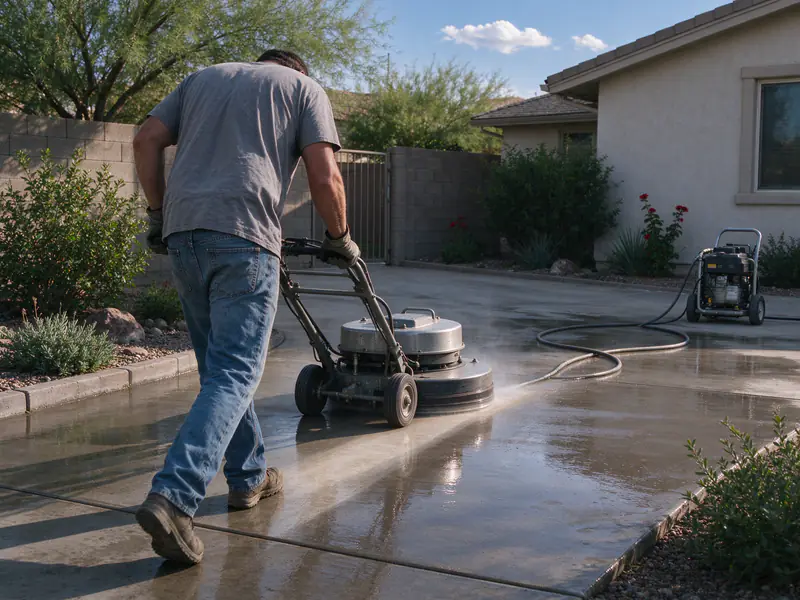
A concrete overlay is a polymer-modified cement mortar spread thin over the old slab. It only works if it bonds, so the bulk of the job is prep. The surface is pressure cleaned, and oil, sealer and paint are removed, since the overlay can’t grip them. Spalls and popouts are cut back to sound concrete and patched, and broken joint edges are rebuilt. The existing control joints are marked so they can be cut or kept open through the new layer; an overlay laid across a joint will crack along it when the slab moves.
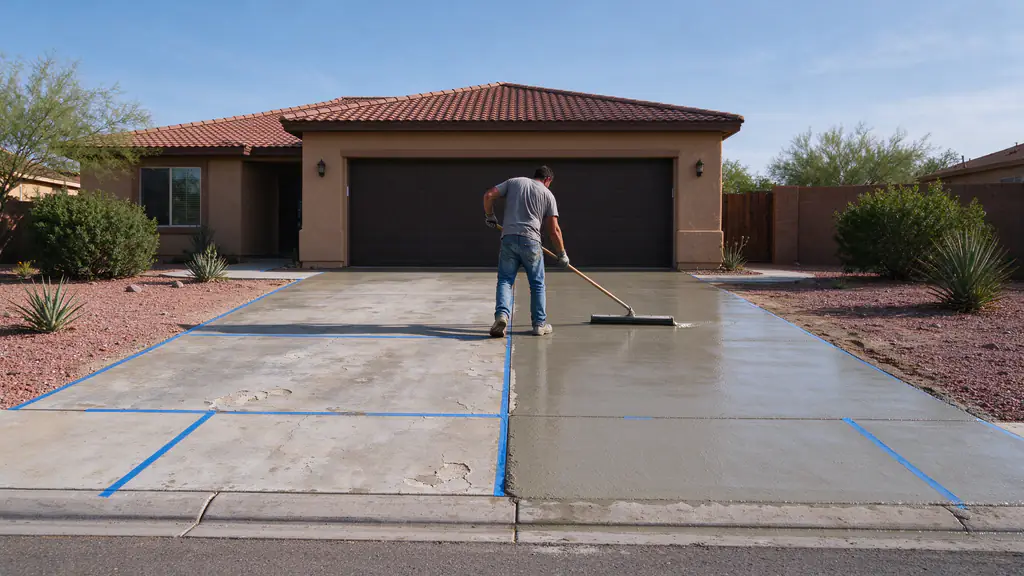
The overlay is then applied, often by squeegee for a plain finish, textured for grip, and cured. Decorative overlays with color, stamped patterns or stencils follow the same steps with more finishing work, which is why they price higher. If your drive is already stamped, stamped concrete repair may be the closer fit.
Why Valley concrete surfaces wear out
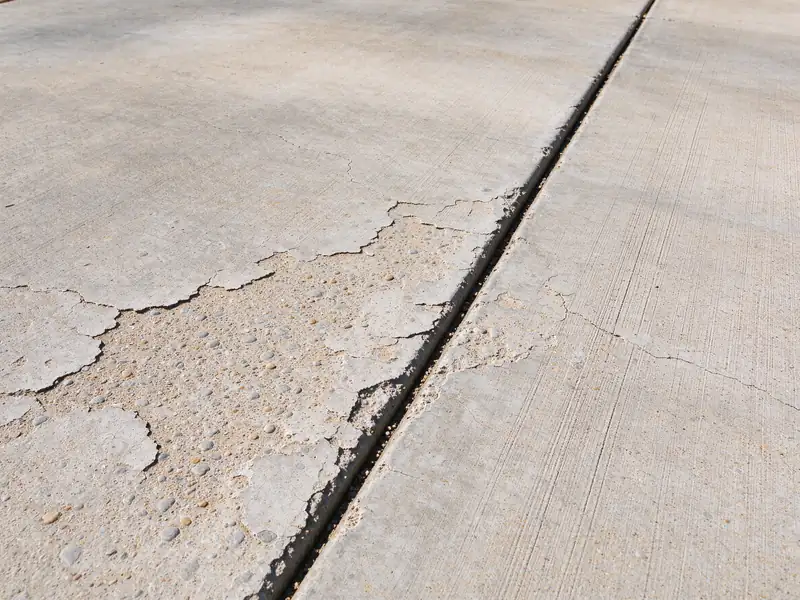
Surface loss on Phoenix concrete rarely starts with frost: Sky Harbor averages 0.6 freezing nights a year in NOAA’s climate normals. It more often traces back to the original pour. Water worked into the surface, finishing while bleed water was still on the slab, or concrete that dried too fast in the heat can all leave a weak top layer that flakes off later. The guide to what causes driveway spalling goes through each cause.
Heat matters for the overlay too. Thin cement layers lose water fast, and normal July highs at Sky Harbor reach 106.5°F, so summer resurfacing is planned for the cooler hours and kept damp while it cures. ACI 305.1 caps concrete at 95°F at discharge for general hot-weather work, which shows how narrow the summer window is.
Asphalt overlays and when they beat patching
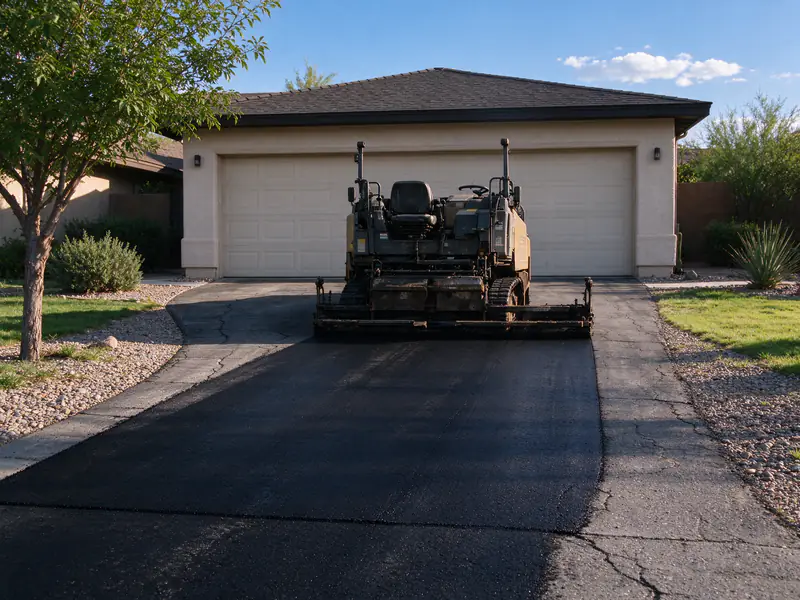
On asphalt, resurfacing means an overlay: a new layer of hot-mix placed over the old pavement. It is the right call when the asphalt is oxidized, raveled and cracked across the surface but the base is still carrying the load. Failed spots are cut out and patched first, the surface is cleaned, a tack coat is sprayed so the layers bond, and the new hot-mix is laid and rolled.
Patching and overlaying answer different questions. A few failed areas in an otherwise sound drive are cheaper to patch on their own, as on the asphalt driveway repair page. Once the whole surface has aged out, patching chases damage that keeps appearing, and an overlay renews everything at once. Neither fixes a failed base: cracks over weak base reflect up through new asphalt, often in the same pattern. Where the base has failed widely, rebuilding is the honest answer.
Edges, joints and the street
New material has height, and every edge has to be planned. At the garage slab, the overlay is tapered or the old surface is ground or milled back so the drive meets the floor without a lip and still sheds water away from the door. The same applies where the drive meets the sidewalk and the street. Expansion joints against the garage and sidewalk are kept open and resealed; the expansion joint repair page explains why they matter in Phoenix heat.
The strip at the street sits in the public right-of-way, and finishes there follow City rules. Under the City of Phoenix Driveway Policy, materials other than concrete or finishes other than broom beyond the first 10.5 feet of right-of-way need a maintenance agreement with Street Transportation, which matters if a decorative overlay is planned to run to the curb. Other cities price this work in their own ways: Chandler’s fee schedule, for example, lists inspection fees for overlays and for mill-and-overlay on paving in the right-of-way. The Phoenix driveway permit guide and the driveway apron repair page cover that edge, and an HOA may set its own finish rules, as the HOA driveway rules guide explains.
Resurfacing or replacement: getting a straight answer
Homeowners report contractors waving off resurfacing and steering them to a full replacement, and say they can’t tell whether that is honest advice. The test above is the way to tell. A good answer to “why not resurface?” names a finding: panels that moved, cracks that reopened, a hollow area, a base that failed. If the slab is sound and only the surface has aged, resurfacing is a reasonable choice, and the resurfacing vs replacement guide sets out where the line sits. When the findings do point the other way, driveway replacement explains what the full rebuild involves.
Payment notes
The Arizona Department of Revenue treats resurfacing as maintenance, repair, replacement or alteration contracting, so tax on materials is usually built into the price rather than added as an invoice line. That is general information, not tax advice. The driveway resurfacing cost guide breaks down the ranges, the cost estimator gives a budget before a visit, and you can ask for an estimate with photos of the surface and its edges.
VIIVIVIVIIIIII
02
What's included
A look at the whole drive to confirm the slab or pavement is sound enough to resurface
Repair of spalls, popouts and broken joint edges before the overlay goes on
Pressure cleaning and surface preparation so the overlay can bond
Joints marked and carried through the new surface
Height worked out at the garage, sidewalk and street transitions
The overlay applied, textured and cured, with the wait before driving stated
For asphalt: patching failed areas, tack coat and a compacted new layer
VIIVIVIVIIIIII
03
Resurfacing compared with patching and replacement
Resurfacing compared with patching and replacement: what each fixes and a budgeting range
Option
Best for
Won't fix
Budgeting range
Concrete resurfacing
Scaled, pitted, stained or worn concrete on a level, solid slab
Settlement, active cracks or a failed base
$5 to $10 per sq ft (typical Phoenix area); decorative overlays cost more
Asphalt overlay
An oxidized, raveled asphalt surface on a sound base
Failed base, which reflects up through the new layer
$1 to $4 per sq ft (national budgeting example); base repairs extra
Asphalt patching
A few failed areas in otherwise sound asphalt
An aged surface across the rest of the drive
$100 to $415 per pothole (typical Phoenix area); larger areas priced by size
Concrete section replacement
One or two broken or sunken panels
Worn surface on the panels left in place
$10 to $15 per sq ft (typical Phoenix area)
Full replacement
A drive with base failure or cracking across most of it
Nothing structural; it is the full rebuild
$6 to $11 per sq ft new concrete, plus $1.20 to $1.90 per sq ft removal (typical Phoenix area)
04
Related resources
Guides that go deeper on resurfacing decisions in the Valley.
What resurfacing actually is on concrete and on asphalt, the condition it needs underneath, how it compares on price with a rebuild, and the height and drainage questions an overlay raises.
What a bonded concrete overlay and an asphalt overlay cost, what prep is priced on top, how the numbers compare with replacement, and the conditions that make resurfacing money poorly spent.
Why the freeze-thaw explanation found in typical driveway advice rarely fits the Valley, the finishing, curing, steel and joint problems that do, and how the depth of the damage sets the repair.
05
How the work runs
First call or estimate request
Describe the surface, what changed and roughly where the property is. Photos of the damage and the street edge help. The published ranges give you a budget to think about before any visit.
A look at the whole driveway
The visit looks at more than the damaged spot: the slab or asphalt, the joints and edges, where water runs, and the transitions at the garage, sidewalk and street. The damaged area is measured, and anything found that changes the scope, such as soft base or caliche, is explained in the estimate.
Work timed for the heat
Hot-weather practice from the American Concrete Institute caps concrete at 95°F at discharge for general work, so summer pours are planned for the cooler part of the day. Where the job crosses into the street right-of-way, the city's permit is part of the scope.
Cure and handover
How long the car stays off depends on the material and the temperature. That wait is set out before the work starts, so you can plan around it.
VIIVIVIVIIIIII
06
What this work looks like
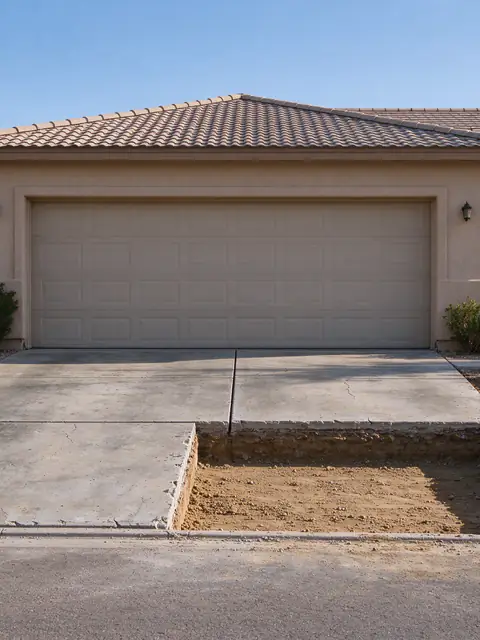
Scaled concrete driveway surface in Mesa with the top layer flaked off
Rotary surface cleaner preparing a concrete driveway in Mesa for resurfacing
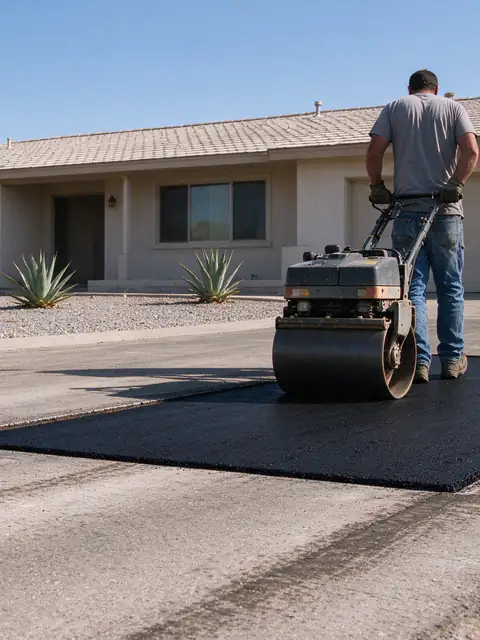
Compact paver laying a new asphalt layer over an old asphalt driveway in Mesa
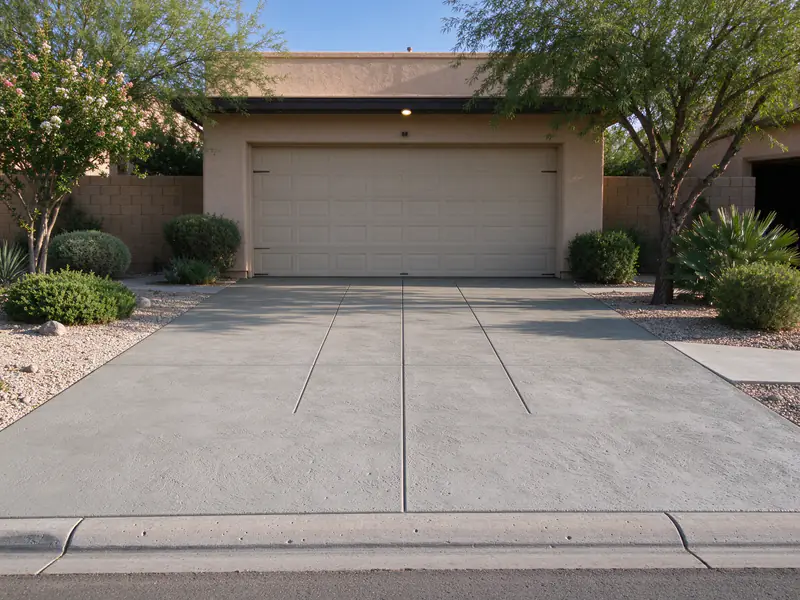
Resurfaced concrete driveway in Mesa with a uniform light gray finish and clean joints
Worn, flaking or faded driveway? Get an Estimate.
Send photos of the surface and its edges. The estimate says whether the drive is sound enough to resurface, what prep it needs and what an overlay won't fix.
Only if the cracks have stopped moving. Narrow, dormant cracks with level edges can be repaired and covered, though an overlay can still show a fine line above them. Cracks that widen, step up on one side or reopen after filling mean the slab is still moving, and an overlay will crack in the same place. Those slabs need the movement dealt with first.
Why do some concrete overlays peel off the driveway?
Because they never bonded or the slab moved under them. Overlays laid over dirt, old sealer, paint or oil let go in patches, and so do overlays on a surface that wasn't cleaned and roughened enough to grip. Thin layers that dry too fast in the heat can also crack and lift. On a slab that is still moving, the overlay cracks and breaks away with it.
Does an asphalt overlay need the old driveway milled first?
Not always. Where the old asphalt is sound and the extra height causes no trouble, it is cleaned, patched where it failed, tacked and overlaid. Milling comes in where the new layer would leave a lip at the garage, sidewalk or street, or block drainage, so those edges are ground down first and the new asphalt finishes flush.
Can a concrete overlay be laid over the joints in a driveway?
It shouldn't be laid across them and left. The joints are where the slab moves, so an overlay spread over a joint cracks along it. The joint lines are marked before the overlay goes on and are cut or kept open through the new surface afterward, and expansion joints at the garage and sidewalk are resealed with a flexible sealant.
What photos help with a driveway resurfacing estimate?
A wide shot of the whole drive, close shots of the worn areas and of every crack, and photos of the edges where the drive meets the garage, sidewalk and street. Rough dimensions help. Mention any sealer or paint already on the surface, past patching, and whether you want a plain finish or a decorative one.