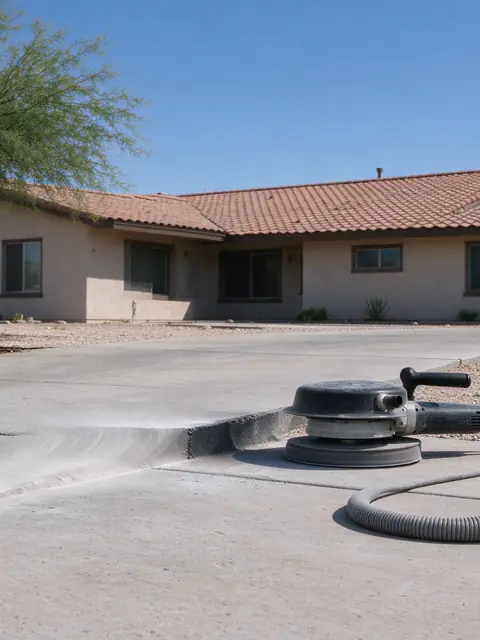
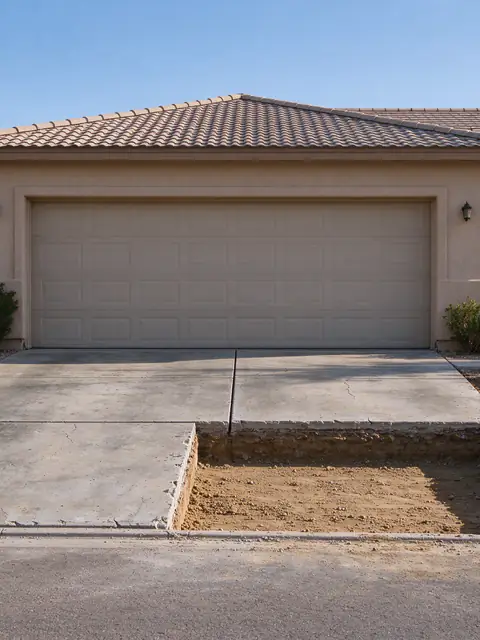
111days a year reach 100°F or more at Sky HarborNOAA climate normals
0.6nights a year drop to freezing at Sky Harbor, so heat and water, not frost, drive most damageNOAA
June 15 to September 30 is monsoon seasonNational Weather Service
Phoenix treats up to 10.5 ft of concrete drive past a roll curb as on-site work, with no separate driveway permit
Concrete for a residential driveway in the Phoenix right-of-way is 6-inch Class A
Last Updated:
Concrete driveway leveling raises a settled panel back toward its neighbors by filling the space under it, so the step at the joint closes and water runs off the way it was meant to. It is a method for one situation: a panel that is still whole but has lost support underneath. Sundial Driveway Repair is a service company offering and managing driveway leveling across Phoenix and its suburbs, for homes and commercial properties, and the lifting is fulfilled by licensed and insured contractors. The first question is always whether the panel is a candidate at all.
This page covers the lifting methods and their limits. If you are still working out why a section sank, or whether to lift, rebuild or replace it, start with sunken driveway repair, which covers the diagnosis and every fix.
What happens on the first visit
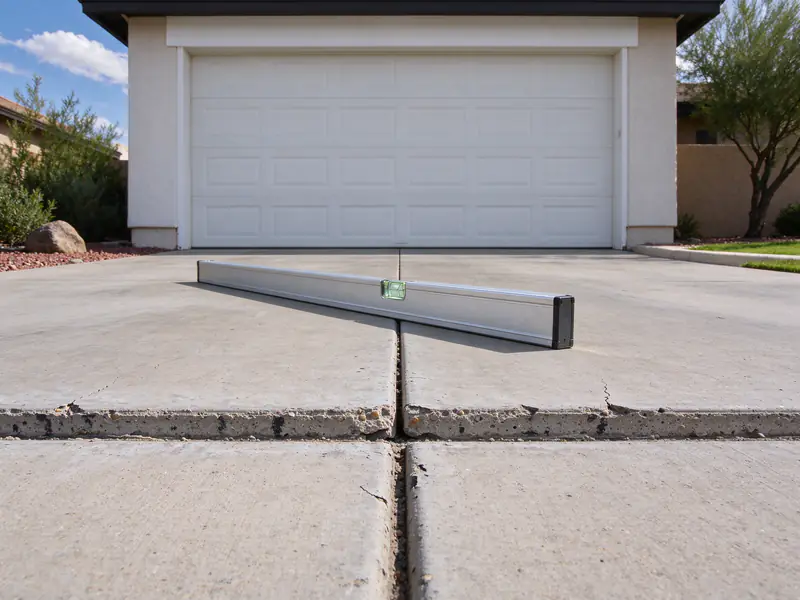
The first visit looks at the whole drive before talking about lifting: the surface, every joint, the edges, where water runs, and the transitions at the garage, sidewalk and street. The step at each joint is measured, and panels are tapped to find hollow-sounding areas over voids. Each panel is checked for cracks, especially cracks that cross it or break off a corner, because a lift pushes on the slab from below and a weak panel can break under that push.
The estimate names the method, the panels and area to be lifted, any part that sits in the street right-of-way, and what the work excludes, such as color match on the patched holes. If something found changes the scope, such as soft base, caliche or water still washing out under an edge, it is explained before any lifting is priced.
Which panels can be lifted
Good candidates
Lifting suits a panel that dropped in one piece: the concrete is sound, the cracks (if any) are few and clean, and it settled because the ground under it compressed, washed out or shrank. A driveway panel that sank an inch at the garage, or a section that tilted toward a downspout, often fits. So does a run of uneven driveway sections where several panels dropped together over an old backfilled trench. The lift fills the void as it raises the slab, which matters as much as the height: a panel raised at the edge with an empty pocket behind it settles again.
Poor candidates
Lifting doesn’t mend concrete. A panel broken into several pieces lifts unevenly and can break further. A panel that rose instead of sank, from swelling clay or a root, can’t be pushed down by injecting under it. Where the step is small and the panels are otherwise in plane, trip hazard grinding removes the lip without drilling. And where water is still running under the slab, the new fill washes out the same way the soil did. In USDA soil survey samples, more than three of every four points in Gilbert and Chandler show moderate or higher shrink-swell clay, and a panel on that soil can keep moving with irrigation and storms, so the water source is part of the decision. The guide to driveway sinking after heavy rain covers monsoon washouts.
Mudjacking
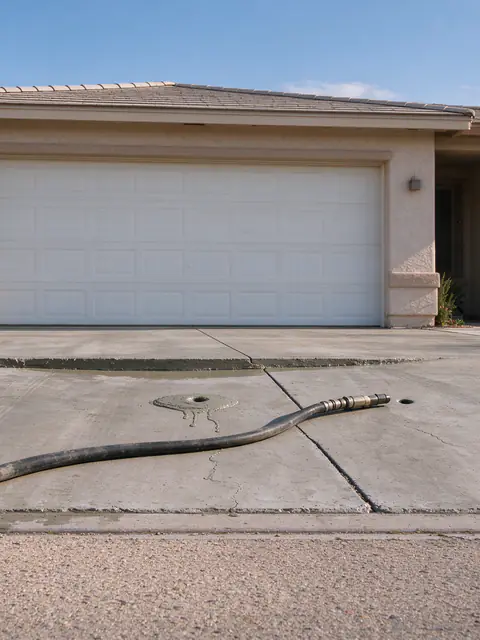
Mudjacking, also called slabjacking, pumps a cement-based slurry under the slab through holes about 1 1/2 inches across, drilled in a pattern across the panel. The slurry fills the void first, then builds pressure and lifts the panel, and the operator moves from hole to hole to raise it evenly. When the panel reaches height, the holes are patched with cement grout.
The slurry is dense, so it adds weight to soil that already settled, and it needs time to firm up before a car drives on it. Its advantages are a mineral fill that holds up well in the ground and a lower price per square foot. A typical Phoenix-area range for mudjacking a settled slab is about $4 to $10 per square foot, and jobs usually carry a minimum charge of several hundred dollars.
Polyurethane foam lifting
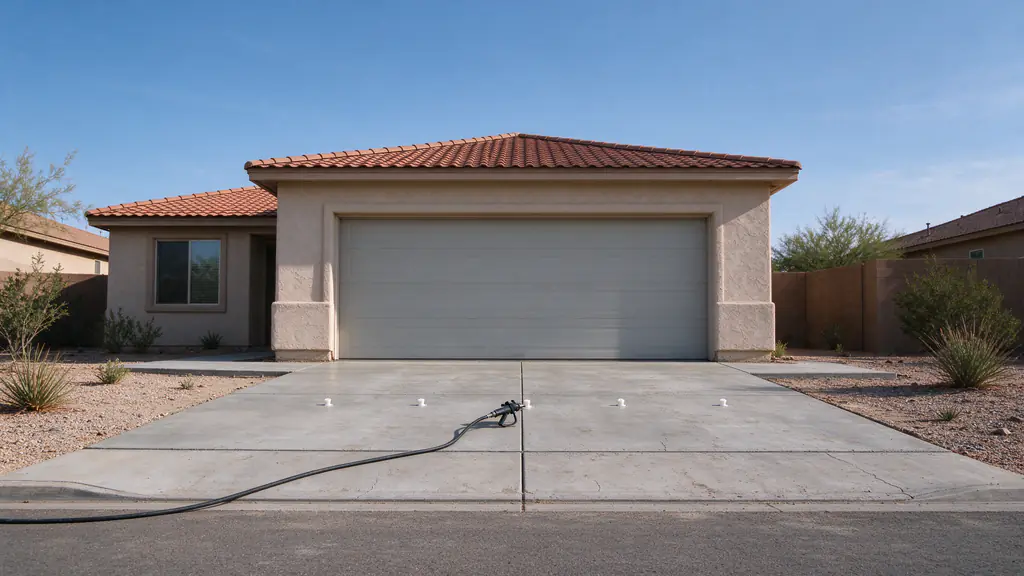
Foam lifting drills smaller ports, about 5/8 inch across, and injects a two-part polyurethane that expands under the slab. It fills voids and lifts the panel as it expands, then cures to a lightweight, closed-cell fill that adds little load to the soil and reaches working strength quickly, so the wait before driving is short. The smaller holes are easier to hide on decorative concrete. The trade-off is price and control: foam expands fast, so the lift is done in small shots and watched closely against a level or string line. A national budgeting range for polyurethane foam lifting is about $8 to $25 per square foot, with a minimum job charge common.
A lifted panel shows a row of small gray patches where it was drilled. The joints around it open slightly as it rises, and they need sealing so irrigation and storm water don’t reach the new fill; expansion joint repair covers that work. A crack that crossed the panel before lifting is cleaned and sealed afterward. Height is set by drainage, not just by the neighboring panel: the drive should still shed water away from the garage, and where a sidewalk crosses the driveway, the City of Phoenix requires an accessible walkway with a cross slope no steeper than 50:1, which limits how far a panel at that crossing can be tilted.
Lifting is not a cure for the cause. If a downspout empties along the edge or a sprinkler keeps the soil wet, redirecting that water is part of a lasting repair, and driveway drainage covers the options. If panels are breaking as well as sinking, concrete driveway repair covers section replacement.
Insurance and payment notes
Whether homeowners insurance pays for a sinking driveway depends on the policy and on what caused the settlement, and that decision belongs to the insurer; the driveway insurance guide sets out the questions to ask. Lifting work is concrete repair, which Arizona’s Registrar of Contractors places under the R-9 residential and C-9 commercial concrete classes. On tax, the Arizona Department of Revenue treats repair work as contracting, so tax on materials is usually built into the price rather than added to your invoice; that is general information, not tax advice. To budget first, the cost estimator works from the same ranges, and you can ask for an estimate when you are ready.
VIIVIVIVIIIIII
02
What's included
A check that each panel is whole and sound enough to lift
A layout of injection holes or ports for each panel
Lifting with slurry or foam, watched against a level or string line so panels aren't over-lifted
Filling the void under the panel, not just raising its edge
Patching the drilled holes with cement grout
Sealing the joints around lifted panels so water stays out of the new support
A stated wait before driving, given before the work starts
VIIVIVIVIIIIII
03
Ways to fix an uneven driveway panel compared
Ways to fix an uneven driveway panel compared: what each fixes, what it leaves, and a budgeting range
Option
Best for
Won't fix
Budgeting range
Mudjacking (cement slurry)
A sound panel that settled in one piece over a void or soft spot
A broken panel, or a void that water keeps washing out
$4 to $10 per sq ft (typical Phoenix area), with a minimum charge of several hundred dollars
Polyurethane foam lifting
A sound panel where small holes, light fill weight or a short wait matter
Broken concrete, heaved panels or an active washout
$8 to $25 per sq ft (national budgeting range), with a minimum charge common
Grinding the step
A small, stable lip at a joint where the panels are otherwise in plane
A panel that tilts, rocks or holds water
Priced per job after measuring
Replace the panel
A broken, badly cracked or heaved panel, rebuilt on new base
Color match with the older panels next to it
$10 to $15 per sq ft (typical Phoenix area)
04
Related resources
Guides that go deeper on driveway leveling decisions in the Valley.
How each lifting method works, where they really differ, how Phoenix clay and storm water affect the choice, and the cases where lifting isn't the answer at all.
What mudjacking and polyurethane foam lifting cost per square foot, why small jobs price as a minimum, what drainage and joint work add, and where lifting stops being the cheaper choice.
What a monsoon storm does to the layers under a driveway, how to tell a washed-out base from a slab that is only cracked, and which repairs hold once the water is dealt with.
05
How the work runs
First call or estimate request
Describe the surface, what changed and roughly where the property is. Photos of the damage and the street edge help. The published ranges give you a budget to think about before any visit.
A look at the whole driveway
The visit looks at more than the damaged spot: the slab or asphalt, the joints and edges, where water runs, and the transitions at the garage, sidewalk and street. The damaged area is measured, and anything found that changes the scope, such as soft base or caliche, is explained in the estimate.
Work timed for the heat
Hot-weather practice from the American Concrete Institute caps concrete at 95°F at discharge for general work, so summer pours are planned for the cooler part of the day. Where the job crosses into the street right-of-way, the city's permit is part of the scope.
Cure and handover
How long the car stays off depends on the material and the temperature. That wait is set out before the work starts, so you can plan around it.
VIIVIVIVIIIIII
06
What this work looks like
Small flush foam injection ports in a straight row in a Tempe concrete driveway
Concrete driveway in Tempe with a settled panel leaving a step at the joint and a level resting on the slab
Diagram of foam lifting: ports about 5/8 inch across drilled through a settled driveway panel, with expanding foam filling the void below and pushing the panel back toward level
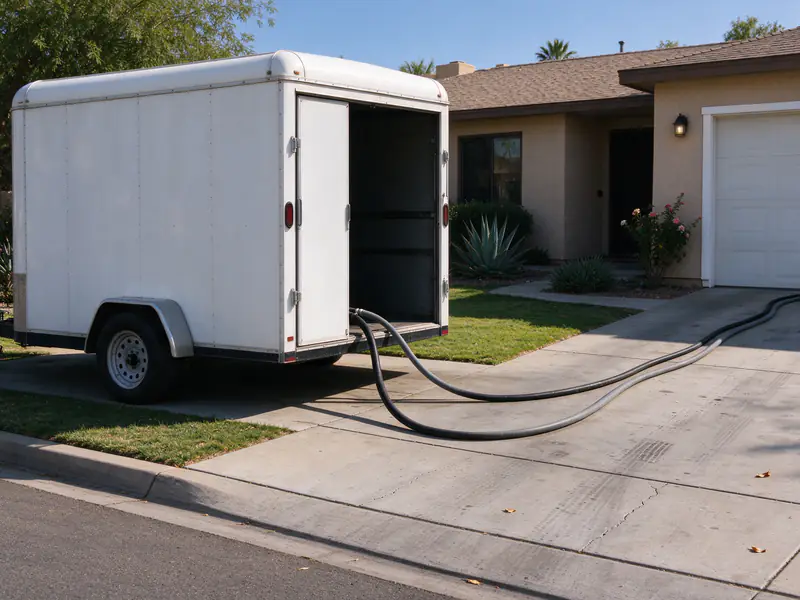
Box trailer with injection hoses running up a concrete driveway in Tempe
Driveway panel dropped? Get an Estimate.
Send photos of the step at each joint with a tape measure in view. The estimate says whether the panels can be lifted, which method fits and what lifting won't change.
Sometimes. A single clean crack across a panel can be lifted if both halves are firm and the crack is sealed afterward, though lifting can open it slightly. A panel broken into several pieces, or with a corner that rocks loose, tends to lift unevenly and break further. In that case the honest repair is replacing the panel on a repaired base.
Can a driveway panel be lifted too high?
Yes, and it can't be pushed back down afterward. Foam expands quickly and slurry builds pressure fast, so the lift is done in small steps and checked against a level or string line across the joints. Over-lifting leaves a new lip, can tip water back toward the garage, and can crack a panel that binds against its neighbor. Fixing it means grinding the high edge or replacing the panel.
Can leveling lower a driveway panel that has risen?
No. Lifting only pushes concrete up. A panel that heaved, for example from swelling clay or a tree root, can only be brought back into line by grinding a small lip, raising the panels around it if that makes sense for drainage, or removing and replacing it. That is why heave and settlement are told apart before any method is chosen.
When can I drive on a driveway after it is leveled?
It depends on the material and the temperature. Foam reaches working strength quickly, so the wait is short. Cement slurry needs longer to firm up under the slab before a car's weight goes on it. The estimate states the wait for the method chosen before the work begins, so you can plan where to park.
What should I measure before asking about driveway leveling?
The height of the step at each joint, measured with a tape against a straightedge, and which panels have dropped. Note whether water pools on the low panel, whether any panel rocks or sounds hollow, and whether the low spot sits at the garage, the sidewalk or the street. Photos with a level resting on the slab help.