111days a year reach 100°F or more at Sky HarborNOAA climate normals
0.6nights a year drop to freezing at Sky Harbor, so heat and water, not frost, drive most damageNOAA
June 15 to September 30 is monsoon seasonNational Weather Service
Phoenix treats up to 10.5 ft of concrete drive past a roll curb as on-site work, with no separate driveway permit
Concrete for a residential driveway in the Phoenix right-of-way is 6-inch Class A
Last Updated:
Driveway apron repair fixes the street end of a driveway: the slab between the sidewalk and the curb, or between the property line and the pavement where a street has no curb. In Phoenix that strip usually sits in the public right-of-way, so the City decides its thickness, its finish and when a permit is needed. Sundial Driveway Repair is a service company offering and managing driveway apron repair across Phoenix and its suburbs, for homes and commercial properties, and the work is fulfilled by licensed and insured contractors.
The apron takes more abuse than any other part of a drive. Every car turns and brakes on it, it sits at the low end where runoff collects, and it meets three other surfaces: the sidewalk, the curb and gutter, and the street. A crack or drop there is rarely just cosmetic, because it can turn into a trip edge on a public walkway. A garage-end drop is a different problem, covered on the sunken driveway repair page.
What happens on the first visit
The first visit looks at the whole driveway, not just the broken corner at the street. That means the surface, the joints and edges, where water runs, and how the drive meets the garage, the sidewalk and the street. Each crack in the apron is checked for width, for whether one side has dropped, and for whether it runs across the panel or stays at a joint. Hollow spots are found by tapping, and sometimes a section is cut out to see the base.
The visit also places the line between your lot and the right-of-way. On a street with a sidewalk, the apron and the sidewalk crossing usually sit inside it, but the line varies by street and subdivision, so it is checked per address. The estimate names the method, the area and the right-of-way portion, and it lists what it leaves out, such as matching the color of the older drive. If the slab turns out to sit on soft base or caliche, that finding and its effect on the scope are explained before anything changes.
Phoenix rules for the apron
On a Phoenix street with a roll or ribbon curb, the City of Phoenix Driveway Policy for Single Family Development treats up to 10.5 feet of concrete drive in the right-of-way as part of the on-site work, with no separate driveway permit. A longer run in the right-of-way needs a driveway permit of its own. Either way, residential driveway concrete there is Class A and 6 inches thick. If you want a material other than concrete, or a finish other than broom, beyond those 10.5 feet, Street Transportation requires a maintenance agreement first.
Streets with no sidewalk, no curb and gutter, and no ribbon curb follow a different rule. The drive needs a driveway permit and an at-grade tie-in to the pavement under MAG Standard Detail 205, with an off-site flow analysis and erosion protection, because water running along the street edge would otherwise cut under the new concrete. An asphalt apron on those streets is built to MAG Detail 202.
Two more Phoenix requirements shape the work. The City’s Parking Requirements Guideline calls for an accessible walkway with a cross slope no steeper than 50:1 across every driveway, so the sidewalk crossing is built nearly flat side to side even where the apron slopes down to the gutter. On corner lots, a single-family driveway stays at least 4 feet from the curb radius return. The Phoenix driveway permit guide walks through the permit steps in more detail.
Who repairs the sidewalk across your drive
Phoenix City Code puts the sidewalk on the owner. Section 31-54 makes the owner or lessee of a lot that abuts a sidewalk responsible for keeping it in repair, and Section 31-55 makes an owner who doesn’t liable for injuries the defect causes. Under Section 31-56 the Street Transportation Director can notify the owner and, if nothing happens, have the City make the repair and charge the cost as a lien; Section 31-57 sends costs still unpaid after 45 days to the Maricopa County Assessor for the tax roll. The code speaks to sidewalks; whether a given apron is treated the same way is confirmed per address with the City. The apron responsibility guide covers the question in full, including suburbs where no local rule was found.
Why aprons fail
Water at the low end
The apron is where runoff from the roof, the drive and the yard meets gutter flow from the street. Monsoon season runs June 15 to September 30 under the National Weather Service definition, and NOAA normals give Sky Harbor about 4 days a year with half an inch of rain or more. Water that gets under the apron through an open curb joint or a crack carries fines out of the base, and the slab starts to ride on voids. On a street with no curb, water running along the pavement edge undercuts the tie-in the same way. A flat dip or a low spot that collects sediment is a sign the water is staying there.
Clay soil and older concrete
Where the subgrade is clay, wet spots near the curb swell and then shrink as they dry, and a slab on that ground moves with each cycle. USDA soil survey samples put moderate or higher shrink-swell soil at about half the sample points in Phoenix’s Central City village and at 72.4% in Encanto, so the risk varies across the city. Age adds to it. In Census Bureau survey data, 41.6% of Phoenix housing was built before 1980, and an apron that is still original was poured to whatever standard applied then. Neither fact proves anything about one driveway; they explain why the base gets checked before a method is chosen.
Wheel loads and the curb joint
Cars turn their wheels on the apron, and delivery and moving trucks put far heavier loads on its edges. A thin or unreinforced apron cracks at the corners first. The joint at the back of the curb is another weak point: once its filler fails, water and grit get in, and the curb and apron start moving separately. That separation can start the scraping-car problem, because the apron drops while the gutter stays put.
How the repair is matched to the damage
The repair follows what the base is doing:
Seal and fill. Narrow, level cracks and an open joint at the curb are cleaned and sealed so water stops reaching the base. It is maintenance, and driveway crack repair explains the methods.
Lift. A sound apron panel that settled in one piece can be raised with slurry or foam, as described on the driveway leveling page. Lifting doesn’t mend a broken panel.
Replace. A cracked-through, sunken or crumbling apron is saw-cut at its joints and at the back of the curb, broken out and hauled away. The base is repaired and compacted, and new concrete is placed at the City’s thickness and class and finished with a broom.
Rebuild the transition. When cars scrape or the slope misses the City detail, the apron is rebuilt to the standard profile, and sometimes the curb with it. Adding or widening the opening itself is a driveway curb cut.
If the drive behind the sidewalk is failing too, the apron is often done together with concrete driveway repair or a full driveway replacement so the joints and slopes line up.
Each suburb sets its own apron rules
Outside Phoenix, the city or town that owns the street decides. Mesa issues right-of-way permits only to contractors licensed by the Arizona Registrar of Contractors, and builds residential aprons to Standard Detail M-1211 where the sidewalk meets a vertical curb and M-1211.1 where it is detached; an older drive that meets every standard except accessibility can be retrofitted under M-1211.2. The Mesa page covers those details. Gilbert builds entrances other than rolled curb to MAG Standard Detail 250 and inspects permitted right-of-way work. Glendale requires a right-of-way construction permit for all work in the public right-of-way and may ask for a performance bond. Scottsdale requires a separate Permission to Work in Right-of-Way, and Chandler issues encroachment permits for construction in its right-of-way.
Paradise Valley adds more conditions. Its right-of-way permit needs a dust control plan and a $2,000,000 liability certificate naming the Town, concrete follows MAG Section 340 with Class A 3000 psi concrete, and sidewalks are poured in San Diego Buff colored concrete. For Peoria, no residential driveway permit page was found, so the rule there is confirmed per address. See the Scottsdale and Paradise Valley pages for more on those towns.
Insurance, cost and payment notes
Whether a homeowners policy pays for apron damage depends on the policy and the cause, and only the insurer decides; the driveway insurance guide lists the questions to ask. For budgeting, a national budgeting range for a concrete driveway apron is about $8 to $18 per square foot. In Phoenix, apron work in the right-of-way can also need a City permit; a small residential concrete permit computes to about $390 from the City’s published fee schedule ($195 minimum plus a $195 as-built review), before any plan review, and Planning & Development confirms the figure for a given job. The apron replacement cost guide works through examples. On tax, the Arizona Department of Revenue treats repair work as maintenance, repair, replacement or alteration contracting, so tax is built into the materials price rather than added as an invoice line. That is general information, not tax advice. When you’re ready, ask for an estimate.
VIIVIVIVIIIIII
02
What's included
A look at the whole drive, including where it meets the sidewalk, curb and street
A marked line between the on-lot work and the right-of-way portion
Saw-cutting at the apron joints and the back of the curb
Breakout and haul-off of the old apron concrete
Base repair and compaction under the new apron
A new apron at the City's required thickness and concrete class, with a broom finish
The city right-of-way permit when the work requires one
VIIVIVIVIIIIII
03
Driveway apron repairs compared
Driveway apron repairs compared: what each does, its limits, and a budgeting figure
Repair
Best for
Won't fix
Budgeting figure
Seal cracks and the curb joint
Narrow, level cracks and an open joint at the back of the curb
A broken or sunken apron
$0.50 to $5 per linear ft for crack sealing (typical Phoenix area), plus a minimum charge
Lift a settled apron panel
A sound apron panel that dropped in one piece
Cracked, crumbling or thin concrete
Mudjacking $4 to $10 per sq ft (typical Phoenix area)
Replace the apron
Broken, sunken or crumbling aprons, rebuilt on new base
Color match with the older drive behind it
$8 to $18 per sq ft (national budgeting example), plus any City permit
Rebuild apron and curb transition
Cars scraping, a failed curb joint or a slope that misses the City detail
Problems in the drive behind the sidewalk
Priced per job after measuring; permit fees apply
04
Related resources
Guides that go deeper on apron repair decisions in the Valley.
The apron usually sits on public land, yet the repair often falls to the homeowner. Here is how ownership, upkeep and permits split between you, the city and anyone who dug it up.
How the City's Driveway Policy for Single Family Development and its right-of-way fee schedule decide whether your driveway job needs a permit, and what it costs when it does.
What replacing the concrete apron at the street costs, why it costs more per foot than the rest of the drive, the Phoenix and Chandler right-of-way fees, and how a new or widened curb cut is priced.
05
How the work runs
First call or estimate request
Describe the surface, what changed and roughly where the property is. Photos of the damage and the street edge help. The published ranges give you a budget to think about before any visit.
A look at the whole driveway
The visit looks at more than the damaged spot: the slab or asphalt, the joints and edges, where water runs, and the transitions at the garage, sidewalk and street. The damaged area is measured, and anything found that changes the scope, such as soft base or caliche, is explained in the estimate.
Work timed for the heat
Hot-weather practice from the American Concrete Institute caps concrete at 95°F at discharge for general work, so summer pours are planned for the cooler part of the day. Where the job crosses into the street right-of-way, the city's permit is part of the scope.
Cure and handover
How long the car stays off depends on the material and the temperature. That wait is set out before the work starts, so you can plan around it.
VIIVIVIVIIIIII
06
What this work looks like
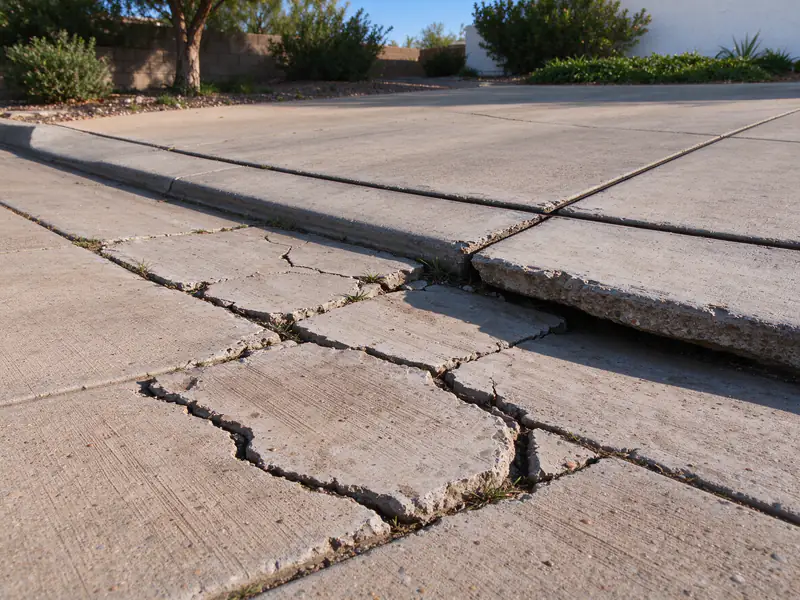
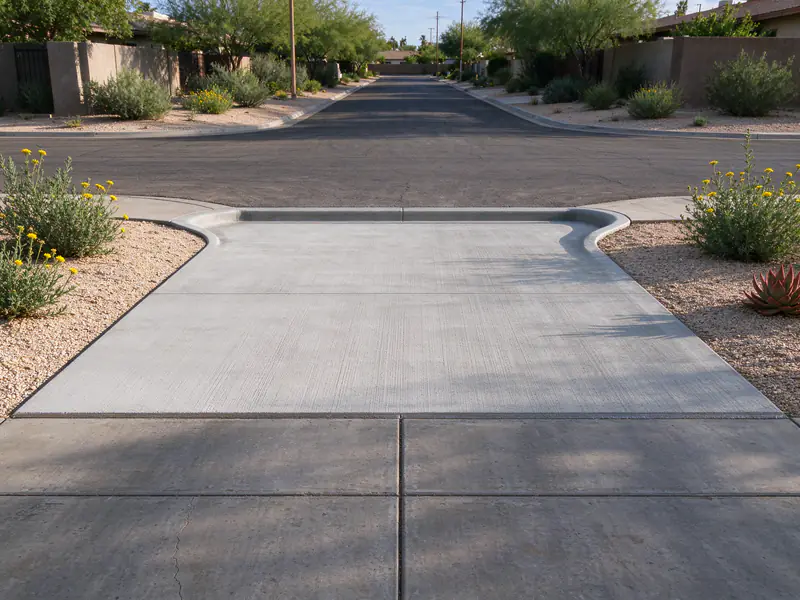
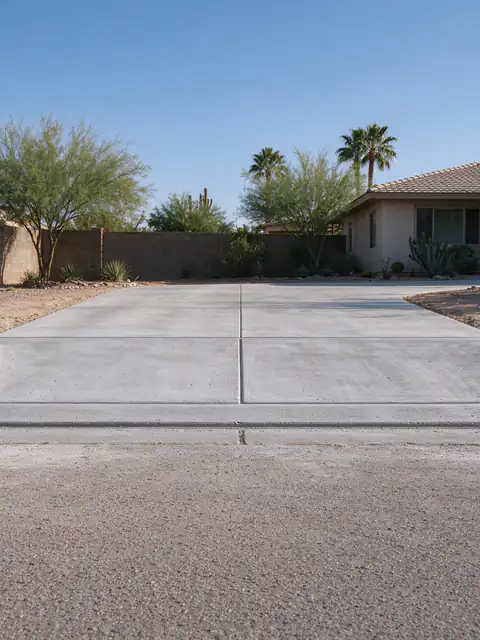
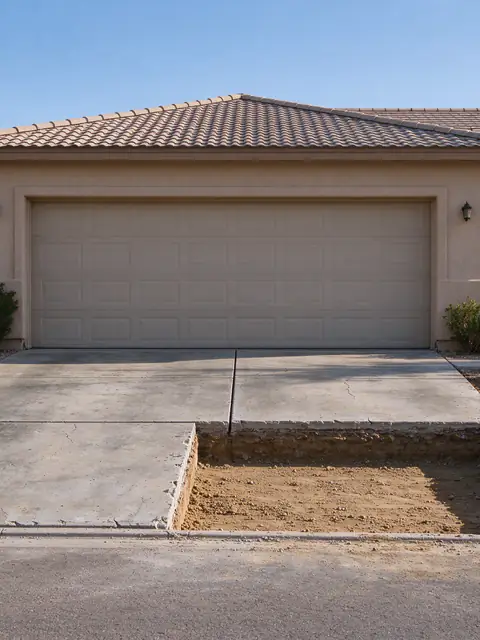
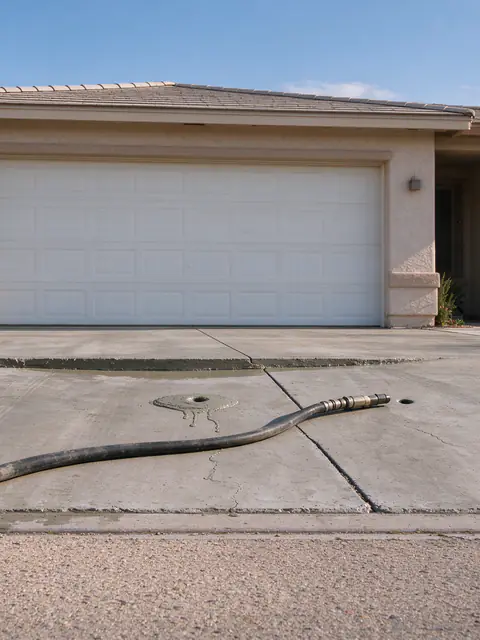
Cracked and broken driveway apron at a roll curb in Phoenix
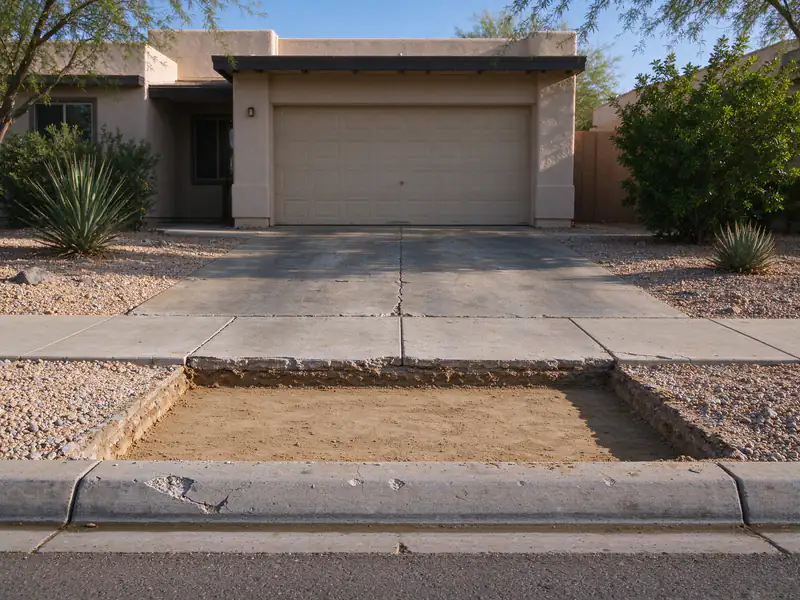
Old driveway apron removed down to the base between the sidewalk and roll curb in Phoenix
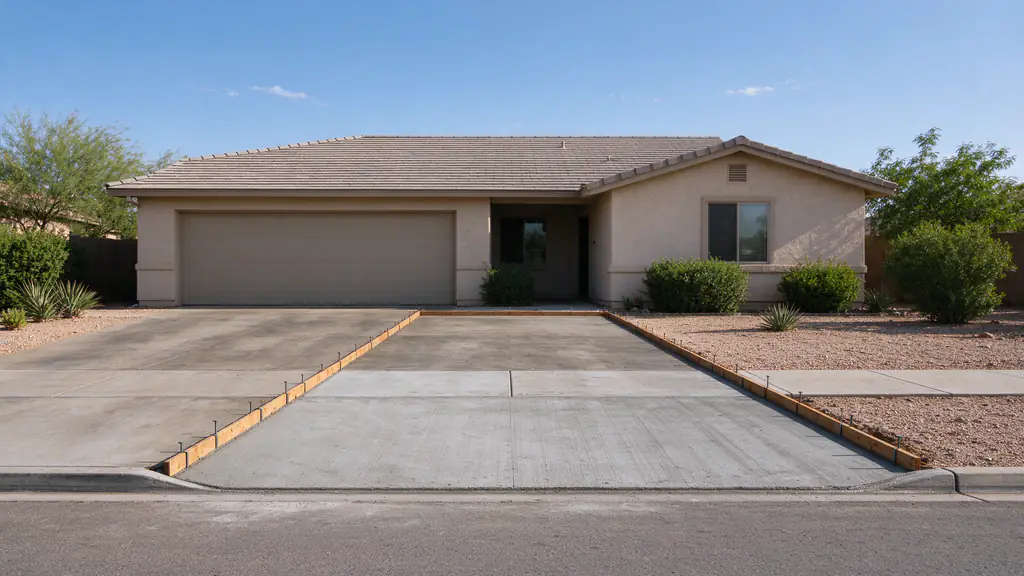
Wood forms set for a new driveway apron between a Phoenix sidewalk and roll curb
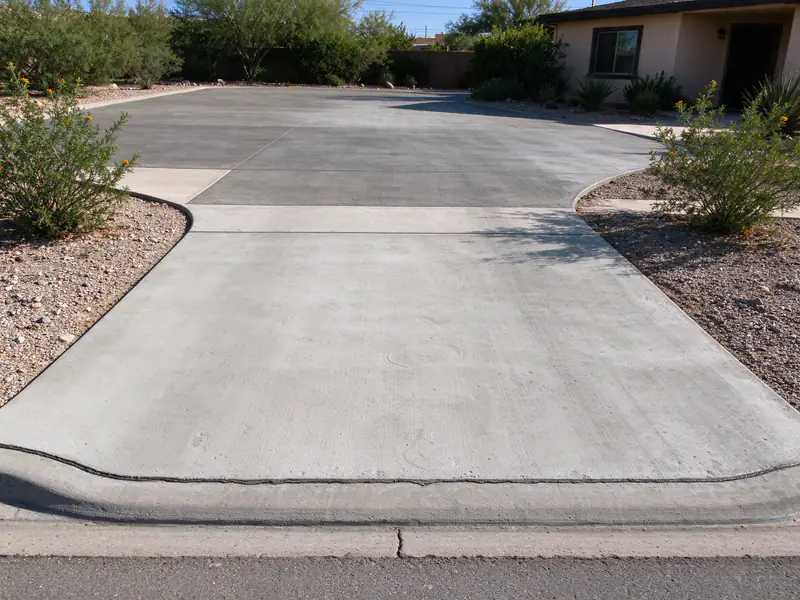
Finished concrete driveway apron sloping to a roll curb in Phoenix
Broken or sunken apron at the curb? Get an Estimate.
Send a photo from the street that shows the apron, curb and sidewalk. The estimate marks which part sits in the right-of-way and what the City requires there.
Can I choose a stamped or colored finish for the street end of my driveway?
In the Phoenix right-of-way, the City sets that. Its Driveway Policy treats a broom-finished concrete drive as standard. Using a material other than concrete, or a finish other than broom, beyond the 10.5 feet that counts as part of the on-site work needs a maintenance agreement with Street Transportation. Behind the sidewalk, on your lot, the choice is yours and your HOA's.
Why does my car scrape where the driveway meets the street?
The angle change between the street, the gutter, the apron and the drive is too sharp for the car's clearance, often because the apron settled, the street was overlaid, or the apron was built to an older profile. Grinding the high spot rarely fixes it for long. Rebuilding the apron to the City's current detail resets the slope, and that work needs the right-of-way permit.
Can a broken apron be patched instead of replaced?
Only when the damage is shallow and the slab is still sound and level. A thin patch over a crumbling or sunken apron takes the same wheel loads and runoff that broke the original, so it usually fails at its edges. When the apron has cracked through, dropped, or lost its base, replacing it from joint to joint on compacted base is the repair that lasts.
What happens if apron work is done without a Phoenix permit?
The City of Phoenix charges an investigation fee for civil or right-of-way work done without a required permit: $250 or the permit fee, whichever is greater, and up to $2,500 per day. The work can also be required to meet the City's standard after the fact, which may mean redoing it. Permit status is set out in the estimate before work starts.
What photos help with a driveway apron estimate?
One wide shot from the street showing the whole apron, the curb and the sidewalk crossing, then close shots of the cracks or broken edges. Add a side view at curb height if cars scrape, and note whether your street has a rolled curb, a vertical curb or no curb at all. That tells the estimate which City rule and detail apply.